
Competitor Ad Rank: How to Spy on Competitor PPC and Win at Paid Search
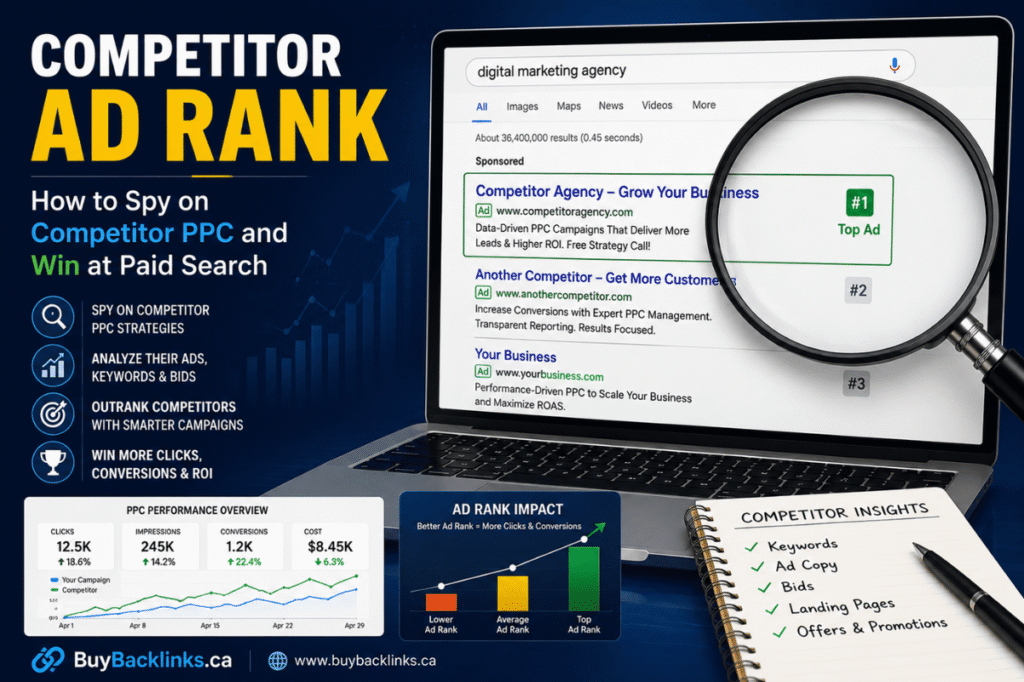
Running successful PPC campaigns isn’t just about improving your own ads. It’s also about understanding what your competitors are doing. Every day, businesses compete for the same keywords, audiences, and clicks. Some consistently appear above everyone else in search results, while others struggle to gain visibility despite significant advertising budgets. One of the most important concepts behind this competition is competitor ad rank. Understanding how ad rank works and how your competitors achieve strong positions can help you improve your own campaigns, reduce wasted spend, and gain a competitive advantage in paid search. In this guide, we’ll explain competitor ad rank, how to analyze competing advertisers, and practical strategies to improve your PPC performance in 2026. What Is Competitor Ad Rank? Competitor ad rank refers to the position competing advertisers achieve in paid search results. When multiple advertisers bid on the same keyword, search engines determine which ads appear and in what order. The ranking process isn’t based solely on who spends the most money. Search engines evaluate factors such as: Bid amount Ad quality Expected click-through rate Landing page experience Ad relevance Search intent alignment The advertiser with the strongest overall combination typically earns the highest ad position. Why Competitor Ad Rank Matters Many advertisers focus only on their own campaigns. However, understanding competitor performance helps answer important questions: Why are competitors outranking you? Which keywords are competitors targeting? What messaging are they using? Which offers attract clicks? Where are opportunities being missed? Competitive analysis helps improve decision-making instead of relying on assumptions. How Ad Rank Actually Works Although advertising platforms use complex algorithms, the concept is relatively simple. Search engines evaluate: Bid Strategy Higher bids can improve visibility, but they don’t guarantee top placement. A poorly optimized ad can still lose to a competitor with a lower bid. Quality Score Quality Score generally reflects: Ad relevance Expected click-through rate Landing page quality Strong Quality Scores often reduce advertising costs while improving visibility. User Experience Search engines prioritize ads that provide value to users. Landing pages that load quickly and match search intent often perform better. Contextual Factors Ad rank can also change based on: Device type Location Search history Time of day Audience signals This is why competitors may appear differently across searches. How to Analyze Competitor Ad Rank You don’t need access to a competitor’s advertising account to learn valuable insights. Several methods can reveal useful information. 1. Search Your Target Keywords One of the simplest approaches is manual observation. Search important keywords and note: Which competitors appear consistently Ad headlines Calls to action Promotions Landing page offers Over time, patterns become easier to identify. Consistent visibility often signals successful campaigns. 2. Study Competitor Ad Copy Ad copy reveals what competitors believe resonates with customers. Pay attention to: Pricing offers Guarantees Discounts Unique selling points Emotional triggers Questions to ask: What benefits do they emphasize? What problems are they solving? What makes their offer different? Understanding messaging can help improve your own ads. 3. Analyze Landing Pages Clicks don’t generate revenue. Conversions do. That’s why competitor landing pages deserve close attention. Review: Page structure Headlines Forms Trust signals Testimonials Calls to action Often, the biggest PPC advantages come from better landing page experiences rather than larger budgets. 4. Monitor Keyword Coverage Competitors frequently reveal strategic priorities through keyword targeting. Look for: Core commercial keywords Long-tail opportunities Industry-specific searches Local PPC campaigns Keyword analysis often uncovers opportunities competitors haven’t fully addressed. 5. Track Competitor Trends Over Time A single search provides limited information. Ongoing monitoring reveals: Seasonal campaigns New promotions Expanding keyword targets Messaging changes Long-term observation often delivers the most valuable insights. Ethical Ways to “Spy” on Competitors The word “spy” sounds aggressive, but competitive analysis should remain ethical. Focus on publicly available information such as: Search ads Landing pages Public offers Industry messaging Market positioning Avoid: Unauthorized access Data theft Misrepresentation Competitive intelligence should improve strategy not violate trust. Common Reasons Competitors Outrank Your Ads Understanding why competitors rank higher helps prioritize improvements. Better Quality Scores Strong Quality Scores often outperform higher bids. Improving relevance can sometimes increase rankings without increasing spend. Stronger Landing Pages Landing page quality significantly affects ad performance. Poor user experiences reduce competitiveness. More Relevant Ad Copy Ads that closely match search intent generally perform better. Relevance often wins over generic messaging. Better Click-Through Rates Search engines favor ads that users engage with consistently. Higher engagement signals greater usefulness. Strong Audience Targeting Competitors may use: Remarketing Customer match lists Geographic targeting Device-specific strategies Better targeting improves overall campaign performance. Strategies to Improve Your Ad Rank Once you’ve analyzed competitors, focus on improving your own campaigns. Optimize Ad Relevance Ensure ads closely match keyword intent. Include: Relevant headlines Clear benefits Strong calls to action Search engines reward relevance. Improve Landing Pages Review: Page speed Mobile experience Conversion paths Content relevance A stronger landing page can improve Quality Score and conversions simultaneously. Test Multiple Ad Variations Never rely on one ad version. Experiment with: Headlines Descriptions Offers Calls to action Continuous testing often reveals surprising performance improvements. Focus on Long-Tail Keywords Highly competitive keywords are expensive. Long-tail keywords often provide: Lower costs Higher intent Better conversion rates These opportunities are frequently overlooked. Strengthen Conversion Tracking Accurate tracking helps identify what actually works. Monitor: Leads Purchases Form submissions Phone calls Data-driven optimization consistently outperforms guesswork. Common PPC Competitive Analysis Mistakes Copying Competitors Exactly Learning from competitors is useful. Imitating them completely is not. Differentiate your offer whenever possible. Focusing Only on Position The top ad position isn’t always the most profitable. Focus on return on investment rather than visibility alone. Ignoring Landing Pages Many advertisers obsess over ads while neglecting the conversion experience. Landing pages often determine campaign success. Making Decisions Too Quickly PPC performance fluctuates. Avoid drawing conclusions from limited data. Tools That Help Analyze Competitor Ad Rank Popular tools include: Google Ads Auction Insights SEMrush Advertising Research Ahrefs SpyFu Similarweb These platforms provide visibility into competitor activity, keyword targeting, and advertising trends.
SEO Ranking Reports: How to Create Reports That Actually Impress Clients
Most clients don’t care about SEO metrics. That may sound surprising coming from an SEO article, but it’s true. Clients rarely get excited about crawl depth, index coverage, or keyword clustering. What they care about is whether SEO is helping their business grow. That’s why many SEO professionals struggle with reporting. They create detailed reports packed with data, yet clients still ask: “What does this mean?” “Are we getting results?” “Is SEO working?” The best seo ranking reports don’t just present numbers. They tell a story, highlight progress, and connect SEO performance to business outcomes. In this guide, you’ll learn how to create ranking reports that clients actually understand, appreciate, and look forward to receiving. What Are SEO Ranking Reports? SEO ranking reports are documents that track how a website performs in search engines over time. They typically include: Keyword rankings Organic traffic Visibility trends Top-performing pages Technical SEO updates Backlink growth The purpose of a ranking report is to show clients the impact of SEO efforts and provide a clear picture of progress. However, effective reporting goes beyond listing rankings. It explains what changed, why it matters, and what comes next. Why SEO Reporting Matters Good reporting does more than update clients. It helps: Build trust Improve client retention Demonstrate value Support strategic decisions Reduce misunderstandings When clients understand the results, they are more likely to remain confident in your SEO strategy. Poor reporting often creates uncertainty even when performance is improving. The Biggest Mistake in SEO Reporting Many SEO reports contain too much data and not enough insight. Clients don’t want dozens of pages filled with charts that require expert interpretation. Instead, they want answers to simple questions: Are rankings improving? Is traffic growing? Are leads increasing? What was accomplished this month? What happens next? Your report should answer these questions clearly. What Every SEO Ranking Report Should Include A professional report should balance simplicity with meaningful detail. Here are the essential sections. 1. Executive Summary Start with a brief overview. This is often the most-read section of the entire report. Include: Major wins Key challenges Overall SEO progress Important next steps Keep it concise. A client should understand the month’s performance within a minute of reading this section. 2. Keyword Ranking Performance Keyword rankings remain one of the most requested SEO metrics. Track: Primary target keywords Ranking improvements Ranking declines New keywords entering search results Instead of showing hundreds of keywords, focus on the most important terms tied to business goals. Example: Keyword Previous Position Current Position SEO audit service 15 8 backlink building service 12 6 local SEO consultant 9 4 This format makes progress easy to understand. 3. Organic Traffic Trends Rankings matter, but traffic often matters more. Include: Monthly organic traffic Traffic growth percentage Year-over-year comparisons Traffic trends by landing page Visual graphs help clients quickly understand progress. Focus on trends rather than isolated numbers. 4. Top Performing Pages Show which pages are generating results. Track: Traffic growth Ranking improvements Engagement metrics This helps clients see which content is contributing to SEO success. It also identifies opportunities for future optimization. 5. Backlink Growth Backlinks remain an important ranking factor. Include: New referring domains High-quality backlinks earned Authority improvements Avoid overwhelming clients with lengthy backlink exports. Highlight quality over quantity. 6. Technical SEO Updates Clients appreciate knowing what work is happening behind the scenes. Include completed improvements such as: Fixed crawl errors Improved site speed Resolved indexing issues Updated internal links This demonstrates ongoing effort and expertise. 7. Conversions and Business Impact This is where reports become truly valuable. Whenever possible, include: Leads generated Contact form submissions Phone calls Sales Revenue impact Clients care about business outcomes more than rankings alone. If SEO contributes to growth, make that connection visible. How to Make SEO Ranking Reports More Client-Friendly Data is important, but presentation matters just as much. Use Simple Language Avoid excessive technical terminology. Instead of saying: “Crawl budget optimization improved indexation efficiency.” Try: “We improved how search engines discover and access your pages.” Clients appreciate clarity. Focus on Outcomes Don’t just report activities. Instead of: Built 10 backlinks Fixed 5 errors Explain the expected impact: Improved authority for important service pages Enhanced crawlability and user experience Outcomes are easier to understand than tasks. Highlight Wins First Start with positive results. Examples: Increased rankings Traffic growth New keyword visibility Improved conversions This creates context before discussing challenges. Include Visual Elements Charts and graphs help clients absorb information quickly. Useful visuals: Ranking trend graphs Traffic growth charts Visibility trend reports Conversion summaries Visual reporting often improves engagement dramatically. Metrics That Matter Most to Clients Not every SEO metric deserves equal attention. The most valuable metrics typically include: Rankings Important for visibility tracking. Organic Traffic Shows audience growth. Leads and Conversions Demonstrates business impact. Top Landing Pages Highlights successful content. Backlink Growth Shows authority development. Technical Improvements Explains ongoing optimization work. These metrics create a balanced report. Common SEO Reporting Mistakes Reporting Too Many Keywords Large keyword lists create confusion. Focus on meaningful rankings. Ignoring Business Goals SEO metrics should connect to client objectives. Rankings alone don’t tell the full story. Using Generic Templates Every client has different goals. Customize reports whenever possible. Hiding Challenges Be transparent when rankings drop or traffic declines. Clients value honesty and strategic recommendations. Recommended Reporting Frequency Most SEO agencies and consultants use monthly reports. Monthly reporting works well because: SEO changes take time Trends become easier to identify Clients stay informed without information overload For enterprise campaigns, weekly reporting may also be useful. Tools Commonly Used for SEO Ranking Reports Popular reporting tools include: Google Search Console Google Analytics Ahrefs SEMrush Looker Studio Agency reporting platforms The best tool is the one that helps present data clearly and accurately. Remember, clients care more about insights than software. The Future of SEO Reporting in 2026 SEO reporting is becoming more outcome-focused. Clients increasingly expect: Clear explanations Conversion tracking Business impact analysis Actionable recommendations The agencies that communicate results effectively often retain
Offsite SEO vs On-Page SEO: What Matters Most for Rankings in 2026
SEO continues to evolve every year, but one question still causes confusion for businesses, marketers, and website owners: What matters more on-page SEO or offsite seo? Some people focus heavily on content optimization and technical improvements. Others invest aggressively in backlinks and authority building. The reality is that both play critical roles, but their impact changes depending on your website’s goals, competition level, and current SEO foundation. In 2026, search engines are smarter than ever. Rankings no longer depend on one factor alone. Google evaluates content quality, user experience, authority, relevance, and trust together. In this guide, we’ll break down the differences between offsite SEO and on-page SEO, explain how they work together, and help you understand what matters most for rankings today. What Is On-Page SEO? On-page SEO refers to all the optimization done directly on your website to improve search visibility. This includes: Content optimization Keyword targeting Title tags Meta descriptions Internal linking Header structure Image optimization Technical page improvements The goal is to help search engines understand your content while improving the user experience. On-page SEO creates the foundation of your rankings. What Is Offsite SEO? Offsite SEO refers to actions taken outside your website to improve authority, trust, and search engine visibility. The most common offsite SEO factors include: Backlinks Brand mentions Digital PR Guest posting Social signals Online reputation Offsite SEO helps search engines determine whether your website is trustworthy and authoritative compared to competitors. In simple terms: On-page SEO tells search engines what your content is about. Offsite SEO helps prove your website deserves to rank. Why This Debate Matters More in 2026 SEO competition has become significantly harder. Millions of websites now publish optimized content using similar tools and strategies. As a result, simply publishing “SEO-friendly” content is no longer enough. Search engines now evaluate: Expertise Authority Trustworthiness User engagement Brand credibility This is where the balance between on-page SEO and offsite SEO becomes critical. On-Page SEO Strengths Let’s start with what on-page SEO does best. Improves Relevance Search engines rely on page content to understand topics and intent. Strong on-page optimization helps pages rank for the right keywords. Examples include: Proper keyword usage Structured headings Topic depth Semantic relevance Without relevance, rankings become difficult regardless of backlinks. Enhances User Experience Good on-page SEO improves usability. Important factors: Readability Mobile responsiveness Fast loading speed Clear navigation Better user experiences often lead to: Lower bounce rates Higher engagement Better conversions Gives You Full Control One major advantage of on-page SEO is control. You can directly improve: Content quality Technical SEO Internal links Page structure Unlike backlinks, you don’t depend on external websites. Offsite SEO Strengths Now let’s look at why offsite SEO remains extremely powerful in 2026. Builds Authority Backlinks still act like trust signals. When reputable websites link to your content, search engines interpret this as a sign of credibility. This is especially important in competitive industries. Two pages may have similar content quality, but the stronger backlink profile often wins. Improves Competitive Rankings For low-competition keywords, strong content may rank without many backlinks. But for competitive keywords: Authority matters heavily Offsite signals become critical Industries like: Finance Legal SaaS Ecommerce SEO often require strong offsite SEO to compete effectively. Increases Brand Trust Modern offsite SEO is not just about backlinks. Brand mentions, PR coverage, reviews, and online reputation all contribute to trust signals. Search engines increasingly evaluate overall brand authority—not just page optimization. Offsite SEO vs On-Page SEO: Which Matters More in 2026? The answer depends on your situation. If Your Website Has Weak Content On-page SEO matters first. Without: Helpful content Proper structure Good user experience backlinks alone won’t sustain rankings long term. Poor pages eventually lose visibility even with authority. If Your Content Is Already Strong Offsite SEO often becomes the growth multiplier. Many websites plateau because: Content quality is similar across competitors Technical SEO is already optimized At that stage, authority signals usually create ranking separation. The Real Answer: They Work Together The strongest SEO strategies combine both. Think of SEO like this: On-Page SEO: Creates relevance and usability. Offsite SEO: Builds authority and trust. You need both to compete consistently in modern search results. Practical Example Imagine two websites targeting: best CRM software for startups Website A: Excellent content Strong technical SEO No backlinks Website B: Similar content quality Strong backlink profile Good brand mentions In most cases, Website B will outperform Website A because authority becomes the deciding factor. This is why offsite SEO remains highly influential in competitive search results. Best On-Page SEO Practices for 2026 To stay competitive, focus on: Search intent optimization Topic depth and relevance Strong internal linking Mobile-first performance Fast page speed Clear content structure Helpful user experiences AI-generated content alone is no longer enough. Originality and usefulness matter more than ever. Best Offsite SEO Practices for 2026 Modern offsite SEO should focus on quality—not manipulation. Effective strategies include: Guest posting on relevant websites Digital PR campaigns Earning editorial backlinks Building brand mentions Creating link-worthy content Avoid: Spammy backlinks Link farms Automated link schemes Search engines are increasingly effective at detecting manipulative tactics. Common SEO Mistakes Businesses Make Focusing Only on Backlinks Authority cannot compensate for weak content forever. Ignoring Technical SEO Slow or poorly structured websites struggle to maintain rankings. Publishing Thin Content Short, low-value pages rarely build sustainable visibility. Building Low-Quality Links Spammy backlinks may hurt rankings instead of helping them. What Matters Most for Rankings in 2026? The most successful websites combine: High-quality content Strong user experience Technical optimization Relevant backlinks Brand trust signals SEO is no longer about isolated tactics. Search engines now reward websites that demonstrate overall quality and authority consistently. The debate between on-page SEO and offsite seo is not really about choosing one over the other. In 2026, both are essential. On-page SEO helps search engines understand and evaluate your content. Offsite SEO helps establish trust, authority, and competitive strength. If your foundation is weak, start with on-page optimization. If your content is already
SEO Audit Service: What a Professional Technical Audit Actually Includes

Many websites struggle with rankings not because of bad content but because of hidden technical issues quietly affecting search performance. Slow pages, crawl problems, indexing errors, broken internal links, and weak site structure can all reduce your visibility in Google without obvious warning signs. That’s where a professional seo audit service becomes valuable. A proper SEO audit doesn’t just generate automated reports filled with technical jargon. It identifies the real issues limiting your website’s growth and provides actionable recommendations to improve performance. In this guide, you’ll learn what a professional SEO audit service actually includes, why technical audits matter, and what businesses should expect before investing in one. What Is an SEO Audit Service? An SEO audit service is a detailed evaluation of a website’s SEO health. The goal is to uncover issues that affect: Search rankings Crawlability Indexing User experience Website performance Organic traffic growth Professional audits analyze both technical SEO and on-page optimization to identify weaknesses and opportunities. Unlike quick automated scans, a real audit involves deeper analysis and strategic recommendations. Why SEO Audits Matter SEO problems are often invisible until rankings start dropping. A website may look fine visually while suffering from: Slow loading times Duplicate content Crawl errors Poor internal linking Mobile usability issues Broken pages Without identifying these issues, even strong content and backlinks may struggle to perform. Benefits of a professional audit include: Improved rankings Better website performance Enhanced user experience Stronger crawl efficiency Better conversion potential An audit creates the foundation for long-term SEO growth. What a Professional SEO Audit Service Actually Includes Not all audits are equal. Some services simply export automated tool data. A professional SEO audit goes much deeper. Below are the core areas a proper audit should include. 1. Technical SEO Analysis Technical SEO is the backbone of any audit. This involves reviewing: Crawlability Indexability Site architecture URL structure Redirects Canonical tags XML sitemaps Robots.txt configuration The goal is to ensure search engines can access and understand your website properly. Even small technical issues can limit rankings significantly. 2. Crawl and Indexing Audit Search engines must crawl and index pages efficiently. An audit should identify: Blocked pages Noindex issues Crawl errors Orphan pages Duplicate indexed URLs Common issues include: Important pages not indexed Staging pages appearing in search Duplicate versions of pages Fixing indexing problems often produces noticeable SEO improvements. 3. Website Speed and Performance Review Page speed affects both rankings and user experience. A professional audit typically reviews: Core Web Vitals Server response times Image optimization Script loading Caching setup Mobile speed performance Slow websites often experience: Higher bounce rates Lower engagement Reduced conversions Performance optimization is now a critical part of technical SEO. 4. Mobile SEO Evaluation Google uses mobile-first indexing, meaning your mobile experience matters heavily. A mobile SEO audit should analyze: Responsive design Mobile usability Layout stability Tap target spacing Mobile page speed Poor mobile experiences can quietly damage rankings over time. 5. On-Page SEO Review Technical SEO alone isn’t enough. A complete audit should also review on-page elements like: Title tags Meta descriptions Header structure Keyword usage Thin content Duplicate content Internal linking This helps ensure pages are optimized for both search engines and users. 6. Internal Linking Analysis Internal links help search engines understand: Website hierarchy Page importance Topic relationships A professional audit checks: Broken internal links Orphan pages Weak linking structures Over-optimized anchor text Strong internal linking improves crawlability and distributes authority throughout the website. 7. Structured Data and Schema Review Schema markup helps search engines understand page content more clearly. An SEO audit service should review: FAQ schema Product schema Article schema Local business schema Incorrect or missing structured data can reduce search visibility opportunities. 8. HTTPS and Security Checks Website security impacts trust and rankings. Audits often include: HTTPS validation Mixed content issues SSL certificate problems Secure redirect checks Search engines prioritize secure websites. 9. Backlink Profile Analysis Many SEO audits also include backlink evaluation. This involves reviewing: Link quality Toxic backlinks Referring domains Anchor text distribution Poor-quality backlinks can negatively affect rankings if left unchecked. 10. Competitor SEO Comparison Professional audits sometimes compare your website against competitors. This can reveal: Keyword gaps Content opportunities Technical weaknesses Backlink differences Competitive analysis helps prioritize improvements strategically. What an SEO Audit Should Deliver A proper SEO audit service should provide more than raw data. You should receive: Clear issue explanations Priority recommendations Actionable fixes Technical insights SEO improvement opportunities Good audits simplify complex SEO problems into understandable action steps. Red Flags to Watch For Not all SEO audit services provide real value. Be cautious of audits that: Promise instant rankings Use only automated reports Provide no explanations Focus only on keywords Ignore technical SEO A quality audit should feel strategic—not generic. How Often Should You Get an SEO Audit? Most websites benefit from regular audits. Recommended frequency: Small business websites: every 6 months Ecommerce websites: quarterly Large or active websites: monthly monitoring You should also audit after: Website redesigns CMS migrations Major traffic drops Large content updates Regular audits help catch issues before they become major ranking problems. Who Needs an SEO Audit Service? SEO audits are valuable for: Small businesses Ecommerce websites Agencies Bloggers SaaS companies Local businesses Any website relying on organic traffic can benefit from technical analysis. Common SEO Issues Found During Audits Here are some of the most common problems audits uncover: Slow mobile performance Duplicate meta tags Broken pages Weak internal linking Crawl depth issues Indexing errors Large image files Redirect chains Thin content pages Many of these issues remain unnoticed without detailed analysis. Choosing the Right SEO Audit Service When selecting an audit provider, look for: Technical SEO expertise Clear communication Transparent recommendations Real analysis—not automated exports Experience with your website type A professional audit should help you understand both the problems and the solutions. A professional seo audit service helps uncover the hidden technical and structural problems that may quietly limit your website’s rankings and traffic. From crawlability and indexing to mobile usability and
Search Engine Positioning: Examples and Strategies to Improve Your Rankings

Getting your website on Google is one thing. Getting it positioned where people actually click is something else entirely. Most users never go beyond the first page of search results. In fact, the top few positions capture the majority of organic clicks. That’s why understanding search engine positioning is so important for businesses, bloggers, and marketers trying to grow online visibility. In this guide, you’ll learn what search engine positioning means, see practical search engine positioning example scenarios, and understand the strategies that help websites improve rankings over time. Whether you run a business website, blog, or ecommerce store, these techniques can help strengthen your organic search performance. What Is Search Engine Positioning? Search engine positioning refers to the exact position a webpage holds in search engine results for a specific keyword. For example: Position #1 = first organic result Position #5 = fifth organic result Position #10 = bottom of page one Higher positions usually lead to: More clicks More traffic Better visibility Increased trust Search engine positioning is often confused with SEO in general, but positioning specifically focuses on improving and maintaining rankings for target keywords. Why Search Engine Positioning Matters Strong rankings directly affect how much organic traffic your website receives. Even moving from position #8 to #3 can dramatically improve clicks and visibility. Benefits of better positioning include: Higher organic traffic Increased brand exposure Better lead generation Improved authority More conversions Good positioning also compounds over time. Once pages gain authority and trust, maintaining rankings becomes easier. Search Engine Positioning Example Scenarios Below are practical examples to show how positioning works in real-world SEO. Example 1: Local Business SEO A local roofing company targets the keyword: roof repair services in Toronto Initial ranking: Position #18 After optimization: Improved local SEO pages Added customer reviews Strengthened internal linking Built backlinks New ranking: Position #4 Result: Increased phone calls and local traffic This is a clear search engine positioning example where focused optimization improved visibility significantly. Example 2: Blog Content Optimization A marketing blog targets: how to create SEO content Initial ranking: Position #11 After updates: Better keyword targeting Improved headings Added examples and FAQs Increased page speed New ranking: Position #3 Result: Higher click-through rate More organic visitors Sometimes small content improvements create meaningful ranking gains. Example 3: Ecommerce Product Positioning An online store targets: best wireless gaming headset Optimization strategy: Improved product descriptions Added comparison content Strengthened category pages Built authority backlinks Ranking improvement: From page two to top five results Result: Increased product sales from organic search Key Factors That Influence Search Engine Positioning Search engines evaluate many signals before deciding rankings. The most important include: Content Relevance Your content must closely match search intent. If users search for: best SEO tools They expect: Comparisons Reviews Features Recommendations Not a generic SEO definition article. Search intent alignment is essential for strong positioning. Keyword Optimization Keywords still matter—but naturally. Best practices: Use primary keyword in: Title H1 Introduction Meta description Include related terms and variations Avoid keyword stuffing Well-optimized content helps search engines understand topic relevance. Backlinks and Authority Backlinks remain one of Google’s strongest ranking signals. High-quality backlinks help: Build authority Improve trust Increase ranking potential However, quality matters more than quantity. Spammy links can damage positioning instead of improving it. Technical SEO Technical issues can limit rankings even with good content. Important areas: Site speed Mobile usability Crawlability HTTPS security Internal linking Strong technical SEO creates a better foundation for rankings. User Experience Signals Search engines pay attention to user behavior. Poor experiences can hurt positioning: Slow pages Difficult navigation Intrusive popups Weak mobile design Better user experiences often improve engagement metrics and rankings. Strategies to Improve Search Engine Positioning Now let’s look at practical strategies you can apply. 1. Target Realistic Keywords Avoid targeting only ultra-competitive keywords. Instead: Focus on long-tail opportunities Target lower competition phrases Build topical authority gradually This creates faster ranking opportunities. 2. Improve Existing Content Updating old content is often easier than creating new pages. Improve: Outdated information Thin sections Internal links Examples Readability Content refreshes can improve rankings significantly. 3. Strengthen Internal Linking Internal links help search engines understand: Important pages Topic relationships Site structure Best practices: Use descriptive anchor text Link related pages naturally Avoid orphan pages 4. Optimize for Featured Snippets Featured snippets improve visibility dramatically. Structure content clearly: Use bullet lists Add concise definitions Include FAQ sections Answer questions directly This increases snippet opportunities. 5. Build High-Quality Backlinks Authority backlinks help improve competitive rankings. Effective methods: Guest posting Resource link building Digital PR Outreach campaigns Natural, relevant links are most valuable. 6. Improve Page Speed Fast-loading pages improve both user experience and SEO. Focus on: Image compression Caching Reduced scripts Better hosting Page speed is especially important for mobile rankings. Common Search Engine Positioning Mistakes Targeting Keywords With Wrong Intent Ranking becomes difficult when content doesn’t match user expectations. Ignoring Technical SEO Broken pages and crawl errors hurt visibility. Publishing Thin Content Short, low-value pages rarely maintain strong rankings. Over-Optimizing Keywords Keyword stuffing makes content feel unnatural and spammy. How Long Does It Take to Improve Positioning? SEO positioning improvements usually take time. Typical timelines: Low-competition keywords: weeks Competitive keywords: months Factors affecting speed: Website authority Competition Content quality Backlink profile Technical SEO health Consistency matters more than shortcuts. Measuring Search Engine Positioning Success Track: Keyword rankings Organic traffic Click-through rate Bounce rate Conversions Remember: Higher rankings only matter if they generate meaningful traffic and business results. Understanding search engine positioning is essential for improving online visibility and driving sustainable organic traffic. The best results come from combining: Strong content Smart keyword targeting Technical SEO Quality backlinks Positive user experience Every improvement compounds over time. The search engine positioning example strategies covered in this guide show that rankings rarely improve through one tactic alone. Long-term SEO success comes from building a strong overall foundation. And if you want to strengthen your authority and improve competitive rankings, buybacklinks.ca offers backlink solutions designed to support sustainable
SEO Technical Audit: A Step-by-Step Checklist for Identifying Hidden Issues
Your website may look perfectly fine on the surface—but hidden technical SEO problems can quietly damage rankings, slow down traffic growth, and prevent pages from performing properly in search results. That’s why a proper seo technical audit matters. Technical SEO is the foundation of your website’s visibility. Even the best content and strongest backlinks can struggle if search engines can’t crawl, index, or understand your site efficiently. In this guide, you’ll learn how to perform a complete SEO technical audit step by step, identify common hidden issues, and improve your website’s overall search performance. What Is an SEO Technical Audit? An SEO technical audit is the process of analyzing a website’s technical health to identify issues that affect: Crawling Indexing Site speed Mobile usability Structured data Internal linking Overall search visibility The goal is to ensure search engines can access, understand, and rank your content properly. Unlike content SEO, technical SEO focuses on the backend structure and performance of your website. Why a Technical SEO Audit Is Important Technical issues often go unnoticed for months. A site may lose rankings because of: Broken pages Crawl errors Slow loading times Duplicate content Indexing problems Poor mobile experience Without regular audits, these problems can compound over time. Benefits of a technical audit include: Improved search visibility Better crawling efficiency Faster website performance Enhanced user experience Higher ranking potential SEO Technical Audit Checklist Below is a practical step-by-step checklist you can use to audit almost any website. 1. Check Website Indexing Start by confirming that search engines are indexing the correct pages. Search in Google: site:yourdomain.com Look for: Missing pages Irrelevant indexed pages Duplicate URLs Staging or test pages appearing in search Common indexing issues: Noindex tags on important pages Blocked pages in robots.txt Canonical errors If important pages aren’t indexed, rankings become impossible. 2. Review Crawlability Search engines must be able to crawl your website efficiently. Check: robots.txt file XML sitemap Broken internal links Redirect chains Important areas to inspect: Blocked CSS or JavaScript files Orphan pages Excessive redirects A clean crawl structure improves search engine efficiency. 3. Analyze Website Speed Site speed directly impacts both user experience and SEO performance. Slow websites often experience: Higher bounce rates Lower engagement Reduced rankings Audit: Core Web Vitals Large image sizes Unused scripts Server response time Render-blocking resources Focus on: Faster mobile performance Image optimization Caching improvements Even small speed improvements can make a noticeable difference. 4. Test Mobile Friendliness Google primarily uses mobile-first indexing. If your site performs poorly on mobile devices, rankings may suffer. Check: Responsive design Text readability Button spacing Mobile loading speed Layout shifts Common issues: Content wider than screen Tiny fonts Slow mobile load times A smooth mobile experience is essential for modern SEO. 5. Inspect HTTPS Security Your website should use HTTPS properly across all pages. Look for: Mixed content warnings Expired SSL certificates HTTP pages still accessible Security issues damage both trust and rankings. Ensure: All pages redirect to HTTPS Internal links use secure URLs Canonical tags point to HTTPS versions 6. Check for Broken Links and Errors Broken pages create poor user experiences and waste crawl budget. Look for: 404 errors Broken internal links Broken external links Redirect loops Important: Fix high-priority pages first, especially pages with backlinks or traffic. 7. Audit Internal Linking Structure Internal links help search engines understand site hierarchy and page importance. Review: Navigation structure Contextual links Anchor text usage Orphan pages Best practices: Link to important pages frequently Use descriptive anchor text Avoid excessive linking on one page Strong internal linking improves crawling and rankings. 8. Identify Duplicate Content Issues Duplicate content confuses search engines. Common causes: URL parameters Printer-friendly pages HTTP vs HTTPS versions Duplicate meta tags Similar location pages Check: Canonical tags Duplicate titles Duplicate descriptions Proper canonicalization helps consolidate ranking signals. 9. Review XML Sitemap An XML sitemap helps search engines discover important pages. Your sitemap should: Include indexable URLs only Exclude redirects and errors Update automatically Also ensure: Sitemap submitted in Google Search Console Sitemap URLs return 200 status codes 10. Analyze Structured Data Structured data helps search engines understand page content more clearly. Examples: FAQ schema Product schema Article schema Local business schema Incorrect schema can trigger warnings or lost opportunities in search results. Validate: Missing fields Invalid markup Duplicate schema types 11. Review URL Structure SEO-friendly URLs improve clarity and usability. Good URLs: example.com/seo-technical-audit Poor URLs: example.com/page?id=58493 Best practices: Keep URLs short Use descriptive words Avoid unnecessary parameters 12. Check On-Page Technical Elements Review important page-level SEO elements: Title Tags Unique for every page Clear and descriptive Meta Descriptions Concise and relevant Encourage clicks Header Structure Proper H1 usage Logical heading hierarchy Image Optimization Alt text added Compressed file sizes These elements support both SEO and accessibility. Common Technical SEO Mistakes Ignoring Crawl Errors Small crawl issues can become large indexing problems. Overusing Redirects Too many redirects slow crawling and weaken user experience. Forgetting Mobile Optimization Desktop-only optimization is no longer enough. Blocking Important Pages Accidental noindex tags or robots.txt rules can remove pages from search results. How Often Should You Perform an SEO Technical Audit? Frequency depends on website size and activity. Recommended schedule: Small websites: every 3–6 months Large websites: monthly or quarterly Ecommerce sites: more frequently Also audit after: Site redesigns CMS migrations Major SEO changes Regular audits help prevent long-term SEO damage. Best Tools for SEO Technical Audits Popular tools include: Google Search Console Google PageSpeed Insights Screaming Frog Ahrefs Site Audit SEMrush Site Audit Each tool helps uncover different technical issues. A proper seo technical audit helps uncover the hidden issues that may quietly limit your website’s performance. From crawlability and indexing to mobile usability and speed optimization, technical SEO creates the foundation for sustainable rankings. The good news is that many technical issues are fixable once identified. Start with the basics: Improve crawlability Fix indexing issues Optimize speed Strengthen internal linking Over time, these improvements can significantly impact organic visibility and user experience. And if you need support
How to Get SEO Clients: 12 Outreach Tactics That Actually Convert

Getting good at SEO is one thing. Getting clients consistently is another challenge entirely. Many freelancers and agencies struggle not because they lack skill but because they rely on random referrals, cold pitches with no strategy, or inconsistent marketing efforts. The truth is, learning how to get SEO clients requires more than sending generic messages and hoping for replies. Businesses get pitched constantly. If your outreach looks like everyone else’s, it gets ignored. In this guide, you’ll learn 12 practical outreach tactics that actually help SEO professionals attract leads, build trust, and convert prospects into paying clients. Whether you’re a freelancer, consultant, or agency owner, these strategies can help you create a more reliable client pipeline. Why Most SEO Outreach Fails Before jumping into tactics, it’s important to understand why most outreach campaigns don’t work. Common problems include: Generic copy-paste messages No personalization Focusing on services instead of problems Contacting the wrong people Pitching too early without building trust Most businesses don’t care about “SEO packages.” They care about: More traffic Better rankings More leads More sales Your outreach should focus on outcomes not technical jargon. Build a Simple but Credible Website If you want clients to trust you, your online presence matters. Your website should clearly explain: What you do Who you help Your process Results or experience How people can contact you You don’t need a massive agency-style site. A clean, professional website with useful content is enough. Include: Service pages Case studies if available Testimonials Blog content This becomes your credibility layer during outreach. Use LinkedIn for Warm Outreach LinkedIn remains one of the best platforms for finding SEO clients especially B2B clients. Instead of pitching immediately: Connect first Engage with their content Start conversations naturally Offer value before selling Bad approach: “Hi, I offer SEO services. Interested?” Better approach: “I noticed your site isn’t targeting local search terms consistently. There may be an opportunity to improve organic visibility.” The second approach feels relevant and thoughtful. Offer Free Mini SEO Audits One of the fastest ways to get attention is showing businesses problems they didn’t notice. A short audit can include: Missing title tags Slow page speed Weak keyword targeting Broken links Poor internal linking Keep it short and actionable. The goal isn’t to give away full consulting it’s to start conversations. Target Businesses Already Investing in Marketing Companies already spending money on ads, social media, or content are more likely to invest in SEO. Look for businesses that: Run Google Ads Post regularly on social media Publish blogs Have active websites These businesses already understand marketing value, making them easier to convert. Create Helpful SEO Content Content marketing works exceptionally well for attracting inbound SEO leads. Write articles around topics like: how to get SEO clients local SEO mistakes SEO tips for small businesses why rankings dropped When potential clients find your content through search, trust builds naturally. This strategy takes time but compounds long term. Use Cold Email the Right Way Cold email still works when done properly. The biggest mistake? Sending long, sales-heavy messages. Effective cold emails are: Short Personalized Problem-focused Easy to reply to Structure: Personalized opening One clear issue or opportunity Simple value proposition Soft CTA Example: “I noticed your service pages aren’t optimized for local search intent. A few improvements could help increase organic leads.” Simple and direct works better than aggressive sales language. Ask Existing Clients for Referrals Referrals often convert faster than cold outreach. But many SEO professionals never ask. After delivering good results: Ask satisfied clients if they know anyone needing SEO help Make referrals easy and casual Stay connected with past clients A strong reputation compounds over time. Focus on One Niche General SEO services are highly competitive. Specializing helps you stand out faster. Examples: SEO for dentists SEO for law firms Ecommerce SEO Local SEO for contractors Niche positioning makes outreach more effective because your messaging becomes highly specific. Join Business Communities and Groups Many SEO clients come from conversations not direct pitches. Places to network: LinkedIn groups Facebook business groups Slack communities Local entrepreneur communities Avoid spamming services. Instead: Answer questions Share insights Help people solve problems Trust usually comes before conversion. Partner With Other Agencies Web design agencies, developers, and marketing consultants often need SEO partners. This can become a consistent lead source. Potential partners: Web designers PPC agencies Branding agencies Developers Partnerships can generate long-term recurring work without constant prospecting. Use Case Studies to Build Trust Even small wins matter. Case studies help prospects visualize results. You don’t need huge numbers. Focus on: The problem Your strategy The improvement Examples: Increased organic traffic Improved rankings Better lead generation Higher click-through rates Specific results create credibility. Follow Up Consistently Most conversions happen after follow-ups not first messages. Many people: Forget Get busy Need time Following up professionally increases response rates significantly. Best practices: Wait a few days between messages Keep follow-ups short Add additional value when possible Persistence matters but avoid being pushy. Common Mistakes When Trying to Get SEO Clients Selling Too Early Build trust before pitching services. Targeting Everyone Broad targeting weakens messaging. Overpromising Results Avoid guarantees like: “#1 rankings overnight” “Guaranteed traffic increase” Smart clients see these as red flags. Ignoring Personal Branding Your content, website, and online presence influence conversion rates heavily. Best Channels for Finding SEO Clients Here are some of the most effective channels today: Channel Best For LinkedIn B2B outreach Google Search Inbound leads Cold Email Direct prospecting Referrals High-conversion leads Local Networking Small business clients Partnerships Long-term lead flow A combination usually works best. How Long Does It Take to Get SEO Clients? Results vary depending on: Experience Positioning Outreach consistency Niche selection Credibility Some people land clients within weeks. Others take months to build momentum. The key difference is consistency. Treat client acquisition like SEO itself: Strategic Long-term Process-driven Learning how to get SEO clients is less about aggressive selling and more about building trust, solving problems, and positioning yourself correctly. The best outreach
SEO Outreach Strategy: Complete Guide to Prospecting, Pitching, and Follow-Up

Most link building efforts fail for one simple reason: poor outreach. You can have great content, a strong website, and even a solid SEO plan but if your outreach is weak, your results will be too. In competitive markets like Canada, where businesses actively invest in SEO, having a refined outreach strategy is what separates consistent growth from stagnation. This guide walks you through a complete SEO outreach strategy from finding the right prospects to writing emails that get replies, and following up without being ignored. If you’re serious about advanced link building, this is where the real work happens. Why SEO Outreach Is Critical for Advanced Link Building Search engines value backlinks, but not just any backlinks. They want links that are: Relevant Contextual From authoritative sources Outreach is how you earn those links. Without a structured outreach strategy: Your emails get ignored Your links come from low-quality sources Your efforts don’t scale Strong outreach connects your content with the right people and that’s the foundation of advanced link building. Step 1: Smart Prospecting (Finding the Right Opportunities) Before sending a single email, you need to identify who to reach out to.This is where most beginners go wrong they focus on quantity instead of relevance. What Makes a Good Prospect? Look for websites that: Are relevant to your niche Have real traffic and engagement Publish quality content Accept contributions, collaborations, or mentions Prospecting Methods That Work Google Search Operators Search for: “write for us + [your niche]” “resources + [your topic]” “guest post guidelines + [keyword]” Competitor Backlink Analysis Analyze where your competitors are getting links and target those same websites. Content-Based Prospecting Find articles similar to yours and reach out to sites that already link to related content. Step 2: Qualification (Filtering for Quality) Not every prospect is worth your time. Sending emails to low-quality sites can hurt your SEO more than help it. Key Metrics to Check Domain authority or domain rating Organic traffic Content quality Relevance to your topic Quick Rule If you wouldn’t proudly show that link to a client or customer, don’t build it. Step 3: Crafting the Perfect Outreach Pitch This is where most outreach campaigns fail. Generic emails don’t work anymore. What a Good Outreach Email Includes A personalized introduction A clear reason for reaching out Value for the recipient A simple, specific ask Example Structure Subject Line: Quick idea for your [article/topic] Email Body: Hi [Name], I came across your article on [topic] and really liked your take on [specific point]. I recently created a resource on [your topic] that could add value to your readers. I thought it might fit well in your article here: [link to their page]. Would you be open to taking a look? Best, [Your Name] Step 4: Personalization That Actually Works Personalization isn’t just adding someone’s name it’s showing that you’ve actually read their content. Ways to Personalize Effectively Mention a specific section of their article Reference their recent work Align your pitch with their audience What to Avoid Copy-paste templates Overly long messages Fake compliments Step 5: Follow-Up Strategy (Where Most Wins Happen) Most replies don’t come from the first email they come from follow-ups. Ideal Follow-Up Sequence Day 1: Initial outreach Day 3–4: First follow-up Day 7: Final follow-up Follow-Up Example Hi [Name], Just wanted to follow up on my previous message. I think the resource I shared could be a helpful addition to your article on [topic]. Let me know what you think! Best, [Your Name] Key Tip Keep it polite and short. Don’t pressure or guilt the recipient. Step 6: Scaling Outreach Without Losing Quality As your strategy grows, you’ll want to scale but without turning your outreach into spam. How to Scale Smartly Use templates, but customize key sections Segment your prospects Track outreach in spreadsheets or tools Test different subject lines and messages Tools You Can Use Outreach platforms (like Pitchbox or Mailshake) SEO tools (Ahrefs, SEMrush) Google Sheets for tracking Step 7: Measuring Outreach Success You can’t improve what you don’t measure. Key Metrics to Track Open rate Reply rate Link acquisition rate Conversion rate (links per emails sent) What Good Looks Like 40–60% open rate 5–15% reply rate Steady link growth over time Common Outreach Mistakes to Avoid Even experienced marketers make these mistakes: Targeting irrelevant websites Sending generic emails Ignoring follow-ups Focusing only on volume Promoting weak content Your outreach is only as strong as the value you offer. How Outreach Fits into Advanced Link Building Outreach isn’t a standalone tactic it’s the engine behind advanced link building. It connects: Your content Your brand Your target audience Whether you’re doing guest posting, digital PR, or niche edits, outreach is what makes it all work. Conclusion A strong SEO outreach strategy can completely transform your link building results. It’s not about sending more emails it’s about sending the right emails to the right people. When done correctly, outreach helps you build relationships, earn high-quality backlinks, and grow your authority in competitive SERPs. If you’re looking to scale your advanced link building efforts without spending months on manual outreach, buybacklinks offers access to high-quality placements and outreach opportunities tailored for competitive markets like Canada. FAQ What is an SEO outreach strategy? An SEO outreach strategy is a process of contacting website owners, bloggers, or publishers to earn backlinks, collaborations, or content placements. How many outreach emails should I send per day? Quality matters more than quantity. Start with 20–50 well-targeted emails rather than sending hundreds of generic ones. Why do outreach emails get ignored? Most emails fail due to lack of personalization, unclear value, or irrelevant targeting. How many follow-ups should I send? Typically 2–3 follow-ups are enough. More than that can feel spammy. Is outreach still effective in 2026? Yes, but only when done strategically. Generic outreach no longer works personalization and value are key. Can I outsource outreach? Yes, many businesses outsource outreach to save time and scale efforts, especially for advanced link building campaigns.
Advanced Link Building Strategies: 15 Tactics for Competitive SERPs

Ranking on page one isn’t what it used to be. In competitive niches especially across Canadian markets basic outreach and directory submissions won’t move the needle anymore. If you’re serious about growth, you need advanced link building strategies that actually stand out, earn trust, and deliver measurable SEO impact. This guide breaks down 15 practical, proven tactics you can use to compete in tough SERPs without risking penalties or wasting time on outdated methods. Whether you’re managing a business website or scaling an agency strategy, you’ll find actionable insights here. Why Advanced Link Building Matters More Than Ever Search engines have become smarter. They don’t just count backlinks they evaluate relevance, authority, context, and intent. That means: One high-quality, relevant link can outperform dozens of weak ones Natural link patterns matter more than volume Context and content alignment are critical Most basic strategies fail because they ignore these factors. Advanced link building focuses on earning links through value, positioning, and smart outreach not shortcuts. 1. Authority Content Partnerships Instead of cold outreach, collaborate with established websites in your niche. Offer to co-create content like industry reports, expert roundups, or guides. Why it works: You tap into an existing audience and earn contextual backlinks naturally. Tip: Target Canadian publishers, niche blogs, or business communities relevant to your audience. 2. Digital PR Campaigns Create something newsworthy data studies, surveys, or unique insights—and pitch it to journalists and media outlets. Example ideas: Local market trends Industry challenges in Canada Consumer behavior insights Result: High-authority backlinks from news sites and publications. 3. Resource Page Link Building Find websites that list useful resources and tools, then pitch your content as an addition. Best approach: Search: “keyword + resources” Offer genuine value, not just promotion Common mistake: Sending generic outreach emails. Personalization matters. 4. Broken Link Building (Done Right) Find broken links on relevant sites and suggest your content as a replacement. Advanced twist: Don’t just replace improve the original content. Tools you can use: Ahrefs Screaming Frog 5. Linkable Assets Creation Create content designed specifically to attract backlinks. Examples: In-depth guides Free tools Original research Visual content (infographics) Key idea: People link to value, not sales pages. 6. Competitor Backlink Gap Analysis Analyze competitors who rank higher than you and identify where their links come from. Steps: Identify top competitors Extract backlink profiles Find link opportunities you’re missing Insight: If a site linked to your competitor, they might link to you too—if you offer something better. 7. HARO & Expert Contributions Respond to journalist queries through platforms like HARO (Help a Reporter Out). Benefits: Authority backlinks Brand visibility Thought leadership Pro tip: Be quick, concise, and credible in your responses. 8. Guest Posting (Modern Approach) Guest posting still works but only if done strategically. Focus on: High-quality websites Relevant audiences Editorial standards Avoid: Low-quality guest post farms or paid spammy placements. 9. Niche Edits (Contextual Links) Insert links into existing high-performing content on authoritative websites. Why it’s powerful: Immediate SEO impact Already indexed and ranking pages Caution: Ensure relevance and avoid over-optimized anchor text. 10. Skyscraper Technique 2.0 Improve on existing top-performing content and promote it. Upgrade it by: Adding updated data Improving design and readability Including expert insights Then reach out to sites linking to the original content. 11. Local Link Building for Canadian SEO If your audience is in Canada, local relevance matters. Strategies: Local directories (quality ones only) Partnerships with local businesses Community sponsorships Impact: Boosts local rankings and trust signals. 12. Podcast & Interview Backlinks Appear on podcasts or interviews within your niche. Benefits: Natural backlinks from show notes Brand authority Audience expansion 13. Testimonials & Case Studies Provide testimonials for tools or services you use. Why it works: Companies often feature testimonials with backlinks. 14. Content Repurposing & Syndication Turn one piece of content into multiple formats: Blog → LinkedIn article Blog → Medium post Blog → infographic Note: Use canonical tags where necessary to avoid duplication issues. 15. Strategic Paid Link Placements (Carefully) In competitive niches, some level of paid placement exists—but it must be done carefully. Best practices: Focus on quality, not volume Ensure relevance and editorial placement Avoid obvious link schemes This is where platforms like buybacklinks can support strategy by helping secure high-quality placements that align with your SEO goals without compromising safety. Common Mistakes to Avoid Even advanced strategies fail when executed poorly. Watch out for: Over-optimized anchor text Irrelevant backlinks Low-quality websites Lack of content value Spammy automation Remember: SEO is long-term. Shortcuts often backfire. How to Build a Sustainable Link Building Strategy Instead of chasing random links, focus on consistency and quality. Framework: Create valuable content Promote it strategically Build relationships Track results and refine Key takeaway: Link building is not just SEO it’s marketing, branding, and networking combined. Advanced link building is about working smarter, not harder. The tactics above aren’t quick hacks they’re sustainable methods that build authority, trust, and long-term rankings. If you’re serious about competing in high-level SERPs, you need a strategy that blends content, outreach, and smart placements. For businesses looking to scale faster without cutting corners, platforms like buybacklinks can help streamline the process with access to quality opportunities tailored for competitive markets like Canada. FAQ What is advanced link building? Advanced link building refers to strategic methods of acquiring high-quality, relevant backlinks using techniques like digital PR, partnerships, and content-driven outreach. How many backlinks do I need to rank? There’s no fixed number. It depends on your competition, niche, and link quality. A few strong links can outperform many weak ones. Are paid backlinks safe? They can be if done carefully with high-quality, relevant placements. Avoid spammy or obvious paid link schemes. How long does link building take to show results? Typically 2–6 months, depending on competition and consistency. What’s the best link building strategy for beginners? Start with guest posting, resource links, and creating valuable content before moving to advanced tactics. Can I do link building myself? Yes, but it requires time, tools, and
What Are SEO Organic Keywords? Finding Terms That Drive Free Traffic

If you’ve ever wondered why some websites get consistent traffic without spending money on ads, the answer usually comes down to one thing: seo organic keywords. These are the search terms that bring visitors to your website naturally without paid promotion. And when used correctly, they can become your most valuable long-term traffic source. In this guide, you’ll learn exactly what SEO organic keywords are, how they work, and how to find the ones that actually bring results not just clicks. What Are SEO Organic Keywords? SEO organic keywords are the words and phrases people type into search engines like Google and your website ranks for them naturally (without ads). For example: “how to start a blog” “best SEO tools” “buy backlinks service” If your page appears in search results for these queries and users click through, that’s organic traffic and it’s powered by the right keywords. Why SEO Organic Keywords Matter Unlike paid ads, organic keywords keep working for you over time. Key Benefits: Free, consistent traffic Builds long-term authority Higher trust compared to ads Better ROI over time Think of it this way:Paid traffic stops when you stop spending.Organic traffic keeps coming if your keywords are strong. Types of SEO Organic Keywords To build a solid strategy, you need a mix of keyword types: 1. Short-Tail Keywords Broad and competitive. Examples: SEO keywords backlinks High traffic, but hard to rank. 2. Long-Tail Keywords More specific and easier to rank. Examples: seo organic keywords for beginners how to find organic keywords for blog Lower traffic, but higher intent and conversions. 3. Branded Keywords Include your business or brand name. Examples: buybacklinks services buybacklinks reviews Important for reputation and trust. 4. Intent-Based Keywords Informational: “what are SEO organic keywords” Commercial: “best keyword research tools” Transactional: “buy SEO services” Matching intent is the key to ranking. How to Find SEO Organic Keywords That Actually Work Most beginners either overcomplicate keyword research or do it blindly. Here’s a simple, practical approach: Step 1: Start With a Core Topic Pick a topic related to your niche. Example:SEO, backlinks, content marketing Then expand into keyword ideas. Step 2: Use Keyword Research Tools Use tools to discover real search terms: Google autocomplete Keyword research platforms Competitor analysis Look for: Search volume Keyword difficulty User intent Step 3: Analyze Competitors Check what keywords your competitors rank for. Ask yourself: What are they doing well? Where are the gaps? This often reveals easy wins. Step 4: Focus on Long-Tail Opportunities Instead of chasing high-volume keywords, target specific phrases like: seo organic keywords strategy for small business how to get organic traffic without ads These are easier to rank and convert better. Step 5: Match Keywords With Content Don’t just collect keywords use them strategically: Blog posts → informational keywords Service pages → transactional keywords Landing pages → commercial keywords Real Examples of SEO Organic Keywords Here are some practical examples you can use or adapt: Informational: what are seo organic keywords how to find organic keywords SEO keyword strategy guide Commercial: best SEO tools for keyword research top backlink services Transactional: buy backlinks service hire SEO expert Long-Tail: seo organic keywords for blog traffic how to rank with organic keywords fast Common Mistakes to Avoid Keyword Stuffing Overusing keywords makes content unnatural and can hurt SEO. Ignoring Search Intent Ranking won’t matter if your content doesn’t match what users want. Targeting Only High-Volume Keywords These are competitive and hard to rank for. Not Updating Content Keywords evolve your content should too. Best Practices for Using SEO Organic Keywords Use your main keyword naturally Add variations and related terms Place keywords in: Title Headings First paragraph Meta description Focus on readability and value Write for humans first How Long Does It Take to See Results? SEO is not instant. Depending on competition and quality, it can take: A few weeks for low-competition keywords Several months for competitive terms Consistency is key. Turning Keywords Into Traffic Here’s the strategy most successful websites follow: Find low-competition keywords Create high-quality content Optimize properly Build backlinks Update regularly Over time, this builds a steady stream of organic traffic. Conclusion Understanding and using seo organic keywords is one of the most powerful ways to grow your website without relying on ads. It’s not about finding any keywords it’s about finding the right ones. Focus on intent.Target realistic opportunities.Create content that genuinely helps. And if you want to accelerate your growth, combining keyword strategy with strong backlinks can make a significant difference. Buy Backlinks provides solutions designed to support long-term SEO success, helping your content rank higher and attract consistent organic traffic. 5. FAQ Section 1. What are SEO organic keywords? SEO organic keywords are search terms that bring traffic to your website naturally through unpaid search engine results. 2. How do I find organic keywords? Start with a topic, use keyword tools, analyze competitors, and focus on long-tail keywords with lower competition. 3. Are organic keywords better than paid keywords? Organic keywords provide long-term traffic without ongoing costs, while paid keywords offer faster but temporary results. 4. How many keywords should I target? Focus on one main keyword per page and include a few related variations naturally. 5. Do I need backlinks for organic keyword ranking? For competitive keywords, backlinks help improve authority and rankings significantly. humna