
Search engines are smarter than ever. The days of ranking a website by collecting hundreds of low-quality backlinks, submitting to random directories, or using questionable shortcuts are long gone.
Today, sustainable SEO growth comes from earning links that make sense.
That is where white hat link building comes in. Instead of trying to manipulate search rankings, ethical link building focuses on creating value, building relationships, and earning mentions from websites that genuinely trust your content.
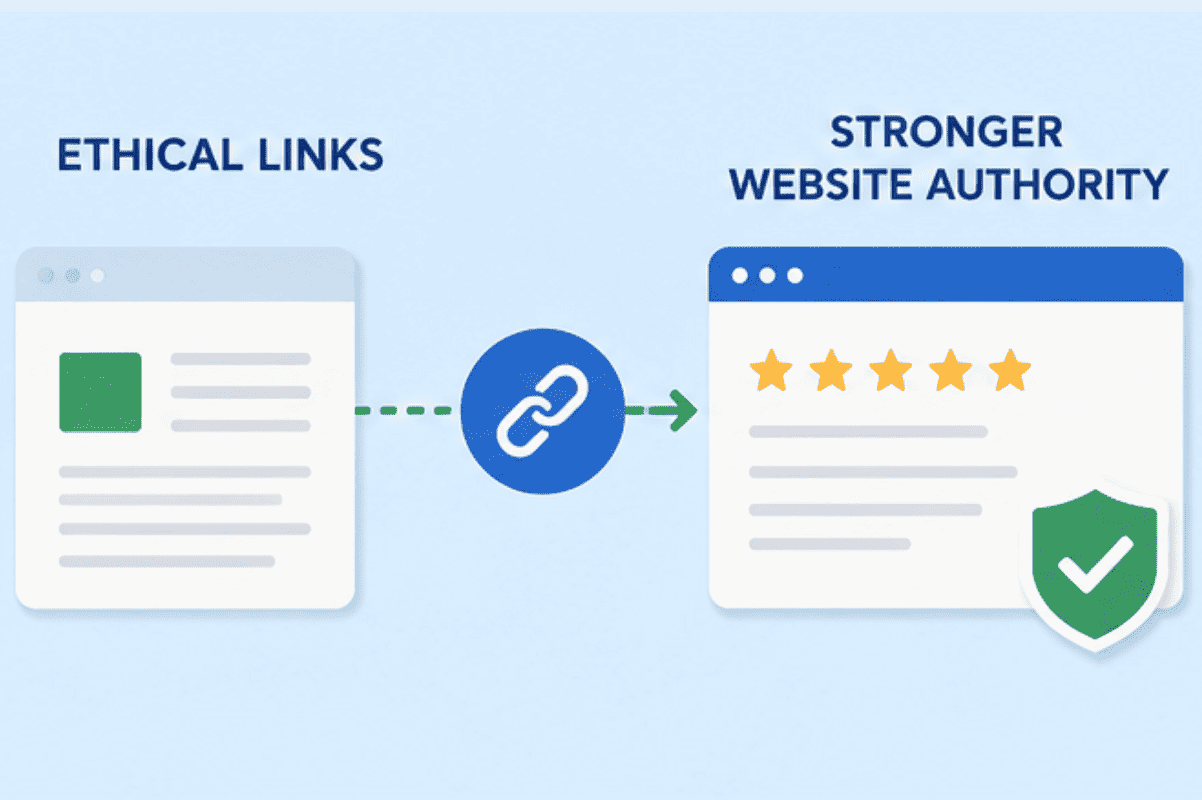
For businesses competing online in 2026, backlinks still play an important role in improving visibility, building authority, and attracting qualified traffic. But the quality of those links matters far more than the quantity.
This guide explains 12 practical white hat link building tactics that can help websites grow safely while building long-term SEO strength.
What Is White Hat Link Building?
White hat link building refers to ethical SEO practices used to earn backlinks naturally from other websites. These methods follow search engine guidelines and focus on creating valuable content, improving online relationships, and becoming a trusted source in your industry.
A backlink is essentially a recommendation. When another website links to your page, it signals that your content provides useful information.
However, not every backlink has the same impact.
A link from a relevant, respected website can help strengthen your authority. A link from an unrelated or spammy website may provide little value and could create SEO risks.
The goal of white hat link building is simple:
Create something worth linking to, then build genuine opportunities for others to discover it.
Why White Hat Link Building Matters in 2026
SEO continues to evolve, but one principle remains consistent: search engines want to show users the most trustworthy and helpful results.
Ethical link building helps businesses by:
- Increasing website authority
- Improving search visibility
- Driving referral traffic
- Building brand credibility
- Creating long-term SEO value3
Many websites fail with link building because they focus only on getting links. Successful campaigns focus on earning the right links.
12 White Hat Link Building Tactics That Actually Work
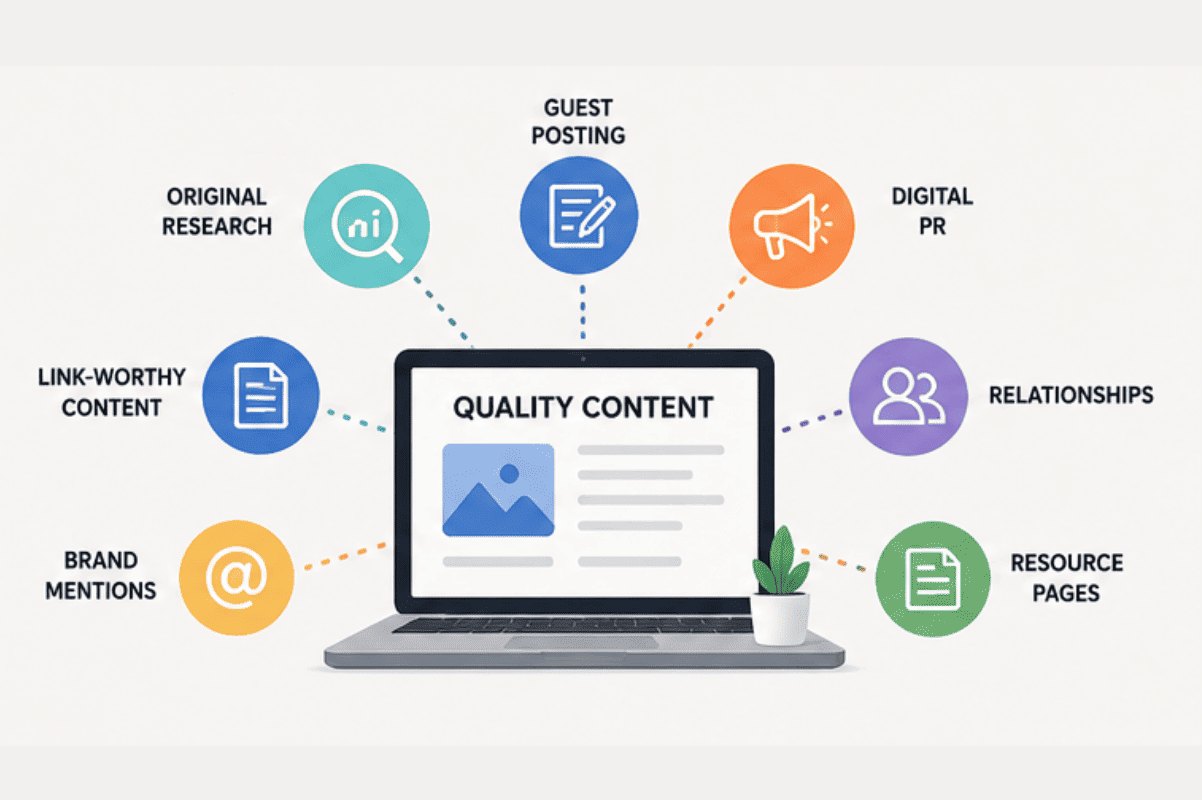
Create Link-Worthy Content
The foundation of effective link building is valuable content.
Other websites are more likely to link to resources that help their audience. This can include:
- Detailed guides
- Industry research
- Original insights
- Tutorials
- Checklists
- Tools and templates
- Expert roundups
For example, a marketing agency might create a complete SEO checklist for small businesses. A business blog, consultant, or educational website may naturally reference that resource.
Great content gives people a reason to link.
Publish Original Research and Data
Original information is highly valuable because websites cannot find it anywhere else.
Examples include:
- Surveys
- Industry reports
- Customer insights
- Data analysis
- Market observations
When journalists, bloggers, and industry professionals need supporting information, they often link to the original source.
Even smaller businesses can create useful research by analyzing their own industry trends or customer experiences.
Use Digital PR Strategies
Digital PR combines public relations with SEO.
Instead of simply asking for links, businesses create stories that people want to share.
Examples:
- Expert commentary on industry news
- Company announcements
- Unique campaigns
- Helpful expert opinions
A successful digital PR approach can earn mentions from authoritative websites while increasing brand awareness.
Build Relationships With Industry Websites
Link building works better when it is relationship-driven.
Start by connecting with:
- Industry bloggers
- Business owners
- Publishers
- Community leaders
- Professional organizations
Engage with their content before asking for anything. Share useful information, participate in discussions, and create genuine connections.
Strong relationships often lead to natural collaboration opportunities.
Guest Posting on Relevant Websites
Guest posting can still be effective when done correctly.
The goal is not publishing articles everywhere. The goal is contributing valuable content to websites that are relevant to your audience.
Good guest posting practices include:
- Choosing relevant websites
- Writing high-quality content
- Avoiding spammy link placements
- Providing real value to readers
A useful guest article should help the audience first and support SEO second.
Create Helpful Resource Pages
Many websites maintain resource pages that recommend useful tools, guides, and references.
You can earn links by creating something worth including.
Examples:
- Industry guides
- Free tools
- Educational resources
- Comprehensive tutorials
After creating the resource, you can reach out to relevant websites and explain why it may help their audience.
Recover Unlinked Brand Mentions
Sometimes websites mention your business but do not link to your website.
These are missed opportunities.
You can monitor mentions of your:
- Brand name
- Products
- Services
- Key people
When you find a relevant mention, a polite outreach message can request that the mention becomes a clickable link.
This works because the website already knows your brand.
Improve Existing Content
Not every link-building opportunity requires creating something new.
Updating existing content can make it more valuable and more link-worthy.
Consider improving:
- Outdated information
- Weak explanations
- Missing examples
- Poor formatting
- Old statistics
Better content has a stronger chance of earning references from other websites.
Create Visual Assets
Visual content is highly shareable.
Examples include:
- Infographics
- Charts
- Diagrams
- Original illustrations
- Data visuals
When another website uses your visual, they may link back to your original page as the source.
The key is creating visuals that simplify information.
Participate in Industry Communities
Online communities can help build visibility and authority when approached correctly.
Examples include:
- Professional forums
- Industry groups
- Business communities
The mistake many businesses make is joining communities only to drop links.
Instead:
- Answer questions
- Share expertise
- Help others
- Contribute valuable information
Links often follow naturally when people recognize your expertise.
Use Broken Link Building
Broken link building involves finding outdated links on relevant websites and suggesting your content as a replacement.
The process:
- Find resource pages in your industry
- Identify broken links
- Create or identify useful replacement content
- Contact the website owner
This strategy helps both sides: you earn a backlink, and the website improves its user experience.
Work With Ethical Link Building Partners
Building quality backlinks takes time, research, and consistent effort.
Some businesses choose to work with experienced link building providers to support their SEO strategy.
The important thing is choosing a partner that focuses on:
- Relevant websites
- Quality content
- Natural placements
- Transparent processes
Avoid providers promising thousands of backlinks overnight. Sustainable SEO is built through quality, not shortcuts.
Common White Hat Link Building Mistakes to Avoid
Even ethical strategies can fail when done poorly.
Avoid these mistakes:
Focusing Only on Quantity
A smaller number of relevant backlinks can be more valuable than a large number of unrelated links.
Using Generic Outreach
Website owners receive many requests. Personal, relevant outreach performs better.
Ignoring Content Quality
A backlink campaign cannot fix weak content. Your website must provide real value.
Chasing Quick Results
SEO is a long-term investment. Strong authority takes time to build.
Best Practices for Successful Link Building
To get better results:
- Create content people genuinely want to reference
- Target websites related to your industry
- Track backlink quality, not just numbers
- Build relationships consistently
- Keep improving your website experience
The strongest links usually come from becoming a trusted resource.
How BuyBacklinks.ca Supports Ethical SEO Growth
For businesses looking to strengthen their online presence, working with an experienced SEO partner can make the process more efficient.
BuyBacklinks.ca helps businesses explore backlink opportunities while focusing on quality-focused strategies that support sustainable SEO growth.
A strong link-building campaign is not about shortcuts. It is about building authority, trust, and visibility over time.
White hat link building remains one of the most reliable ways to improve SEO performance in 2026. The best strategies focus on creating valuable resources, earning genuine mentions, and building connections within your industry.
Avoid risky shortcuts and focus on links that provide real value.
If you want to strengthen your website’s authority with a quality-focused approach, BuyBacklinks.ca can help you explore ethical link-building solutions designed for long-term growth.
What is the difference between white hat and black hat link building?
White hat link building uses ethical methods that follow search engine guidelines, such as creating valuable content and earning relevant backlinks. Black hat methods attempt to manipulate rankings through risky practices like spam links or automated schemes.
How long does white hat link building take to work?
Results vary depending on competition, website authority, content quality, and industry. Ethical link building is a long-term strategy that typically builds momentum over time.
Are backlinks still important for SEO in 2026?
Yes, backlinks can still contribute to SEO success when they come from relevant and trustworthy websites. Quality and relevance matter more than the number of links.
What makes a backlink high quality?
A high-quality backlink usually comes from a relevant website with genuine authority, useful content, and a natural reason for linking to your page.
Can I build backlinks without creating new content?
Yes. You can use strategies such as updating existing content, earning unlinked mentions, building relationships, and fixing broken links. However, valuable content often creates more opportunities.
