
Anchor text may seem like a small part of SEO, but it has a significant impact on how search engines and users understand a webpage. Whether you’re building internal links or earning backlinks from other websites, choosing the right anchor text helps create a better user experience while strengthening your SEO strategy.
When used naturally, SEO anchor text provides context, improves website navigation, and signals the relevance of the linked page. However, over-optimizing anchor text or using repetitive keywords can do more harm than good.
In this guide, you’ll learn what SEO anchor text is, the different types of anchor text, best practices for optimization, and real examples you can apply to your own website.
What Is SEO Anchor Text?
SEO anchor text is the clickable text in a hyperlink that directs users to another page or website. It tells both readers and search engines what they can expect after clicking the link.
For example, instead of writing:
Click here
A more descriptive anchor text would be:
Learn more about white hat link building.
This gives users a clear idea of where the link leads and helps search engines understand the destination page.
Why Anchor Text Matters for SEO
Anchor text plays an important role in both usability and search engine optimization.
Benefits include:
- Helps search engines understand page topics
- Improves website navigation
- Supports internal linking strategies
- Increases user trust
- Encourages higher click-through rates
Well-written anchor text creates a better experience for visitors while reinforcing the relevance of linked content.
Types of SEO Anchor Text
Understanding the different anchor text types helps create a natural backlink profile.
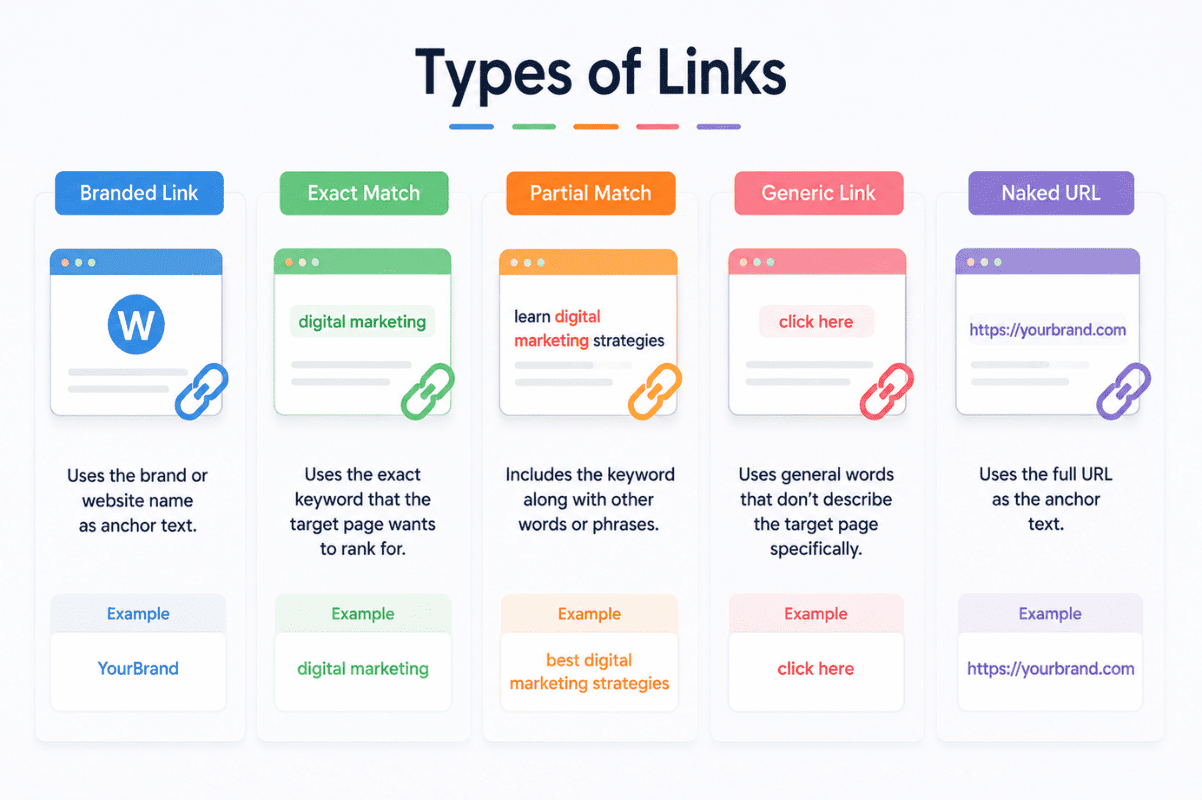
Exact Match
The anchor text exactly matches the target keyword.
Example:
SEO anchor text
Use exact-match anchors sparingly to avoid appearing manipulative.
Partial Match
Includes part of the target keyword along with additional words.
Example:
best practices for SEO anchor text
This is generally safer and feels more natural.
Branded Anchor
Uses your business or website name.
Example:
Branded anchors help strengthen brand recognition while maintaining a natural link profile.
Generic Anchor
Common phrases such as:
- Learn more
- Read this guide
- Visit the website
These are acceptable occasionally but shouldn’t dominate your linking strategy.
Naked URL
The full website address is used as the anchor.
Example:
These often appear in citations or references.
SEO Anchor Text Best Practices
Write Naturally
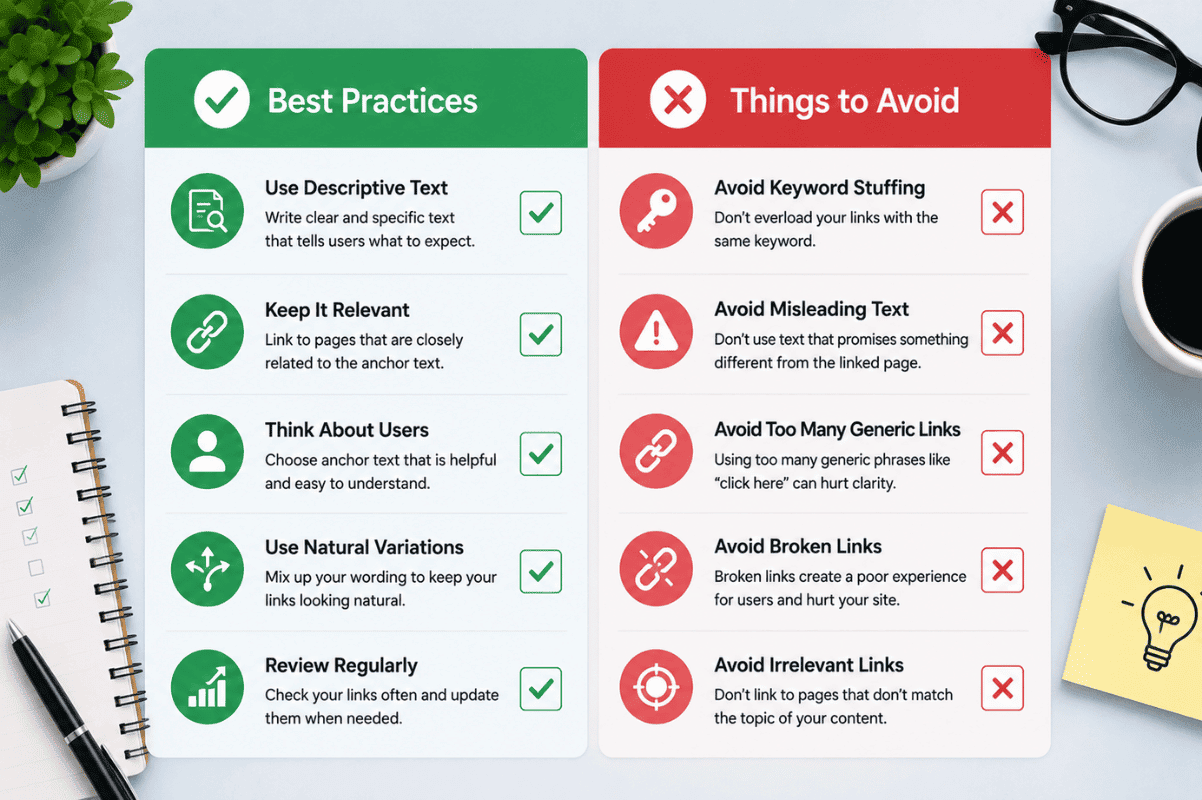
Your anchor text should fit naturally into the sentence. Avoid forcing keywords where they don’t belong.
Instead of:
“Our SEO anchor text SEO anchor text guide explains everything.”
Write:
“This guide explains how to optimize SEO anchor text for better rankings.”
Natural writing improves readability and user trust.
Be Descriptive
Readers should understand where the link leads before clicking.
Good example:
Complete guide to guest posting
Poor example:
Click here
Specific anchors improve both usability and SEO.
Avoid Keyword Stuffing
Using the same keyword repeatedly across every backlink can appear unnatural.
Instead, vary your anchor text with:
- Branded anchors
- Partial-match phrases
- Natural language
- Related keywords
A diverse anchor profile looks more authentic.
Prioritize User Experience
Always ask yourself:
“Does this anchor help the reader?”
If the answer is yes, you’re likely on the right track.
Search engines increasingly reward websites that prioritize users over algorithms.
Real Examples of Good Anchor Text
Here are a few examples of effective anchor text.
| Poor Anchor Text | Better Anchor Text |
| Click here | Learn how white hat link building works |
| Read more | SEO backlink optimization guide |
| This page | Internal linking best practices |
| Visit site | Explore our guest posting services |
| More info | Complete technical SEO checklist |
The better examples provide context and encourage users to click confidently.
Common Anchor Text Mistakes
Avoid these common SEO mistakes.
Overusing Exact-Match Keywords
Repeating the same keyword across many backlinks may appear manipulative.
Using Generic Links Everywhere
Phrases like “click here” provide little context.
Linking Irrelevant Pages
Anchor text should accurately describe the destination page.
Ignoring Internal Links
Many websites focus only on backlinks while overlooking internal linking opportunities.
Strong internal linking improves both SEO and user navigation.
How Internal Links Benefit from Optimized Anchor Text
Anchor text isn’t only for backlinks.
Internal links help search engines understand your website structure while guiding visitors toward related content.
For example, if you have articles about:
- White hat link building
- Guest posting
- Resource page link building
- HARO outreach
You can naturally connect them using descriptive anchor text.
This improves topical relevance and keeps users engaged longer.
How BuyBacklinks.ca Supports Ethical Link Building
An effective SEO strategy goes beyond earning backlinks. It also includes thoughtful anchor text optimization that creates natural, relevant, and user-friendly links.
At BuyBacklinks.ca, ethical link-building practices focus on relevance, quality, and long-term SEO success rather than keyword manipulation or spammy tactics.
Building a balanced anchor text profile helps strengthen authority while supporting sustainable search visibility.
SEO anchor text remains a fundamental part of successful search engine optimization. When written naturally and used strategically, anchor text helps search engines understand your content while making navigation easier for visitors.
Focus on clarity, relevance, and variety rather than chasing exact-match keywords. By combining descriptive internal links with high-quality backlinks, you’ll build a stronger website that benefits both users and search engines.
If you’re looking to strengthen your backlink profile with ethical SEO practices, BuyBacklinks.ca can help you build a long-term strategy focused on quality and sustainable growth.
FAQ Section
What is SEO anchor text?
SEO anchor text is the clickable text in a hyperlink that describes the content of the linked page for users and search engines.
Does anchor text still matter for SEO?
Yes. Relevant and descriptive anchor text helps search engines understand page context and improves user experience.
How often should I use exact-match anchor text?
Use exact-match anchor text sparingly. A natural mix of branded, partial-match, and descriptive anchors is generally considered a healthier approach.
What is the best anchor text for internal links?
The best internal anchor text clearly describes the destination page and fits naturally within the surrounding content.
Can poor anchor text hurt SEO?
Yes. Keyword stuffing, irrelevant anchors, or excessive use of generic phrases can reduce usability and may weaken your overall SEO strategy.
