
SEO Monitoring: What to Watch Weekly, Monthly, and Quarterly

SEO can change quietly. A page may lose rankings without an obvious warning, organic traffic can decline while other channels remain strong, or a technical issue can prevent search engines from properly accessing important pages. That is why SEO monitoring matters. Instead of checking your website only when rankings drop, regular monitoring gives you a clearer picture of what is working, what is changing, and where action may be needed. The key, however, is knowing what to monitor and how often to check it. Some SEO metrics deserve weekly attention. Others are more useful when reviewed monthly or quarterly. Looking at everything every day can create unnecessary noise and make it harder to spot meaningful trends. This guide explains a practical SEO monitoring routine, including rankings, organic traffic, technical health, backlinks, conversions, and site audits. What Is SEO Monitoring? SEO monitoring is the ongoing process of tracking a website’s search performance and identifying changes that could affect its visibility, traffic, or ability to attract visitors from search engines. It can include monitoring: Keyword rankings Organic traffic Click-through rates Indexed pages Technical SEO issues Backlinks and referring domains Page performance Organic conversions Competitor movements Content performance The goal is not simply to collect numbers. The goal is to understand why those numbers are changing and decide whether action is necessary. For example, a small ranking fluctuation may not require any response. A steady decline across several important keywords, combined with falling organic traffic, deserves a closer investigation. SEO Monitoring: What to Watch Weekly A weekly check should be relatively quick. You are looking for unusual changes, emerging problems, and early warning signs. 1. Keyword Rankings Check your most important target keywords each week. You do not need to track hundreds of keywords manually. Focus on terms that are closely connected to your products, services, important landing pages, and business goals. Look for: Significant ranking drops Important pages moving down the results New keywords gaining visibility Keywords entering the top 10 Unexpected ranking changes across several pages Do not panic over a single position change. Search rankings naturally fluctuate. Instead, look for patterns that continue over time. F 2. Organic Traffic Review organic traffic in your analytics platform and compare it with a previous period. Ask questions such as: Did organic sessions increase or decrease? Which landing pages changed the most? Did traffic drop across the entire website or only specific pages? Are important service or product pages still attracting visitors? Is branded traffic behaving differently from non-branded traffic? A traffic decline does not automatically mean your SEO strategy has failed. Seasonality, search demand, algorithm changes, competition, and technical problems can all affect performance. 3. Search Performance Your search performance data can reveal changes that traffic alone does not explain. Pay attention to impressions, clicks, click-through rate, and average search position. For example, if impressions are increasing but clicks are not, your pages may be appearing in search results without attracting enough users. That could indicate an opportunity to improve titles and meta descriptions. 4. Technical Warnings A quick weekly technical check can help catch problems before they become larger issues. Look for obvious warnings involving: Crawling Indexing Broken important pages Server errors Unexpected redirects Security problems Major page-speed issues You do not necessarily need a complete site audit every week. A quick review is often enough to identify whether something unusual needs investigation. What to Review Monthly Monthly SEO monitoring should go deeper. This is where you move beyond short-term fluctuations and begin analysing trends. 1. Run a Website Audit A monthly website audit can help identify technical and on-page issues that may be difficult to notice during routine checks. Depending on the size and complexity of your website, an audit may review: Broken links Redirect chains Missing or duplicated title tags Meta description issues Heading structure Canonical tags Indexing problems Duplicate content Internal linking XML sitemap issues Mobile usability Page performance The purpose of a site audit is not to create a giant list of errors and fix everything blindly. Prioritize problems based on their potential impact. An issue affecting an important revenue-generating page is generally more urgent than a minor warning on an unimportant page. 2. Analyse Organic Landing Pages Review which pages are bringing in organic visitors and whether their performance is changing. A page that attracts significant search traffic is an asset worth monitoring closely. Look for pages that: Are gaining traffic Are losing traffic Have strong impressions but weak clicks Rank well but generate few conversions Have declining engagement Are competing with another page for similar search terms This analysis can reveal content opportunities that keyword rankings alone may miss. 3. Review Backlinks Backlinks remain an important part of SEO, but quality matters more than simply collecting large numbers of links. Each month, review your backlink profile for changes in referring domains and links pointing to important pages. Look for: New relevant backlinks Lost valuable backlinks Changes in referring domains Links pointing to outdated URLs Unusual or suspicious patterns If your SEO strategy includes link building, monitoring acquired links also helps you understand whether your efforts are building a diverse and relevant backlink profile. 4. Check Content Performance SEO monitoring should not stop at technical data. Review your published content and identify articles or landing pages that are gaining traction. Then look at content that has remained stagnant or lost visibility. Ask: Does the page still match search intent? Is the information current? Does it answer the reader’s main questions? Could examples or explanations be improved? Are there stronger competitors now? Are there internal links pointing to the page? Updating useful content can sometimes be more valuable than constantly publishing something new. What to Review Quarterly Quarterly reviews should focus on strategy rather than individual fluctuations. Three months gives you enough data to identify broader trends and make more informed decisions. 1. Compare SEO Growth Over Time Compare your current performance with the previous quarter and, where useful, the same period from the previous year.
How Does SEO Work? A Simple, Real-World Explanation for Marketers

Search engines are often the first place people go when they need an answer, product, service, or solution. But with millions of pages competing for attention, simply publishing a website does not guarantee that people will find it.This is where SEO comes in.If you have ever wondered what does SEO mean, the simple answer is Search Engine Optimization. It is the process of improving a website and its content so search engines can understand it and users can discover it through relevant search queries.But understanding the definition is only the beginning. The more important question is: how does SEO work in practice?SEO is not a single trick or a button you switch on. It involves content, website structure, technical performance, links, search intent, and user experience working together. This guide explains how those pieces fit together in simple, real-world terms. What Does SEO Mean? SEO stands for Search Engine Optimization.When someone searches Google for a phrase such as “best accounting software for small businesses,” Google has to decide which pages are most useful for that query.SEO helps your website communicate its relevance and value to search engines. It can involve: Creating useful content Optimizing page titles and headings Improving website speed Making pages mobile-friendly Building relevant backlinks Improving internal links Fixing technical problems Matching content with search intent The goal is not simply to get traffic. The goal is to attract the right traffic from people who are genuinely interested in what your business offers. How Does SEO Work? So, how does SEO work when someone enters a search query? Think of Google as trying to match a question with the most useful available answer. Several processes happen behind the scenes. 1. Crawling Search engines use automated systems, commonly called crawlers or bots, to discover webpages. They can find pages through links, sitemaps, and other signals. If important pages cannot be crawled properly, search engines may have difficulty discovering or understanding them. 2. Indexing After discovering a page, Google can analyse and store information about it in its index. Indexing does not automatically mean that a page will rank highly. It simply means the page is available to potentially appear in search results. 3. Ranking When someone performs a search, Google’s systems evaluate relevant pages and determine which results should appear. The exact systems are complex and constantly evolving, but relevance, content quality, website signals, links, usability, and many other factors can influence visibility. This is why SEO requires a complete strategy rather than one isolated optimisation. SEO Starts With Search Intent One of the biggest mistakes marketers make is focusing entirely on keywords. A keyword tells you what someone typed, but search intent helps explain what they actually want. For example, consider these searches: “What is SEO?” The person probably wants an explanation. “Best SEO agency for small business” The person may be comparing providers. “Buy SEO services” The person is closer to taking action. Your content should match the reason behind the search. If someone wants an educational guide and you give them a sales page, the page may not satisfy their needs. Likewise, if someone is ready to purchase and you only provide a general definition, you may miss the opportunity. The Role of Content in SEO Content gives search engines information about your expertise and helps users find answers. Good SEO content should: Answer the main question Cover important related topics Be easy to understand Provide useful examples Use relevant keywords naturally Demonstrate experience and knowledge Keyword stuffing is not a substitute for quality. For example, repeating “SEO services” dozens of times throughout an article does not make the page more valuable. A better approach is to explain the subject thoroughly and use relevant terminology naturally. Technical SEO Makes Content Easier to Discover You can publish an excellent article, but technical problems can still make it difficult for search engines and users to access. Technical SEO can include: Website speed Mobile usability Crawlability Indexing XML sitemaps Canonical URLs HTTPS Structured data Broken links Website architecture Think of technical SEO as the foundation of a house. Your content may be excellent, but the foundation still needs to be strong. Why Backlinks Matter Another important part of understanding how does SEO work is understanding links.A backlink is a link from another website to yours. Search engines can use links as signals when evaluating the authority and relevance of webpages. However, not every backlink has the same value.A relevant link from a trustworthy website can be more meaningful than a large collection of unrelated or low-quality links.That is why sustainable link building focuses on relevance, quality, and genuine value instead of simply trying to increase the number of backlinks. SEO and Digital Marketing Work Together SEO should not operate separately from your broader marketing strategy. SEO and digital marketing can complement each other through content marketing, social media, paid advertising, email marketing, branding, and conversion optimisation. For example, a business might: Publish a helpful SEO article. Optimise it for relevant searches. Promote it through social media. Earn backlinks from industry websites. Use analytics to understand visitor behaviour. Improve the page based on performance. Convert qualified visitors into leads or customers. Each channel can support the others. Paid advertising can generate immediate visibility, while SEO can build organic visibility over time. Content can attract visitors, while conversion optimisation helps turn those visitors into customers. How to Measure SEO Performance Ranking position is useful, but it should not be your only measurement. Marketers should also monitor: Organic traffic Search impressions Click-through rate Keyword visibility Conversions Leads Revenue Indexed pages Backlink growth The most important metric depends on the business objective. For an ecommerce website, revenue and transactions may matter most. For a service business, qualified leads and phone calls may be more valuable. SEO becomes much more effective when you connect search visibility to actual business outcomes. Common SEO Mistakes Marketers Should Avoid SEO mistakes can waste time and resources. Some common problems include: Targeting keywords without understanding intent Publishing
Best Local SEO Strategies for Multi-Location and Small Business Sites

Getting found by local customers is not simply about adding a city name to your website. Google needs clear signals about what your business offers, where you operate, and which locations you serve. That becomes even more important when you manage multiple business locations. A single location may only need a well-optimised Google Business Profile and a strong local landing page. A multi-location business, however, needs a more organised approach to location pages, business information, reviews, internal links, and local content. The right local SEO strategy helps businesses appear in relevant local searches without creating duplicate pages or confusing search engines. Whether you run one shop, a service-area business, or dozens of locations, these practical strategies can help strengthen your local visibility. Why Local SEO Matters for Small and Multi-Location Businesses Local search often connects businesses with people who are already looking for a product or service nearby. Someone searching for a dentist, contractor, restaurant, accountant, or repair service usually wants a business they can contact or visit without travelling far. Effective local SEO optimization can help your business: Increase visibility in local Google searches Improve Google Maps presence Attract relevant website visitors Generate more calls and enquiries Build trust with local customers Strengthen visibility across individual service areas The goal is not simply to rank for every possible location. The goal is to appear when your business is genuinely relevant to a local search. 1. Optimise Your Google Business Profile For businesses with physical locations, Google Business Profile should be a central part of your local SEO efforts. Each eligible location should have accurate business information, including: Business name Address Phone number Website Opening hours Business category Services Photos Multi-location businesses should avoid treating every profile as an exact copy of another. Each location should accurately represent the business at that specific address. Keep opening hours, services, and contact information updated. Even a small change, such as a holiday schedule, should be reflected when necessary. Choose the Right Primary Category Your primary business category helps Google understand what your business does. Choose the category that most accurately describes the main service or purpose of the location. Add relevant secondary categories where appropriate, but avoid selecting unrelated categories simply to target additional searches. 2. Create Unique Location Pages One of the most important local SEO best practices for multi-location websites is creating useful location pages. Each location should have its own URL when there is enough unique information to provide genuine value. A strong location page can include: Full address and contact details Opening hours Services available at that location Local photographs Directions or nearby landmarks Customer reviews or testimonials Frequently asked questions Relevant local information Avoid creating dozens of pages where only the city name changes. For example, replacing “Toronto” with “Mississauga” across the same paragraph does not create useful local content. Each page should provide information that actually helps customers in that area. 3. Keep NAP Information Consistent NAP stands for Name, Address, and Phone number. Your business information should be consistent across your website, Google Business Profile, directories, social profiles, and other relevant platforms. For multi-location businesses, consistency becomes more challenging because every location has different contact information. Create a central record of each location’s: Official business name Address Phone number URL Hours Services Business category This makes it easier to identify incorrect information and maintain accurate listings. 4. Build a Clear Website Structure Your website architecture should make it easy for users and search engines to understand your locations. For example: example.com/locations/ Then individual location pages could follow: example.com/locations/toronto/ example.com/locations/mississauga/ example.com/locations/brampton/ The exact structure depends on the business, but the principle remains the same. Location pages should be logically organised and easy to reach through internal links. Avoid burying important location pages several clicks deep within the website. 5. Target Local Search Intent Naturally Keyword research remains useful, but local SEO should focus on search intent rather than repeating city names. Instead of forcing a keyword into every paragraph, create content that answers questions local customers actually have. For example, a roofing company might target searches related to: Roof repair in a specific city Emergency roofing services nearby Residential roof replacement Local roofing inspections Use relevant terms naturally in page titles, headings, body copy, URLs, and metadata. Good local SEO optimization makes a page useful for local customers first. 6. Build Local Citations Carefully Local citations are online references to your business information. These can come from: Local directories Industry websites Business associations Chambers of Commerce Relevant community websites Trusted review platforms Quality matters more than submitting your business to every directory available. For small businesses, focus on reputable platforms relevant to your industry and location. For multi-location businesses, ensure each listing points to the correct location page and contains accurate information. 7. Earn Relevant Local Backlinks Backlinks can strengthen your website’s authority and support your broader local SEO strategy. Look for legitimate opportunities to earn links from relevant websites, such as: Local publications Community organisations Industry associations Local business partners Sponsorships Community events A local backlink can be particularly useful when it comes from a trustworthy website that is genuinely connected to your business or community. Avoid buying large numbers of low-quality links simply to increase backlink counts. Relevance, quality, and credibility matter. 8. Build a Review Strategy Reviews influence how potential customers perceive your business and contribute to your overall local presence. Encourage satisfied customers to leave honest reviews on platforms where your business is listed. For multi-location businesses, monitor reviews separately for each location. Respond professionally to both positive and negative feedback. A thoughtful response can show potential customers that your business pays attention to customer experiences. Never create fake reviews or offer misleading incentives in exchange for positive feedback. 9. Create Locally Relevant Content A local business blog should not exist simply to publish keywords. Create content that answers questions from your target customers. For example: Seasonal guides for your service area Local buying guides Area-specific maintenance tips Answers to common
Local Search Optimization: How to Rank Higher in Local Google Results

When people search for a nearby service, they usually intend to take action. Whether they’re looking for a plumber, dentist, restaurant, or marketing agency, they often choose a business that appears near the top of Google’s local results. If your business isn’t visible there, you’re missing valuable opportunities to attract customers who are ready to buy. That’s why local search optimization has become an essential part of digital marketing. It helps businesses improve their visibility in location-based searches, making it easier for nearby customers to discover and contact them. If you’ve ever wondered how to rank higher on Google, the answer goes beyond adding a few keywords to your website. Google’s local algorithm considers several factors, including relevance, distance, prominence, website quality, and the accuracy of your business information. This guide explains the fundamentals of local search engine optimization and provides practical steps you can take to improve your local rankings in 2026. What Is Local Search Optimization? Local search optimization is the process of improving your online presence so your business appears more prominently in Google’s local search results, including Google Maps and the Local Pack. Unlike traditional SEO, which targets users across a wider geographic area, local SEO focuses on attracting customers within a specific city, region, or service area. For example, when someone searches for: “coffee shop near me” “SEO agency in Toronto” “emergency plumber Mississauga” Google prioritises businesses that are most relevant to that location and search intent. A strong local search engine optimization strategy helps your business appear in these high-intent searches. Why Local SEO Matters Most local searches are made by people who are actively looking for a nearby product or service. That means local traffic is often more valuable than general website traffic because it comes from users who are closer to making a purchasing decision. Effective local SEO can help you: Increase local visibility Drive more qualified website traffic Generate phone calls and enquiries Improve foot traffic to physical locations Build trust through reviews and accurate business information Even businesses that serve customers at their location can benefit from appearing prominently in Google Maps and local search results. 1. Optimise Your Google Business Profile Your Google Business Profile is one of the most important ranking factors for local SEO. Make sure your profile includes: Accurate business name Correct address Phone number Website URL Business hours Primary and secondary categories High-quality photos Business description Services and products Keep your profile updated whenever your business information changes. A complete and accurate profile helps Google understand your business and improves your chances of appearing in local search results. 2. Keep Your Business Information Consistent Your Name, Address, and Phone Number (NAP) should be consistent everywhere your business appears online. Check that your information matches across: Your website Google Business Profile Business directories Social media profiles Industry listings Inconsistent information can confuse both customers and search engines, making it more difficult to establish trust. 3. Optimise Your Website for Local Keywords Your website should naturally include location-specific keywords that match the services you provide. Instead of targeting only broad terms, consider phrases such as: SEO agency in Vancouver Accountant in Calgary Roofing services in Ottawa Include local keywords in: Page titles Meta descriptions Headings Body content Image alt text URLs where appropriate Avoid keyword stuffing. Write naturally for readers first. 4. Create Dedicated Location Pages If your business serves multiple cities or regions, create a dedicated page for each location. Each page should contain: Unique content Local service information Relevant customer testimonials Area-specific FAQs Contact details Driving directions where appropriate Avoid copying the same content across multiple pages with only the city name changed. Unique location pages provide a much better experience for both users and search engines. 5. Build Strong Local Citations A citation is any online mention of your business information. Common citation sources include: Local business directories Industry-specific directories Chamber of Commerce websites Local business associations Trusted review platforms Focus on quality and consistency rather than submitting your business to hundreds of low-quality directories. 6. Encourage Customer Reviews Reviews are one of the strongest trust signals in local SEO. Encourage satisfied customers to leave honest reviews on your Google Business Profile. When responding to reviews: Thank customers for positive feedback. Respond professionally to negative reviews. Address concerns respectfully. Never purchase fake reviews. Authentic customer feedback helps build credibility and may improve your local visibility over time. 7. Build Local Backlinks Backlinks remain one of Google’s strongest ranking signals, and local backlinks can have an even greater impact on local search optimization. Look for opportunities to earn links from reputable local websites, such as: Local news publications Community organisations Chambers of Commerce Industry associations Local business partners Sponsorships and events Quality matters far more than quantity. A few relevant local backlinks are often more valuable than dozens of low-quality links. 8. Optimise for Mobile Users Most local searches happen on smartphones. People searching for nearby businesses expect a fast, mobile-friendly experience. Review your website to ensure it: Loads quickly Uses a responsive design Has readable text without zooming Includes easy-to-tap buttons Displays contact information clearly Offers simple navigation A poor mobile experience can lead to higher bounce rates and lost customers. 9. Improve Your On-Page SEO Good on-page optimisation helps search engines understand your content and improves your chances of ranking. Before publishing or updating a page, check that you have: A unique title tag A compelling meta description One clear H1 heading Logical H2 and H3 headings Relevant internal links Optimised images with descriptive alt text Short, descriptive URLs Strong on-page SEO supports both traditional rankings and local search visibility. 10. Create Helpful Local Content Publishing useful local content is an effective way to demonstrate expertise and attract nearby customers. Consider writing about: Local events Community news Area-specific guides Frequently asked questions Seasonal tips Customer success stories For example, a landscaping company could publish articles about spring lawn care in its service area, while a restaurant might share guides to local food
The Only SEO Checklist You Need for Blog Posts Before You Hit Publish

Publishing a blog post without reviewing its SEO is like launching a new product without checking whether the doors are open. You may have written valuable content, but if search engines struggle to understand it or users find it difficult to read, your article may never reach its full potential. A thorough SEO checklist helps you catch common issues before your content goes live. From keyword placement and internal links to image optimisation and metadata, a few extra minutes can make a significant difference in your organic performance. Whether you’re a business owner, content marketer, blogger, or manage an ecommerce SEO checklist for an online store, following a structured publishing process ensures every article has the best possible chance of ranking. In this guide, you’ll learn the essential checks to complete before clicking the Publish button. Why Every Blog Needs an SEO Checklist Creating high-quality content is only one part of search engine optimisation. Search engines also evaluate how well your content is organised, how easily users can navigate it, and whether it provides a good overall experience. A consistent on page SEO checklist helps you: Improve search visibility Increase click-through rates Enhance user experience Reduce optimisation mistakes Maintain consistency across your website Support long-term organic growth Instead of relying on memory, a checklist ensures every important SEO task is completed before publishing. 1. Confirm Your Target Keyword Every blog post should focus on one primary keyword supported by a few closely related phrases. Before publishing, ask yourself: Does the article target one clear search intent? Is the primary keyword naturally included? Have related keywords been used where appropriate? For this article, the primary keyword is SEO checklist, while related terms include on page SEO checklist and ecommerce SEO checklist. Avoid forcing keywords into every paragraph. Modern SEO rewards natural writing that answers the reader’s questions. 2. Write a Compelling SEO Title Your title is often the first thing users see in search results. An effective SEO title should: Include the primary keyword Stay under 60 characters where possible Clearly communicate the article’s value Encourage clicks without sounding misleading A strong title improves both relevance and click-through rate. 3. Optimise the Meta Description Although meta descriptions aren’t a direct ranking factor, they can influence whether users choose your page over another result. A good meta description should: Be between 140 and 155 characters Include the primary keyword naturally Explain what readers will learn Encourage clicks with clear, actionable language Think of it as a short advertisement for your content. 4. Check Your URL Slug Your URL should be clean, descriptive, and easy to understand. Instead of: yourwebsite.com/blog/post?id=12345 Use something like: yourwebsite.com/seo-checklist-before-publishing Best practices include: Keep URLs short. Use lowercase letters. Separate words with hyphens. Remove unnecessary dates or numbers. Simple URLs are easier for both users and search engines to understand. 5. Structure Your Headings Properly A well-organised article is easier to read and easier for search engines to understand. Use headings logically: One H1 for the article title H2s for major sections H3s only when additional organisation is needed Avoid skipping heading levels or using headings simply for styling purposes. Clear headings also help readers quickly find the information they’re looking for. 6. Review Keyword Placement Once your article is complete, verify that your primary keyword appears naturally in important locations, including: H1 Introduction At least one H2 Conclusion SEO title Meta description URL slug There’s no need to repeat the keyword excessively. Focus on readability first, and let keyword placement support the content rather than dominate it. Search engines are now much better at understanding context and related terms, so writing naturally is more effective than trying to hit a specific keyword density. 7. Improve Readability Even the most informative article can lose readers if it’s difficult to scan. Before publishing, review your content for: Short paragraphs Simple, direct language Bullet points where appropriate Clear transitions between sections Active voice instead of passive voice Remember, you’re writing for people first and search engines second. A positive reading experience often leads to longer time on page, lower bounce rates, and more engagement. 8. Optimise Images Before Publishing Images improve readability, but they should also support your SEO efforts. Before publishing, make sure every image: Uses a descriptive file name Includes relevant alt text Is compressed for faster loading Uses modern formats where possible, such as WebP Matches the content surrounding it Large image files can slow down your page, affecting both user experience and search performance. 9. Add Internal Links Internal links help search engines understand your website’s structure while guiding readers to related content. Link to relevant pages such as: Related blog articles Service pages Category pages Contact page Resource guides Choose descriptive anchor text instead of generic phrases like “Click here.” For example, if you mention link building, linking to a dedicated service page provides additional value to readers. 10. Include Trustworthy External Links Not every link should point to your own website. When appropriate, reference reputable sources that support your content, such as: Google Search Central Google Analytics documentation Schema.org Web.dev Industry research from recognised organisations External links help readers verify information and demonstrate that your content is based on reliable sources. 11. Check for Duplicate Content Before publishing, ensure your article offers original value. Avoid: Copying content from other websites Reusing large sections from older blog posts Creating multiple articles targeting the exact same keyword without a clear purpose If you’re updating an older article, improve it rather than creating a competing version. Unique, helpful content is far more valuable than publishing several similar articles. 12. Add a Clear Call to Action Every blog post should guide readers toward a logical next step. Depending on your goals, your call to action might encourage readers to: Read another article Contact your team Request a consultation Explore your services Subscribe to your newsletter Keep your CTA helpful and relevant rather than overly promotional. Does This Checklist Apply to eCommerce Websites? Absolutely. While product pages have unique
Technical SEO Checklist for 2026: A Step-by-Step Site Review
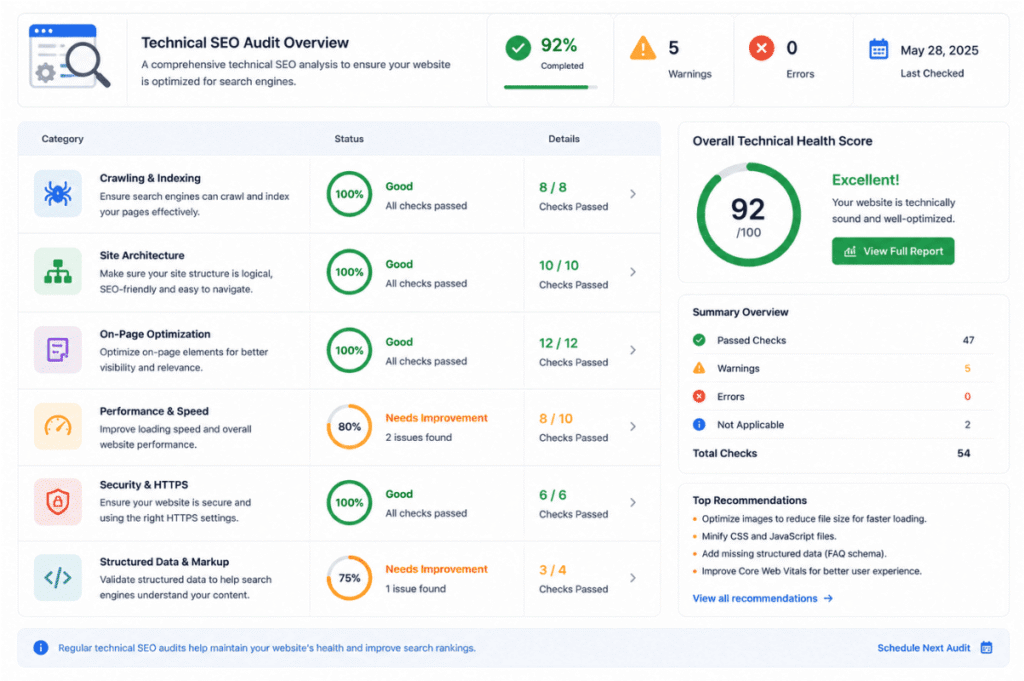
Search engine optimization has evolved significantly over the last few years. While high-quality content and authoritative backlinks remain essential, they won’t deliver their full potential if search engines struggle to crawl or understand your website. That’s why technical SEO continues to be one of the most important parts of a successful SEO strategy in 2026. Whether you’re managing a business website, an eCommerce store, or a growing blog, regular technical audits help uncover hidden issues that may be limiting your visibility in search results. From slow page speeds and broken links to indexing errors and poor mobile usability, even small technical problems can affect your rankings. The good news is that most technical SEO improvements don’t require rebuilding your website. A structured review can help you identify issues, prioritise fixes, and create a stronger foundation for long-term organic growth. This step-by-step tech SEO checklist walks you through the most important areas to review in 2026, helping ensure your website is accessible to search engines and provides an excellent experience for visitors. Why Technical SEO Matters in 2026 Google’s ranking systems have become increasingly sophisticated, but they still rely on being able to crawl, understand, and index your website correctly. If search engines encounter technical barriers, your pages may never reach their full ranking potential, regardless of how useful the content is. A strong technology SEO strategy helps you: Improve crawl efficiency Increase index coverage Reduce duplicate content Enhance user experience Improve Core Web Vitals Support stronger organic rankings Think of technical SEO as maintaining the foundation of a house. Even beautiful interiors cannot compensate for structural problems. Step 1: Check Crawlability Before anything else, verify that search engines can access your website. Review your robots.txt file to ensure you’re not accidentally blocking important pages or folders. While certain admin areas should remain restricted, product pages, service pages, blog posts, and category pages generally need to remain crawlable. Next, log into Google Search Console and review the Crawl Stats report. If Google frequently encounters errors or spends time crawling unnecessary pages, your crawl budget may be wasted. Also check for: Broken internal links Redirect loops Server errors DNS issues Excessive redirect chains Fixing crawl issues ensures search engines spend more time discovering valuable content instead of encountering obstacles. Step 2: Review Indexing Status Being crawled doesn’t guarantee that a page will appear in Google’s index. Open Google Search Console and review the Pages report. Pay close attention to pages labelled: Crawled – currently not indexed Discovered – currently not indexed Duplicate without user-selected canonical Alternate page with canonical tag Soft 404 These reports often highlight technical issues that prevent important pages from appearing in search results. If valuable pages aren’t indexed, investigate whether they’re blocked, duplicated, thin, or incorrectly canonicalised. Remember that not every page should be indexed. Thank-you pages, admin sections, internal search pages, and duplicate filters usually don’t belong in Google’s index. Step 3: Test Website Speed Page speed remains a critical ranking factor because it directly affects user experience. Visitors expect websites to load quickly. Slow pages increase bounce rates and reduce conversions. Use tools such as Google PageSpeed Insights or Lighthouse to identify opportunities for improvement. Common speed improvements include: Compressing images Using next-generation image formats Reducing unused CSS and JavaScript Enabling browser caching Improving server response times Using a Content Delivery Network (CDN) Rather than chasing perfect performance scores, focus on providing a fast, smooth experience for real users. Step 4: Evaluate Core Web Vitals Core Web Vitals continue to measure important aspects of page experience. The three primary metrics are: Largest Contentful Paint (LCP) Measures how quickly the main content loads. Interaction to Next Paint (INP) Measures how responsive your website feels when users interact with it. Cumulative Layout Shift (CLS) Measures unexpected layout movement while a page loads. Improving these metrics often results in a faster, more stable browsing experience, benefiting both users and search engines. Step 5: Confirm Mobile Friendliness Google primarily evaluates websites using mobile-first indexing. That means your mobile website should offer the same quality experience as your desktop version. Review every important page on a mobile device and check for: Responsive layouts Readable text Proper button spacing Fast loading times Easy navigation No horizontal scrolling A technically sound mobile experience supports stronger SEO performance while improving user satisfaction. Step 6: Review Your XML Sitemap An XML sitemap helps search engines discover the most important pages on your website. While Google can often find pages through internal links, a sitemap provides a clear roadmap and supports more efficient crawling. Your sitemap should: Include only indexable pages Exclude duplicate or redirected URLs Update automatically when new content is published Match your canonical URLs After making changes, submit your sitemap through Google Search Console to help search engines discover updates more quickly. Step 7: Audit Internal Linking Internal links are one of the simplest yet most effective technical SEO improvements. A strong internal linking structure helps search engines understand the relationship between pages and distributes authority across your website. During your audit, check for: Orphan pages with no internal links Broken internal links Generic anchor text such as “Click Here” Important pages that receive very few internal links Whenever possible, use descriptive anchor text that explains what users will find after clicking. Step 8: Check Canonical Tags Duplicate content can confuse search engines and dilute ranking signals. Canonical tags tell Google which version of a page should be treated as the primary version. Review your website to ensure: Every important page has a self-referencing canonical tag. Duplicate pages point to the correct canonical URL. Canonical tags don’t reference redirected or broken pages. Incorrect canonicalisation is a common issue after website migrations or CMS updates, so it’s worth checking regularly. Step 9: Validate Structured Data Structured data, also known as Schema markup, helps search engines better understand your content. Depending on your website, you may benefit from schema types such as: Article Product FAQ Organisation Local Business Breadcrumb Although structured data isn’t a
Technical SEO Explained: The Fixes That Improve Crawlability and Rankings
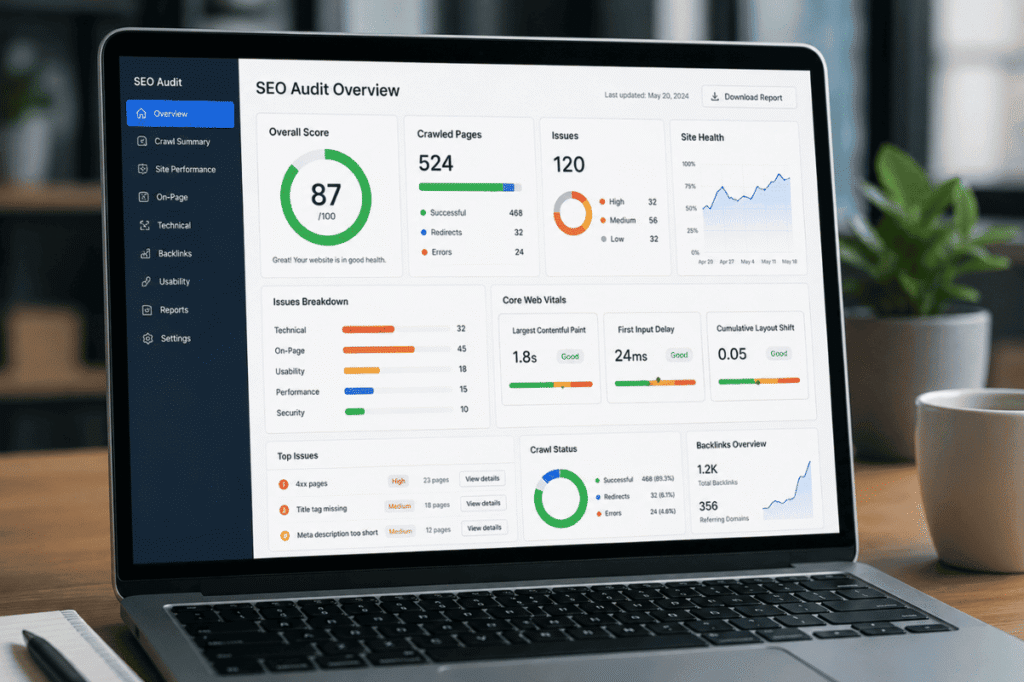
Search engine optimization isn’t just about writing great content or earning backlinks. Even the best content can struggle to rank if search engines can’t efficiently crawl, understand, and index your website. That’s where technical SEO comes in. Technical SEO focuses on optimizing the technical foundation of your website so search engines can access, interpret, and rank your pages more effectively. While it often sounds intimidating, most technical improvements are practical, measurable, and have long-term benefits for both search engines and visitors. In this guide, you’ll learn what technical SEO is, why it matters, the most important fixes to prioritize, and common mistakes that prevent websites from reaching their ranking potential. What Is Technical SEO? Technical SEO is the process of optimizing your website’s infrastructure so search engines can crawl, index, and understand your content efficiently. Unlike on-page SEO, which focuses on content and keywords, or off-page SEO, which focuses on authority and backlinks, tech SEO ensures the website itself isn’t creating barriers for search engines. A technically healthy website typically offers: Fast loading pages Secure HTTPS connections Mobile-friendly design Clear site architecture Proper indexing Structured data Minimal crawl errors Think of technical SEO as building strong foundations before decorating a house. Without a solid structure, everything built on top becomes less effective. Why Technical SEO Matters for Rankings Google wants to provide users with the best possible experience. If your website is difficult to crawl, slow to load, or filled with technical errors, search engines may not fully understand or trust your content. Good technology SEO helps by: Improving crawl efficiency Increasing indexation of important pages Reducing duplicate content issues Enhancing page experience Supporting better Core Web Vitals Helping search engines understand page relationships Technical improvements won’t automatically push a page to the top of Google, but they remove obstacles that may be limiting your site’s performance. How Search Engines Crawl Your Website Before understanding technical fixes, it helps to know how search engines work. The process generally follows three steps: Crawling Search engine bots discover pages by following links, sitemaps, and previous crawl data. Indexing Once a page is crawled, Google evaluates whether it should be stored in its index. Ranking Indexed pages compete for visibility based on hundreds of ranking signals, including relevance, authority, usability, and quality. If crawling or indexing fails, rankings become impossible regardless of content quality. Essential Technical SEO Fixes That Improve Crawlability 1. Build a Clear Website Structure A logical site structure helps both users and search engines. A well-organized website: Groups related topics together Uses descriptive URLs Minimizes unnecessary clicks Makes important pages easy to find Ideally, users and search engines should reach valuable pages within a few clicks from the homepage. 2. Improve Internal Linking Internal links guide crawlers throughout your website. Strong internal linking helps: Discover new pages Pass authority between pages Establish topic relevance Improve user navigation Avoid orphan pages that have no internal links pointing to them. 3. Submit an XML Sitemap An XML sitemap provides search engines with a roadmap of important pages. A sitemap should: Include canonical URLs Exclude unnecessary pages Update automatically when new content is published Although Google can often discover pages naturally, a sitemap makes the process more efficient. 4. Optimize Your Robots.txt File Your robots.txt file tells search engines which sections of your website should or shouldn’t be crawled. Common mistakes include: Blocking important pages Accidentally blocking CSS or JavaScript files Preventing search engines from accessing critical resources Always review robots.txt carefully after website updates. 5. Fix Crawl Errors Google Search Console reports crawl issues such as: 404 errors Server errors Redirect loops Blocked resources Regularly monitoring these reports helps ensure search engines continue accessing your content properly. 6. Improve Website Speed Page speed affects both user experience and crawling efficiency. Large images, excessive scripts, and poor hosting can slow a website significantly. Some practical improvements include: Compressing images Enabling browser caching Using modern image formats Reducing unnecessary plugins Minifying CSS and JavaScript Using a content delivery network (CDN) Faster websites often experience better engagement and lower bounce rates. 7. Optimize Core Web Vitals Core Web Vitals measure real-world user experience. The primary metrics include: Largest Contentful Paint (LCP) Interaction to Next Paint (INP) Cumulative Layout Shift (CLS) Improving these metrics helps create a smoother browsing experience while supporting your overall technical SEO strategy. 8. Make Your Website Mobile Friendly Google primarily uses mobile-first indexing. That means Google evaluates the mobile version of your website before the desktop version. Ensure: Responsive layouts Readable font sizes Proper button spacing Fast mobile loading Easy navigation Poor mobile usability can negatively affect both users and search visibility. 9. Secure Your Website with HTTPS HTTPS protects user data and builds trust. Modern browsers warn visitors when websites aren’t secure, which can reduce confidence and increase bounce rates. Most websites today should use HTTPS across every page. 10. Use Canonical Tags Correctly Duplicate content isn’t always harmful, but it can confuse search engines. Canonical tags indicate the preferred version of similar pages. Examples include: Product variations Filtered category pages URL parameters Printer-friendly pages Proper canonicalization helps consolidate ranking signals. 11. Implement Structured Data Structured data helps search engines better understand your content. Depending on your website, you may use schema for: Articles Products FAQs Reviews Organizations Local businesses While structured data doesn’t guarantee rich results, it increases eligibility for enhanced search listings. 12. Eliminate Broken Links Broken internal links create poor user experiences and waste crawl resources. Regular audits help identify: Broken navigation links Missing images Outdated redirects Deleted pages Fixing these issues keeps your website healthy and easier to crawl. Common Technical SEO Mistakes Many websites unknowingly create technical problems during redesigns or migrations. Some of the most common issues include: Blocking important pages from indexing Using endless redirect chains Creating duplicate URLs Ignoring crawl errors Publishing slow-loading pages Missing XML sitemaps Poor internal linking Broken canonical tags Unoptimized mobile experiences Routine technical audits help identify these issues before they affect rankings. Technical SEO Tools Worth
Where to Put SEO Keywords on Your Website Without Over-Optimizing
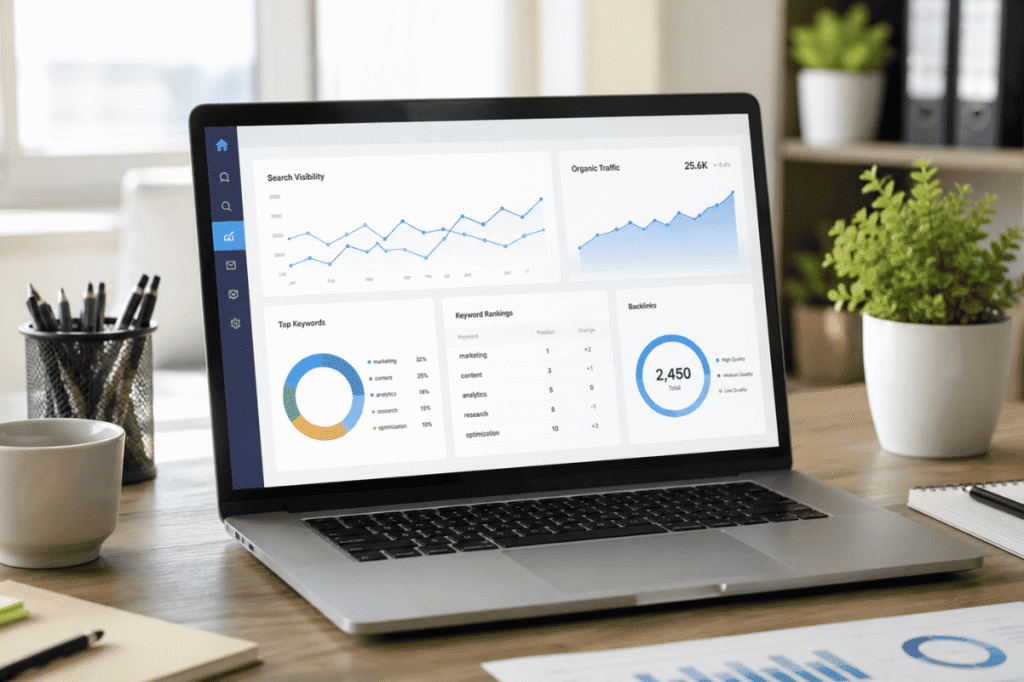
Most website owners understand that keywords matter. The challenge is knowing where they belong. Some people cram the same phrase into every heading, paragraph, and image alt tag, hoping Google will reward them. Others barely use keywords at all because they worry about penalties. Neither approach works well today. Modern SEO is about relevance, context, and helping users find exactly what they’re looking for. Search engines have become much better at understanding topics, intent, and natural language. That means your keyword placement should support the reader first, not just the algorithm. In this guide, you’ll learn where to place seo keywords, how to avoid over-optimization, and why understanding how to choose keywords for seo and how to do seo keyword research is just as important as using the keywords themselves. Whether you’re publishing a blog, creating a service page, or optimizing an ecommerce website, these best practices will help you create content that performs well without sounding forced. Why Keyword Placement Still Matters Keywords tell search engines what your page is about. They also reassure visitors that they’ve landed on the right page. However, keyword placement is no longer about repetition. Instead, search engines look at: Topic relevance Search intent Content quality Natural language User experience Overall page structure A well-written article with thoughtful keyword placement will almost always outperform a page that’s stuffed with repetitive phrases. Before Placement Comes Research You cannot place keywords effectively if you’ve chosen the wrong ones. That’s why learning how to choose keywords for seo is the first step. Good keywords should have: Clear search intent Reasonable competition Relevant search volume Strong connection to your products or services For example, someone searching: “SEO keywords” “how to do seo keyword research” “best keyword research tools” has different goals, even though the topics are related. Understanding intent allows you to create content that actually answers the searcher’s question. How to Do SEO Keyword Research If you’re wondering how to do seo keyword research, start by thinking like your customers. Ask yourself: What problem are they trying to solve? What questions would they search? What words would beginners use? What words would experienced users use? Then use keyword research tools to validate your ideas. Helpful options include: Google Search suggestions Google Search Console Google Keyword Planner Ahrefs Semrush Moz AnswerThePublic Look for related phrases, long-tail keywords, and common questions that can naturally fit throughout your content. Remember, keyword research isn’t about finding one perfect keyword. It’s about understanding the entire topic. Where to Put SEO Keywords Naturally Let’s go through the areas that matter most. The Page Title Your title is one of the strongest relevance signals. Include your primary keyword naturally, preferably near the beginning. Example: Where to Put SEO Keywords Without Over-Optimizing Avoid awkward titles like: SEO Keywords SEO Guide SEO Tips for SEO Keywords Write for humans first. The URL Keep URLs: Short Descriptive Easy to read Good: yourdomain.com/where-to-put-seo-keywords Poor: yourdomain.com/blog?id=45873&keyword=seo-keywords-guide-best Simple URLs are easier for users and search engines. The H1 Heading Your H1 should clearly describe the page. Include the primary keyword once if it fits naturally. Since the H1 usually matches or closely resembles the title, there’s no need to force extra variations. The Introduction Google pays attention to the beginning of your content because it quickly establishes the page topic. Mention your primary keyword naturally within the first paragraph or two. Don’t force it multiple times. One clear mention is usually enough. Headings (H2s and H3s) Headings help both readers and search engines understand your content structure. Include keywords only where they genuinely improve clarity. For example: How to Do SEO Keyword Research Common SEO Keyword Mistakes Where SEO Keywords Belong Avoid repeating the exact keyword in every heading. Instead, use related terms and natural language. Throughout the Body Content This is where many websites make mistakes. Instead of counting keyword density, focus on discussing the topic thoroughly. Naturally include: Primary keyword Secondary keywords Related phrases Synonyms For example, an article about seo keywords may also mention: search terms keyword targeting search intent organic rankings keyword optimization content strategy This creates topical relevance without sounding repetitive. Image File Names Images can provide additional context. Instead of uploading: IMG0045.jpg Rename it: seo-keyword-placement-guide.jpg Keep filenames descriptive but concise. Image Alt Text Alt text exists primarily for accessibility. Describe the image honestly. Good example: “Example showing proper SEO keyword placement in a blog article.” Avoid stuffing keywords into every image. Meta Description Although meta descriptions aren’t a direct ranking factor, they can improve click-through rates. Include the primary keyword naturally while writing a compelling summary. Think of it as your page’s advertisement in search results. Internal Links Internal links help search engines understand relationships between pages. Instead of always using identical anchor text, vary it naturally. For example: keyword research guide SEO content strategy on-page SEO checklist optimizing website content Natural anchor text creates a healthier internal linking profile. External Links Referencing trustworthy sources can improve credibility. Link to authoritative resources when they genuinely help readers understand a topic better. Quality matters more than quantity. Conclusion Your conclusion is another appropriate place to reinforce your main topic. Mention the primary keyword naturally while summarizing the article. Avoid introducing entirely new information here. How Often Should You Use SEO Keywords? There’s no ideal keyword percentage. Instead, ask yourself: Does the page sound natural? Would I notice the keyword being repeated? Does every mention serve a purpose? If the answer is yes, you’re probably on the right track. Search engines now understand context remarkably well. You don’t need to repeat the same phrase twenty times. Signs You’re Over-Optimizing Keyword stuffing often creates content that’s difficult to read. Common warning signs include: The same phrase appears in every paragraph. Every heading contains identical wording. Keywords appear where they don’t make sense. Image alt text repeats the same keyword. Internal links all use identical anchor text. The writing feels robotic. If your content sounds unnatural when read aloud, it’s worth revising. Best Practices for Natural Keyword
Off-Page SEO Services Explained: What Agencies Actually Do

f you’ve invested in SEO before, you’ve probably heard the phrase off-page SEO services. Many agencies promise higher rankings through backlinks, outreach, and digital PR, but what do these services actually involve? The truth is that off-page SEO is much more than simply building links. A reliable off page SEO company focuses on improving your website’s authority, trust, and reputation through ethical strategies that support long-term search visibility. In this guide, we’ll explain what off-page SEO services include, why they matter, and how to choose the right agency for your business. What Are Off-Page SEO Services? Off page SEO services are activities performed outside your website to improve its credibility and authority in search engines. Unlike on-page SEO, which focuses on optimizing your website’s content and technical elements, off-page SEO helps search engines understand how other websites and users view your brand. Common goals include: Building high-quality backlinks Increasing brand authority Improving online reputation Driving referral traffic Supporting higher search rankings A successful off-page strategy is built on relevance, quality, and consistency rather than shortcuts. What Does an Off Page SEO Company Actually Do? Not all SEO agencies follow the same approach, but reputable providers usually offer a combination of ethical link-building and digital authority strategies. Backlink Research Agencies identify websites that are relevant to your industry and capable of providing valuable backlinks. Rather than chasing large numbers of links, they focus on quality opportunities. Outreach Campaigns Professional outreach involves contacting website owners, editors, and publishers to earn natural backlinks. This may include: Guest posting Resource page outreach Editorial placements Partnership opportunities Personalized outreach generally produces better results than mass email campaigns. Content Promotion Even great content needs visibility. An agency may promote your guides, tools, research, or blog posts to publishers and industry websites that could benefit from referencing your content. Digital PR Many agencies now combine SEO with digital public relations. By helping businesses share expert opinions, original research, and newsworthy stories, they can earn editorial mentions from trusted publications. These backlinks are often among the most valuable in SEO. Competitor Analysis An experienced agency studies your competitors’ backlink profiles to uncover opportunities you may be missing. This helps create a smarter and more targeted link-building strategy. Common Off Site SEO Services Businesses often ask what is included in off site SEO services. Typical services include: Guest posting Resource page link building Digital PR campaigns Brand mention outreach Broken link building Local business citations Industry directory submissions Competitor backlink analysis Link profile audits Outreach management The exact mix depends on your industry, goals, and competition. Why Off-Page SEO Matters Search engines want to recommend trustworthy websites. Off-page SEO provides signals that help demonstrate your credibility. Benefits include: Improved domain authority Higher keyword rankings Increased referral traffic Better brand visibility Stronger online reputation When combined with quality content and technical SEO, off-page optimization supports sustainable growth. What to Look for in an Off Page SEO Company Choosing the right partner is just as important as choosing the right strategy. Look for an agency that: Uses white hat SEO techniques Focuses on relevant websites Provides transparent reporting Avoids guaranteed ranking promises Builds links naturally Communicates clearly Be cautious of companies that promise hundreds of backlinks in a few days. Quality link building takes time and genuine outreach. Red Flags to Avoid Some agencies still rely on outdated practices that may harm your website. Watch out for: Spammy directory submissions Automated link building Private blog networks (PBNs) Paid links from irrelevant websites Keyword-stuffed anchor text Unrealistic ranking guarantees Shortcuts may produce temporary gains, but they often create long-term risks. How Long Do Off-Page SEO Services Take? Off-page SEO isn’t an overnight process. Most businesses begin seeing gradual improvements over several months, depending on factors such as: Website age Competition Existing authority Content quality Link-building consistency The goal is steady, sustainable growth rather than quick wins. Why Ethical Link Building Wins Search engines continue to reward websites that earn backlinks naturally. Instead of focusing on volume, successful agencies prioritize: Relevant publishers Helpful content Editorial links Industry relationships Long-term authority This approach creates a stronger backlink profile that remains valuable as search algorithms evolve. How BuyBacklinks.ca Can Help At BuyBacklinks.ca, off-page SEO is built around quality rather than quantity. Every campaign focuses on earning relevant backlinks through ethical outreach, trusted publishers, and proven white hat strategies. Whether you’re looking to strengthen your authority, increase organic visibility, or develop a long-term SEO strategy, the emphasis is always on sustainable growth instead of risky shortcuts. Conclusion Understanding off page SEO services helps you make better decisions when investing in SEO. A trustworthy off page SEO company does far more than build backlinks. It develops a strategy that improves authority, earns relevant mentions, and supports lasting search performance. By choosing ethical off site SEO services, businesses can strengthen their online reputation, attract qualified traffic, and achieve sustainable rankings that continue to deliver value over time. FAQ Section What are off page SEO services? Off-page SEO services include activities outside your website that improve authority and search visibility, such as link building, digital PR, guest posting, and brand mentions. What does an off page SEO company do? An off page SEO company helps businesses build authority through ethical backlink acquisition, outreach campaigns, competitor analysis, and other off-site optimization strategies. Are off site SEO services different from off-page SEO? No. The terms are often used interchangeably and both refer to optimization activities performed outside your website. How long does off-page SEO take? Results vary, but most businesses see gradual improvements over several months as authority and backlinks grow naturally. Are backlinks still important in 2026? Yes. High-quality, relevant backlinks remain one of the strongest authority signals used by search engines when evaluating websites. humna
What Is Off-Page SEO? The 2026 Beginner’s Guide to Authority Signals

If you’ve spent any time learning about search engine optimization, you’ve probably come across the term off-page SEO. While creating quality content and optimizing your website are essential, they represent only part of the SEO equation. Search engines also evaluate how the rest of the internet views your website. That’s where off-page SEO comes in. If you’re wondering what is off page SEO, think of it as everything that happens outside your website to improve its reputation, trust, and authority. These external signals help search engines determine whether your content deserves to rank above competitors. In this beginner-friendly guide, you’ll learn what off-page SEO is, why it matters, the most effective off page SEO techniques and how to build authority the right way in 2026. What Is Off-Page SEO? Off-page SEO refers to all optimization activities that occur outside your website to improve its visibility in search engine results. Unlike on-page SEO, which focuses on optimizing content, headings, images, and technical elements on your website, off-page SEO is about building credibility across the web. Search engines use these external signals to evaluate factors such as: Website authority Trustworthiness Brand reputation Content popularity Industry relevance The stronger these signals are, the more confidence search engines have in recommending your website to users. Why Off-Page SEO Matters Even the best content may struggle to rank if no one references or trusts it. Off-page SEO helps search engines answer important questions like: Do other reputable websites recommend this content? Is this business recognized within its industry? Is the website trustworthy? Are people talking about this brand online? Positive answers to these questions can strengthen your search visibility over time. The Most Important Off Page SEO Techniques Building authority doesn’t happen overnight. Instead, it comes from consistently applying ethical strategies that improve your online reputation. 1. Earn High-Quality Backlinks Backlinks remain one of the strongest off-page ranking signals. A backlink is simply a link from another website to yours. When respected websites reference your content, search engines may view your site as more authoritative. Focus on earning backlinks from: Relevant industry websites Trusted blogs Business publications Educational resources Professional organizations Quality is always more important than quantity. 2. Create Shareable Content Useful content naturally attracts links and mentions. Consider publishing: Comprehensive guides Original research Industry statistics Checklists Infographics Case studies The more value your content provides, the more likely others are to recommend it. 3. Build Brand Mentions Not every authority signal includes a backlink. Mentions of your business across trusted websites, podcasts, forums, and news articles can contribute to your overall online reputation. Consistent branding also helps users recognize and trust your business. 4. Guest Posting Writing helpful articles for reputable websites remains a valuable off-page SEO strategy. Focus on contributing genuinely useful content rather than publishing solely for backlinks. Guest posting can help you: Reach new audiences Build credibility Earn relevant backlinks Develop industry relationships 5. Digital PR Digital PR combines traditional public relations with SEO. By sharing expert insights, original research, or newsworthy stories, businesses can earn editorial mentions from trusted media outlets. These editorial backlinks are often among the highest-quality links available. 6. Resource Page Link Building Many organizations maintain pages listing useful industry resources. If your content provides genuine value, you may earn placement on these pages through thoughtful outreach. This is one of the most sustainable white hat link-building techniques. Authority Signals Beyond Backlinks Although backlinks receive the most attention, search engines evaluate many other trust signals. Examples include: Brand searches Online reviews Business citations Social visibility Expert mentions Industry recognition These signals work together to strengthen your website’s overall authority. Common Off-Page SEO Mistakes Many beginners focus on shortcuts instead of sustainable growth. Avoid these common mistakes. Buying Low-Quality Links Cheap backlink packages from spammy websites can damage your website’s reputation. Always prioritize relevance and quality. Ignoring Link Relevance A backlink from a related industry website is generally more valuable than dozens of unrelated links. Using Black Hat Techniques Practices such as link farms, automated link building, and private blog networks violate search engine guidelines and may increase the risk of penalties. Expecting Instant Results Off-page SEO is a long-term investment. Building authority takes consistency, patience, and quality work. Off-Page SEO Best Practices for 2026 As search engines become better at evaluating trust and relevance, successful websites focus on ethical optimization. Follow these best practices: Create valuable content worth referencing. Build relationships within your industry. Earn editorial backlinks naturally. Diversify your backlink profile. Monitor your online reputation. Keep your content updated. The goal isn’t simply to collect links it’s to become a trusted resource. How BuyBacklinks.ca Can Help Building authority requires time, research, and a thoughtful strategy. BuyBacklinks.ca helps businesses develop ethical backlink campaigns focused on quality, relevance, and sustainable SEO growth. Rather than relying on risky shortcuts, the goal is to strengthen your website with backlinks that support long-term search performance. Understanding what is off page SEO is the first step toward building lasting online authority. While technical SEO and quality content are essential, external trust signals help search engines determine whether your website deserves to rank. By applying proven off page SEO techniques such as earning quality backlinks, creating valuable content, participating in digital PR, and building genuine industry relationships, you can strengthen your website’s reputation over time. A consistent, ethical approach will always outperform shortcuts when it comes to long-term SEO success. FAQ Section What is off page SEO? Off-page SEO includes all activities outside your website that help improve search engine rankings, such as earning backlinks, building brand mentions, and increasing online authority. Why is off-page SEO important? It helps search engines evaluate your website’s credibility, authority, and trustworthiness using external signals from across the web. What are the best off page SEO techniques? Some of the most effective techniques include earning quality backlinks, guest posting, digital PR, resource page link building, creating shareable content, and building brand mentions. Is off-page SEO different from on-page SEO? Yes. On-page SEO focuses on optimizing