
How to Track Keyword Rankings Without Chasing Vanity Metrics

Keyword rankings are one of the first numbers marketers look at when evaluating SEO performance. Seeing a target keyword move from position 20 to position 8 can feel like a clear win. But rankings alone do not tell the whole story. A website can rank for hundreds or even thousands of keywords without generating meaningful traffic, leads, sales, or revenue. On the other hand, a small improvement in a highly valuable search term can have a much bigger business impact. That is why effective SEO measurement requires more than simply asking, “What position does my keyword have?” If you want to rank a site successfully, you need to understand which keywords matter, how rankings translate into visibility, and whether that visibility leads to meaningful results. Why Keyword Rankings Can Be a Vanity Metric Keyword rankings are useful, but they become a vanity metric when you track them without considering business outcomes. Imagine an online accounting firm ranking #3 for a keyword that receives very little search demand. The ranking looks impressive, but it may generate almost no qualified traffic. Now imagine the same business moves from position #11 to position #5 for a highly relevant commercial keyword. That improvement could bring significantly more potential customers. The second result may be much more valuable even though the ranking change appears less dramatic. When you check keywords ranking, always ask: Does the keyword attract relevant visitors? Does it match our target audience? Is the search intent valuable? Is traffic increasing? Are visitors converting? Does the keyword contribute to business goals? These questions turn ranking data into useful SEO analysis. What Is Keyword Ranking? Keyword ranking refers to the position of a webpage in search results for a particular search query. For example, if your page appears as the fifth organic result for “commercial landscaping services,” its ranking for that query is position 5. Rankings can change because of: Search algorithm updates Competitor improvements New content Backlinks Search intent changes Location Device Search history Changes to the search results page This means rankings are not fixed numbers. A page that appears in position 5 today might appear in position 7 tomorrow without anything significant changing on your website. Track Groups of Keywords, Not Just Individual Terms Instead of obsessing over one keyword, organise your keywords into groups. For example, an SEO agency could track: Core Service Keywords SEO services SEO agency SEO consultant Commercial Keywords affordable SEO services best SEO agency SEO services for small business Informational Keywords how does SEO work what is technical SEO how to improve Google rankings This makes your reporting more meaningful. You can then see whether an entire topic or service area is improving instead of reacting to every small ranking fluctuation. Focus on Search Intent A keyword’s position means very little if the page does not satisfy the searcher’s intent. Consider two searches: “What is SEO?” This is informational. The user probably wants an explanation. “SEO services for small business” This has stronger commercial intent. The user may be evaluating providers. A page ranking highly for an informational keyword may generate plenty of visitors but few customers. A lower-volume commercial keyword could generate fewer visitors but more leads. When you check keywords ranking, always consider the intent behind each search. Look at Organic Traffic Alongside Rankings Organic traffic helps you understand whether ranking improvements are actually bringing more visitors. For example: Metric Before After Average ranking 14 9 Organic clicks 500 780 Leads 18 31 This tells a much stronger story than simply saying, “Our rankings improved.” If rankings increase but organic clicks remain flat, investigate why. Possible reasons include: Low search volume Weak search intent Low click-through rate Strong paid results Featured snippets Local packs Other SERP features Ranking position is important, but visibility and traffic provide additional context. Measure Click-Through Rate Click-through rate, or CTR, shows how often users click your result after seeing it. A page can rank well and still receive fewer clicks than expected. Your title and meta description can influence whether someone chooses your result. For example, a generic title such as: SEO Services | Company Name may be less compelling than a specific title that clearly communicates the page’s value. Improving CTR should not involve misleading users. Your title and description should accurately represent what they will find on the page. Track Conversions, Not Just Clicks This is where SEO measurement becomes much more useful. A visitor has limited value if they never take a meaningful action. Depending on the business, conversions could include: Contact form submissions Phone calls Quote requests Purchases Account registrations Consultation bookings Newsletter signups Suppose one keyword generates 1,000 visitors and three leads, while another generates 200 visitors and 20 leads. The second keyword may be much more valuable despite generating less traffic. This is why marketers should connect keyword ranking data with conversion information whenever possible. Monitor Keyword Trends Over Time Don’t judge SEO performance from a single day. Instead, look at trends across weeks and months. You can monitor: Average ranking Number of keywords ranking in the top 10 Number of keywords ranking in the top 3 Organic clicks Organic impressions CTR Conversions A trend can reveal whether your strategy is actually moving in the right direction. Short-term fluctuations are normal. Consistent improvement is more meaningful. Don’t Try to Rank a Site for Everything More keywords do not automatically mean better SEO. A common mistake is trying to target every keyword remotely connected to a business. Instead, focus on keywords that are: Relevant Searchable Aligned with your services Connected to your audience Appropriate for your website’s authority Capable of supporting business goals Ten highly relevant keywords can be more valuable than hundreds of unrelated searches. Use Competitors as a Benchmark Competitor analysis can provide useful context when measuring your performance. Look at competitors that target the same audience and search terms. Ask: Which topics do they rank for? Which important keywords do they rank for that you don’t? What types of pages
Competitor Ad Rank: How to Spy on Competitor PPC and Win at Paid Search
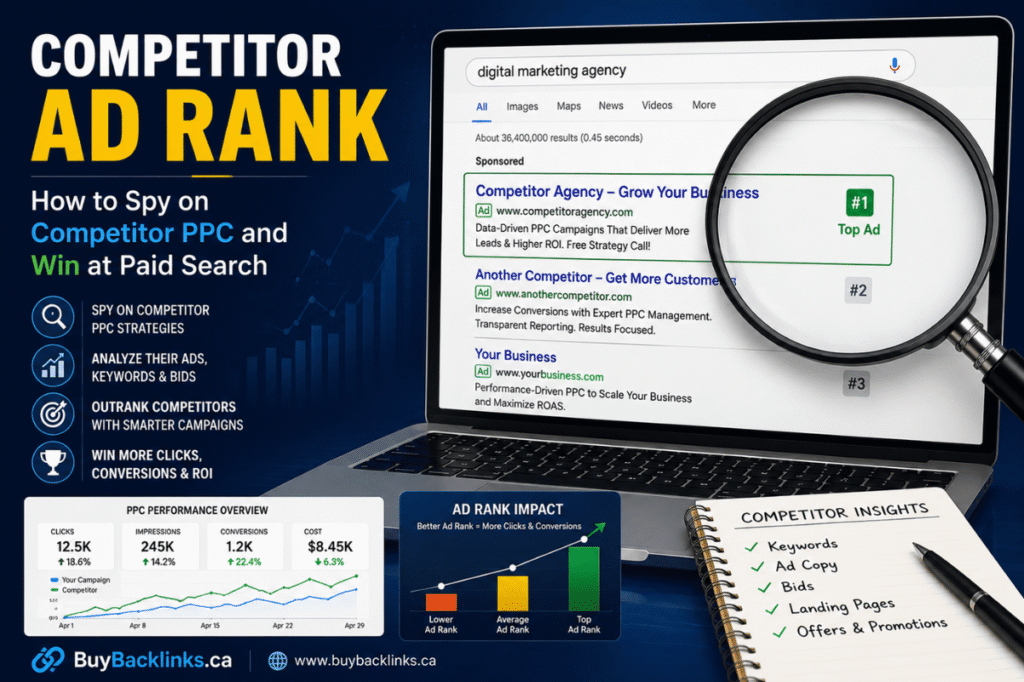
Running successful PPC campaigns isn’t just about improving your own ads. It’s also about understanding what your competitors are doing. Every day, businesses compete for the same keywords, audiences, and clicks. Some consistently appear above everyone else in search results, while others struggle to gain visibility despite significant advertising budgets. One of the most important concepts behind this competition is competitor ad rank. Understanding how ad rank works and how your competitors achieve strong positions can help you improve your own campaigns, reduce wasted spend, and gain a competitive advantage in paid search. In this guide, we’ll explain competitor ad rank, how to analyze competing advertisers, and practical strategies to improve your PPC performance in 2026. What Is Competitor Ad Rank? Competitor ad rank refers to the position competing advertisers achieve in paid search results. When multiple advertisers bid on the same keyword, search engines determine which ads appear and in what order. The ranking process isn’t based solely on who spends the most money. Search engines evaluate factors such as: Bid amount Ad quality Expected click-through rate Landing page experience Ad relevance Search intent alignment The advertiser with the strongest overall combination typically earns the highest ad position. Why Competitor Ad Rank Matters Many advertisers focus only on their own campaigns. However, understanding competitor performance helps answer important questions: Why are competitors outranking you? Which keywords are competitors targeting? What messaging are they using? Which offers attract clicks? Where are opportunities being missed? Competitive analysis helps improve decision-making instead of relying on assumptions. How Ad Rank Actually Works Although advertising platforms use complex algorithms, the concept is relatively simple. Search engines evaluate: Bid Strategy Higher bids can improve visibility, but they don’t guarantee top placement. A poorly optimized ad can still lose to a competitor with a lower bid. Quality Score Quality Score generally reflects: Ad relevance Expected click-through rate Landing page quality Strong Quality Scores often reduce advertising costs while improving visibility. User Experience Search engines prioritize ads that provide value to users. Landing pages that load quickly and match search intent often perform better. Contextual Factors Ad rank can also change based on: Device type Location Search history Time of day Audience signals This is why competitors may appear differently across searches. How to Analyze Competitor Ad Rank You don’t need access to a competitor’s advertising account to learn valuable insights. Several methods can reveal useful information. 1. Search Your Target Keywords One of the simplest approaches is manual observation. Search important keywords and note: Which competitors appear consistently Ad headlines Calls to action Promotions Landing page offers Over time, patterns become easier to identify. Consistent visibility often signals successful campaigns. 2. Study Competitor Ad Copy Ad copy reveals what competitors believe resonates with customers. Pay attention to: Pricing offers Guarantees Discounts Unique selling points Emotional triggers Questions to ask: What benefits do they emphasize? What problems are they solving? What makes their offer different? Understanding messaging can help improve your own ads. 3. Analyze Landing Pages Clicks don’t generate revenue. Conversions do. That’s why competitor landing pages deserve close attention. Review: Page structure Headlines Forms Trust signals Testimonials Calls to action Often, the biggest PPC advantages come from better landing page experiences rather than larger budgets. 4. Monitor Keyword Coverage Competitors frequently reveal strategic priorities through keyword targeting. Look for: Core commercial keywords Long-tail opportunities Industry-specific searches Local PPC campaigns Keyword analysis often uncovers opportunities competitors haven’t fully addressed. 5. Track Competitor Trends Over Time A single search provides limited information. Ongoing monitoring reveals: Seasonal campaigns New promotions Expanding keyword targets Messaging changes Long-term observation often delivers the most valuable insights. Ethical Ways to “Spy” on Competitors The word “spy” sounds aggressive, but competitive analysis should remain ethical. Focus on publicly available information such as: Search ads Landing pages Public offers Industry messaging Market positioning Avoid: Unauthorized access Data theft Misrepresentation Competitive intelligence should improve strategy not violate trust. Common Reasons Competitors Outrank Your Ads Understanding why competitors rank higher helps prioritize improvements. Better Quality Scores Strong Quality Scores often outperform higher bids. Improving relevance can sometimes increase rankings without increasing spend. Stronger Landing Pages Landing page quality significantly affects ad performance. Poor user experiences reduce competitiveness. More Relevant Ad Copy Ads that closely match search intent generally perform better. Relevance often wins over generic messaging. Better Click-Through Rates Search engines favor ads that users engage with consistently. Higher engagement signals greater usefulness. Strong Audience Targeting Competitors may use: Remarketing Customer match lists Geographic targeting Device-specific strategies Better targeting improves overall campaign performance. Strategies to Improve Your Ad Rank Once you’ve analyzed competitors, focus on improving your own campaigns. Optimize Ad Relevance Ensure ads closely match keyword intent. Include: Relevant headlines Clear benefits Strong calls to action Search engines reward relevance. Improve Landing Pages Review: Page speed Mobile experience Conversion paths Content relevance A stronger landing page can improve Quality Score and conversions simultaneously. Test Multiple Ad Variations Never rely on one ad version. Experiment with: Headlines Descriptions Offers Calls to action Continuous testing often reveals surprising performance improvements. Focus on Long-Tail Keywords Highly competitive keywords are expensive. Long-tail keywords often provide: Lower costs Higher intent Better conversion rates These opportunities are frequently overlooked. Strengthen Conversion Tracking Accurate tracking helps identify what actually works. Monitor: Leads Purchases Form submissions Phone calls Data-driven optimization consistently outperforms guesswork. Common PPC Competitive Analysis Mistakes Copying Competitors Exactly Learning from competitors is useful. Imitating them completely is not. Differentiate your offer whenever possible. Focusing Only on Position The top ad position isn’t always the most profitable. Focus on return on investment rather than visibility alone. Ignoring Landing Pages Many advertisers obsess over ads while neglecting the conversion experience. Landing pages often determine campaign success. Making Decisions Too Quickly PPC performance fluctuates. Avoid drawing conclusions from limited data. Tools That Help Analyze Competitor Ad Rank Popular tools include: Google Ads Auction Insights SEMrush Advertising Research Ahrefs SpyFu Similarweb These platforms provide visibility into competitor activity, keyword targeting, and advertising trends.
SEO Ranking Reports: How to Create Reports That Actually Impress Clients
Most clients don’t care about SEO metrics. That may sound surprising coming from an SEO article, but it’s true. Clients rarely get excited about crawl depth, index coverage, or keyword clustering. What they care about is whether SEO is helping their business grow. That’s why many SEO professionals struggle with reporting. They create detailed reports packed with data, yet clients still ask: “What does this mean?” “Are we getting results?” “Is SEO working?” The best seo ranking reports don’t just present numbers. They tell a story, highlight progress, and connect SEO performance to business outcomes. In this guide, you’ll learn how to create ranking reports that clients actually understand, appreciate, and look forward to receiving. What Are SEO Ranking Reports? SEO ranking reports are documents that track how a website performs in search engines over time. They typically include: Keyword rankings Organic traffic Visibility trends Top-performing pages Technical SEO updates Backlink growth The purpose of a ranking report is to show clients the impact of SEO efforts and provide a clear picture of progress. However, effective reporting goes beyond listing rankings. It explains what changed, why it matters, and what comes next. Why SEO Reporting Matters Good reporting does more than update clients. It helps: Build trust Improve client retention Demonstrate value Support strategic decisions Reduce misunderstandings When clients understand the results, they are more likely to remain confident in your SEO strategy. Poor reporting often creates uncertainty even when performance is improving. The Biggest Mistake in SEO Reporting Many SEO reports contain too much data and not enough insight. Clients don’t want dozens of pages filled with charts that require expert interpretation. Instead, they want answers to simple questions: Are rankings improving? Is traffic growing? Are leads increasing? What was accomplished this month? What happens next? Your report should answer these questions clearly. What Every SEO Ranking Report Should Include A professional report should balance simplicity with meaningful detail. Here are the essential sections. 1. Executive Summary Start with a brief overview. This is often the most-read section of the entire report. Include: Major wins Key challenges Overall SEO progress Important next steps Keep it concise. A client should understand the month’s performance within a minute of reading this section. 2. Keyword Ranking Performance Keyword rankings remain one of the most requested SEO metrics. Track: Primary target keywords Ranking improvements Ranking declines New keywords entering search results Instead of showing hundreds of keywords, focus on the most important terms tied to business goals. Example: Keyword Previous Position Current Position SEO audit service 15 8 backlink building service 12 6 local SEO consultant 9 4 This format makes progress easy to understand. 3. Organic Traffic Trends Rankings matter, but traffic often matters more. Include: Monthly organic traffic Traffic growth percentage Year-over-year comparisons Traffic trends by landing page Visual graphs help clients quickly understand progress. Focus on trends rather than isolated numbers. 4. Top Performing Pages Show which pages are generating results. Track: Traffic growth Ranking improvements Engagement metrics This helps clients see which content is contributing to SEO success. It also identifies opportunities for future optimization. 5. Backlink Growth Backlinks remain an important ranking factor. Include: New referring domains High-quality backlinks earned Authority improvements Avoid overwhelming clients with lengthy backlink exports. Highlight quality over quantity. 6. Technical SEO Updates Clients appreciate knowing what work is happening behind the scenes. Include completed improvements such as: Fixed crawl errors Improved site speed Resolved indexing issues Updated internal links This demonstrates ongoing effort and expertise. 7. Conversions and Business Impact This is where reports become truly valuable. Whenever possible, include: Leads generated Contact form submissions Phone calls Sales Revenue impact Clients care about business outcomes more than rankings alone. If SEO contributes to growth, make that connection visible. How to Make SEO Ranking Reports More Client-Friendly Data is important, but presentation matters just as much. Use Simple Language Avoid excessive technical terminology. Instead of saying: “Crawl budget optimization improved indexation efficiency.” Try: “We improved how search engines discover and access your pages.” Clients appreciate clarity. Focus on Outcomes Don’t just report activities. Instead of: Built 10 backlinks Fixed 5 errors Explain the expected impact: Improved authority for important service pages Enhanced crawlability and user experience Outcomes are easier to understand than tasks. Highlight Wins First Start with positive results. Examples: Increased rankings Traffic growth New keyword visibility Improved conversions This creates context before discussing challenges. Include Visual Elements Charts and graphs help clients absorb information quickly. Useful visuals: Ranking trend graphs Traffic growth charts Visibility trend reports Conversion summaries Visual reporting often improves engagement dramatically. Metrics That Matter Most to Clients Not every SEO metric deserves equal attention. The most valuable metrics typically include: Rankings Important for visibility tracking. Organic Traffic Shows audience growth. Leads and Conversions Demonstrates business impact. Top Landing Pages Highlights successful content. Backlink Growth Shows authority development. Technical Improvements Explains ongoing optimization work. These metrics create a balanced report. Common SEO Reporting Mistakes Reporting Too Many Keywords Large keyword lists create confusion. Focus on meaningful rankings. Ignoring Business Goals SEO metrics should connect to client objectives. Rankings alone don’t tell the full story. Using Generic Templates Every client has different goals. Customize reports whenever possible. Hiding Challenges Be transparent when rankings drop or traffic declines. Clients value honesty and strategic recommendations. Recommended Reporting Frequency Most SEO agencies and consultants use monthly reports. Monthly reporting works well because: SEO changes take time Trends become easier to identify Clients stay informed without information overload For enterprise campaigns, weekly reporting may also be useful. Tools Commonly Used for SEO Ranking Reports Popular reporting tools include: Google Search Console Google Analytics Ahrefs SEMrush Looker Studio Agency reporting platforms The best tool is the one that helps present data clearly and accurately. Remember, clients care more about insights than software. The Future of SEO Reporting in 2026 SEO reporting is becoming more outcome-focused. Clients increasingly expect: Clear explanations Conversion tracking Business impact analysis Actionable recommendations The agencies that communicate results effectively often retain
Search Engine Positioning: Examples and Strategies to Improve Your Rankings

Getting your website on Google is one thing. Getting it positioned where people actually click is something else entirely. Most users never go beyond the first page of search results. In fact, the top few positions capture the majority of organic clicks. That’s why understanding search engine positioning is so important for businesses, bloggers, and marketers trying to grow online visibility. In this guide, you’ll learn what search engine positioning means, see practical search engine positioning example scenarios, and understand the strategies that help websites improve rankings over time. Whether you run a business website, blog, or ecommerce store, these techniques can help strengthen your organic search performance. What Is Search Engine Positioning? Search engine positioning refers to the exact position a webpage holds in search engine results for a specific keyword. For example: Position #1 = first organic result Position #5 = fifth organic result Position #10 = bottom of page one Higher positions usually lead to: More clicks More traffic Better visibility Increased trust Search engine positioning is often confused with SEO in general, but positioning specifically focuses on improving and maintaining rankings for target keywords. Why Search Engine Positioning Matters Strong rankings directly affect how much organic traffic your website receives. Even moving from position #8 to #3 can dramatically improve clicks and visibility. Benefits of better positioning include: Higher organic traffic Increased brand exposure Better lead generation Improved authority More conversions Good positioning also compounds over time. Once pages gain authority and trust, maintaining rankings becomes easier. Search Engine Positioning Example Scenarios Below are practical examples to show how positioning works in real-world SEO. Example 1: Local Business SEO A local roofing company targets the keyword: roof repair services in Toronto Initial ranking: Position #18 After optimization: Improved local SEO pages Added customer reviews Strengthened internal linking Built backlinks New ranking: Position #4 Result: Increased phone calls and local traffic This is a clear search engine positioning example where focused optimization improved visibility significantly. Example 2: Blog Content Optimization A marketing blog targets: how to create SEO content Initial ranking: Position #11 After updates: Better keyword targeting Improved headings Added examples and FAQs Increased page speed New ranking: Position #3 Result: Higher click-through rate More organic visitors Sometimes small content improvements create meaningful ranking gains. Example 3: Ecommerce Product Positioning An online store targets: best wireless gaming headset Optimization strategy: Improved product descriptions Added comparison content Strengthened category pages Built authority backlinks Ranking improvement: From page two to top five results Result: Increased product sales from organic search Key Factors That Influence Search Engine Positioning Search engines evaluate many signals before deciding rankings. The most important include: Content Relevance Your content must closely match search intent. If users search for: best SEO tools They expect: Comparisons Reviews Features Recommendations Not a generic SEO definition article. Search intent alignment is essential for strong positioning. Keyword Optimization Keywords still matter—but naturally. Best practices: Use primary keyword in: Title H1 Introduction Meta description Include related terms and variations Avoid keyword stuffing Well-optimized content helps search engines understand topic relevance. Backlinks and Authority Backlinks remain one of Google’s strongest ranking signals. High-quality backlinks help: Build authority Improve trust Increase ranking potential However, quality matters more than quantity. Spammy links can damage positioning instead of improving it. Technical SEO Technical issues can limit rankings even with good content. Important areas: Site speed Mobile usability Crawlability HTTPS security Internal linking Strong technical SEO creates a better foundation for rankings. User Experience Signals Search engines pay attention to user behavior. Poor experiences can hurt positioning: Slow pages Difficult navigation Intrusive popups Weak mobile design Better user experiences often improve engagement metrics and rankings. Strategies to Improve Search Engine Positioning Now let’s look at practical strategies you can apply. 1. Target Realistic Keywords Avoid targeting only ultra-competitive keywords. Instead: Focus on long-tail opportunities Target lower competition phrases Build topical authority gradually This creates faster ranking opportunities. 2. Improve Existing Content Updating old content is often easier than creating new pages. Improve: Outdated information Thin sections Internal links Examples Readability Content refreshes can improve rankings significantly. 3. Strengthen Internal Linking Internal links help search engines understand: Important pages Topic relationships Site structure Best practices: Use descriptive anchor text Link related pages naturally Avoid orphan pages 4. Optimize for Featured Snippets Featured snippets improve visibility dramatically. Structure content clearly: Use bullet lists Add concise definitions Include FAQ sections Answer questions directly This increases snippet opportunities. 5. Build High-Quality Backlinks Authority backlinks help improve competitive rankings. Effective methods: Guest posting Resource link building Digital PR Outreach campaigns Natural, relevant links are most valuable. 6. Improve Page Speed Fast-loading pages improve both user experience and SEO. Focus on: Image compression Caching Reduced scripts Better hosting Page speed is especially important for mobile rankings. Common Search Engine Positioning Mistakes Targeting Keywords With Wrong Intent Ranking becomes difficult when content doesn’t match user expectations. Ignoring Technical SEO Broken pages and crawl errors hurt visibility. Publishing Thin Content Short, low-value pages rarely maintain strong rankings. Over-Optimizing Keywords Keyword stuffing makes content feel unnatural and spammy. How Long Does It Take to Improve Positioning? SEO positioning improvements usually take time. Typical timelines: Low-competition keywords: weeks Competitive keywords: months Factors affecting speed: Website authority Competition Content quality Backlink profile Technical SEO health Consistency matters more than shortcuts. Measuring Search Engine Positioning Success Track: Keyword rankings Organic traffic Click-through rate Bounce rate Conversions Remember: Higher rankings only matter if they generate meaningful traffic and business results. Understanding search engine positioning is essential for improving online visibility and driving sustainable organic traffic. The best results come from combining: Strong content Smart keyword targeting Technical SEO Quality backlinks Positive user experience Every improvement compounds over time. The search engine positioning example strategies covered in this guide show that rankings rarely improve through one tactic alone. Long-term SEO success comes from building a strong overall foundation. And if you want to strengthen your authority and improve competitive rankings, buybacklinks.ca offers backlink solutions designed to support sustainable
How to Get SEO Clients: 12 Outreach Tactics That Actually Convert

Getting good at SEO is one thing. Getting clients consistently is another challenge entirely. Many freelancers and agencies struggle not because they lack skill but because they rely on random referrals, cold pitches with no strategy, or inconsistent marketing efforts. The truth is, learning how to get SEO clients requires more than sending generic messages and hoping for replies. Businesses get pitched constantly. If your outreach looks like everyone else’s, it gets ignored. In this guide, you’ll learn 12 practical outreach tactics that actually help SEO professionals attract leads, build trust, and convert prospects into paying clients. Whether you’re a freelancer, consultant, or agency owner, these strategies can help you create a more reliable client pipeline. Why Most SEO Outreach Fails Before jumping into tactics, it’s important to understand why most outreach campaigns don’t work. Common problems include: Generic copy-paste messages No personalization Focusing on services instead of problems Contacting the wrong people Pitching too early without building trust Most businesses don’t care about “SEO packages.” They care about: More traffic Better rankings More leads More sales Your outreach should focus on outcomes not technical jargon. Build a Simple but Credible Website If you want clients to trust you, your online presence matters. Your website should clearly explain: What you do Who you help Your process Results or experience How people can contact you You don’t need a massive agency-style site. A clean, professional website with useful content is enough. Include: Service pages Case studies if available Testimonials Blog content This becomes your credibility layer during outreach. Use LinkedIn for Warm Outreach LinkedIn remains one of the best platforms for finding SEO clients especially B2B clients. Instead of pitching immediately: Connect first Engage with their content Start conversations naturally Offer value before selling Bad approach: “Hi, I offer SEO services. Interested?” Better approach: “I noticed your site isn’t targeting local search terms consistently. There may be an opportunity to improve organic visibility.” The second approach feels relevant and thoughtful. Offer Free Mini SEO Audits One of the fastest ways to get attention is showing businesses problems they didn’t notice. A short audit can include: Missing title tags Slow page speed Weak keyword targeting Broken links Poor internal linking Keep it short and actionable. The goal isn’t to give away full consulting it’s to start conversations. Target Businesses Already Investing in Marketing Companies already spending money on ads, social media, or content are more likely to invest in SEO. Look for businesses that: Run Google Ads Post regularly on social media Publish blogs Have active websites These businesses already understand marketing value, making them easier to convert. Create Helpful SEO Content Content marketing works exceptionally well for attracting inbound SEO leads. Write articles around topics like: how to get SEO clients local SEO mistakes SEO tips for small businesses why rankings dropped When potential clients find your content through search, trust builds naturally. This strategy takes time but compounds long term. Use Cold Email the Right Way Cold email still works when done properly. The biggest mistake? Sending long, sales-heavy messages. Effective cold emails are: Short Personalized Problem-focused Easy to reply to Structure: Personalized opening One clear issue or opportunity Simple value proposition Soft CTA Example: “I noticed your service pages aren’t optimized for local search intent. A few improvements could help increase organic leads.” Simple and direct works better than aggressive sales language. Ask Existing Clients for Referrals Referrals often convert faster than cold outreach. But many SEO professionals never ask. After delivering good results: Ask satisfied clients if they know anyone needing SEO help Make referrals easy and casual Stay connected with past clients A strong reputation compounds over time. Focus on One Niche General SEO services are highly competitive. Specializing helps you stand out faster. Examples: SEO for dentists SEO for law firms Ecommerce SEO Local SEO for contractors Niche positioning makes outreach more effective because your messaging becomes highly specific. Join Business Communities and Groups Many SEO clients come from conversations not direct pitches. Places to network: LinkedIn groups Facebook business groups Slack communities Local entrepreneur communities Avoid spamming services. Instead: Answer questions Share insights Help people solve problems Trust usually comes before conversion. Partner With Other Agencies Web design agencies, developers, and marketing consultants often need SEO partners. This can become a consistent lead source. Potential partners: Web designers PPC agencies Branding agencies Developers Partnerships can generate long-term recurring work without constant prospecting. Use Case Studies to Build Trust Even small wins matter. Case studies help prospects visualize results. You don’t need huge numbers. Focus on: The problem Your strategy The improvement Examples: Increased organic traffic Improved rankings Better lead generation Higher click-through rates Specific results create credibility. Follow Up Consistently Most conversions happen after follow-ups not first messages. Many people: Forget Get busy Need time Following up professionally increases response rates significantly. Best practices: Wait a few days between messages Keep follow-ups short Add additional value when possible Persistence matters but avoid being pushy. Common Mistakes When Trying to Get SEO Clients Selling Too Early Build trust before pitching services. Targeting Everyone Broad targeting weakens messaging. Overpromising Results Avoid guarantees like: “#1 rankings overnight” “Guaranteed traffic increase” Smart clients see these as red flags. Ignoring Personal Branding Your content, website, and online presence influence conversion rates heavily. Best Channels for Finding SEO Clients Here are some of the most effective channels today: Channel Best For LinkedIn B2B outreach Google Search Inbound leads Cold Email Direct prospecting Referrals High-conversion leads Local Networking Small business clients Partnerships Long-term lead flow A combination usually works best. How Long Does It Take to Get SEO Clients? Results vary depending on: Experience Positioning Outreach consistency Niche selection Credibility Some people land clients within weeks. Others take months to build momentum. The key difference is consistency. Treat client acquisition like SEO itself: Strategic Long-term Process-driven Learning how to get SEO clients is less about aggressive selling and more about building trust, solving problems, and positioning yourself correctly. The best outreach
2019 Local Search Ranking Factors: Lessons That Still Drive Local SEO Success
Local search has become one of the most important digital channels for small and medium sized businesses. When people search for nearby services, they usually rely on search engines to find reliable options quickly. Over the years, experts have studied what influences local rankings, and one widely discussed reference was the 2019 local search ranking factors study. Even though search algorithms evolve constantly, many of the core lessons from that analysis still apply today. Understanding these lessons can help businesses improve visibility in local search results, attract nearby customers, and compete effectively within their market. This guide explores the most important insights from the 2019 study and explains how they continue to shape modern local SEO strategies. What the 2019 Local Search Ranking Factors Study Highlighted The study analyzed the elements that most strongly influence how businesses appear in local search results. These rankings often appear in the map pack or localized search listings. The research combined insights from experienced SEO professionals who evaluated hundreds of ranking signals. While search engines never reveal their full algorithms, these insights helped identify patterns that influence local visibility. Some of the major areas examined included: Google Business Profile signals on page website optimization backlinks and authority online reviews and ratings user behavior signals Even years later, these categories remain central to successful local SEO strategies. Google Business Profile Optimization One of the strongest insights from the study was the importance of a well optimized business profile. A complete profile helps search engines understand your business and match it with relevant local queries. Key optimization steps include: accurate business name, address, and phone number selecting the correct business categories adding high quality photos writing a clear business description maintaining updated hours of operation Consistency across all platforms helps reinforce credibility and improves the likelihood of appearing in local results. Website Optimization Still Matters Many businesses assume local rankings depend only on business listings. In reality, the website itself plays a major role. Search engines analyze your website to understand your services, location, and expertise. Important elements include: location specific landing pages clear service descriptions fast loading speed mobile friendly design structured data markup These factors help search engines connect your website with local search queries. Backlinks Remain a Key Ranking Signal Another major takeaway from the study was the role of backlinks in strengthening local authority. When reputable websites link to your business website, it signals trust and credibility. Local businesses can earn backlinks through: partnerships with community organizations sponsorships of local events mentions in local news publications industry directories collaborations with other local businesses High quality backlinks can significantly strengthen the authority of a business website and improve local rankings. Reviews and Reputation Signals Online reviews strongly influence both search visibility and customer decisions. Positive reviews show search engines that customers trust your business and have had good experiences. Best practices include: encouraging satisfied customers to leave reviews responding to feedback professionally addressing concerns quickly maintaining consistent engagement A steady stream of authentic reviews signals that a business is active and reliable. Local Citations and Consistency Citations are mentions of a business’s name, address, and phone number on other websites. These references appear in: business directories local listing websites industry portals community platforms Consistency across these listings helps search engines verify that a business is legitimate. Incorrect or outdated information can weaken trust signals and reduce local visibility. User Behavior Signals User interactions can also influence rankings. Search engines analyze signals such as: click through rates calls from business listings requests for directions website visits When users frequently engage with a listing, it suggests that the business is relevant to the search query. This can contribute to improved local visibility over time. Content That Targets Local Intent Content tailored to local audiences can also strengthen SEO performance. Businesses can publish helpful resources such as: local service guides community event coverage neighborhood specific pages location based blog posts This type of content demonstrates relevance to a geographic area and can attract both search traffic and backlinks. Building Authority for Long Term Results Local SEO success rarely comes from a single tactic. It requires a combination of consistent optimization, strong content, and reliable authority signals. Businesses that focus on long term quality often see more sustainable results. Strategic support from experienced providers such as BuyBacklinks.ca can help strengthen backlink profiles and reinforce overall authority within competitive local markets. Conclusion Although search algorithms evolve constantly, many lessons from the 2019 local search ranking factors study remain highly relevant today. Strong business profiles, optimized websites, trustworthy backlinks, and authentic customer reviews continue to influence local rankings. Businesses that invest in these fundamentals are better positioned to attract nearby customers and maintain strong visibility in search results. By focusing on consistency, credibility, and genuine customer engagement, local companies can build a long lasting foundation for digital growth. FAQ Section Why are local search rankings important for businesses? Local rankings help businesses appear when nearby customers search for services or products, increasing visibility and potential leads. Do backlinks affect local SEO rankings? Yes. High quality backlinks strengthen a website’s authority, which can influence local search visibility. How important are customer reviews for local SEO? Reviews play a significant role because they influence both customer trust and search engine evaluation of a business. Does website optimization affect local search results? Yes. A well optimized website helps search engines understand your services and location, improving relevance for local searches. Can small businesses compete in local search results? Yes. By focusing on strong profiles, accurate citations, and consistent reviews, smaller businesses can compete effectively in local markets. humna
Google Ranking Factors 2019: What We Learned and What Still Applies in 2026

SEO never stands still. Algorithms evolve, user behavior shifts, and new technologies reshape how search engines rank websites. Yet, despite all these changes, many of the core principles from earlier years still hold strong today. If you understand what worked in the past and why you can build a strategy that performs not just now, but long-term. In this guide, we’ll explore what defined search rankings back then, what still matters today, and how to apply those lessons effectively in 2026. A Look Back: The SEO Landscape in 2019 By that time, search engines had already moved beyond basic keyword matching. The focus had shifted toward: understanding user intent rewarding high-quality content evaluating authority through links improving user experience This marked a transition from “optimization tricks” to genuine value-driven SEO. Key Ranking Factors That Defined That Era Several factors stood out as major contributors to search visibility. 1. Backlinks as Authority Signals Links from other websites were among the strongest indicators of credibility. However, the focus had already begun shifting toward: relevance over volume editorial placements over artificial links natural link profiles Websites with strong, clean backlink profiles consistently outperformed others. 2. Content Quality and Depth Search engines rewarded content that: answered questions clearly provided in-depth explanations avoided duplication delivered real value Thin or low-effort pages struggled to rank, even then. 3. Smart Keyword Usage Keyword stuffing had already lost effectiveness. Instead, success depended on: natural language semantic variations topic-focused writing This shift laid the foundation for modern content strategies. 4. Mobile Optimization Mobile-first indexing had become the standard. Websites that didn’t perform well on mobile devices experienced ranking drops and reduced visibility. 5. Page Speed Faster websites offered better user experiences, making speed an important ranking factor. 6. User Interaction Signals Search engines began analyzing how users interacted with content, including: time spent on page engagement levels click-through behavior These signals helped determine content usefulness. What Still Matters in 2026 Many of these principles are still relevant today but expectations have increased significantly. 1. Backlinks Remain a Core Ranking Factor Links still play a major role in determining authority. What’s different now is the level of quality required. Search engines evaluate: topical relevance placement within content trustworthiness of the linking site natural growth patterns Low-quality links are no longer effective and can even harm performance. 2. Content Must Be Truly Helpful Content standards have risen dramatically. Today, high-performing content must: fully answer the user’s query demonstrate real understanding be easy to read and well-structured provide practical value Surface-level content rarely competes in search results anymore. 3. Search Intent Is Critical Matching user intent is no longer optional. Content must align with what users expect when they search, whether they are: learning something comparing options looking to take action Misaligned content struggles to rank, regardless of quality. 4. Technical SEO Still Provides the Foundation Even the best content needs a strong technical base. Important elements include: fast loading times mobile responsiveness proper indexing clean internal linking Without these, visibility can be limited. 5. User Experience Continues to Influence Rankings While not always directly measurable, overall user experience matters. This includes: readability navigation layout clarity content structure A better experience often leads to stronger engagement and improved performance. What Has Changed Since Then While the fundamentals remain, several major developments have reshaped SEO. 1. Advanced AI Evaluation Search engines now use sophisticated systems to understand content quality. This makes it easier to detect: shallow content keyword manipulation low-value pages Authenticity and depth are more important than ever. 2. Greater Emphasis on Trust and Credibility Modern SEO places more importance on: expertise real-world experience brand reputation trust signals This is especially important in competitive industries. 3. Stronger Focus on Link Quality Link building has become more selective. A few high-quality links can outperform a large number of weak ones. 4. Topical Authority Over Isolated Content Ranking well now often requires covering a subject in depth. Instead of single articles, successful websites build: content clusters related topic coverage interconnected pages This demonstrates expertise and improves overall visibility. Common Mistakes That Still Hold Websites Back Even with all the available knowledge, many strategies fail due to avoidable mistakes. Relying on Outdated Tactics Shortcuts and manipulative techniques rarely work long-term. Ignoring Link Building Content alone is often not enough in competitive spaces. Publishing Without Direction Without a clear plan, even well-written content may not perform. How to Build a Strategy That Works Today To succeed in modern SEO, focus on combining proven fundamentals with updated practices. Create Valuable, In-Depth Content Focus on solving real problems and answering real questions. Build a Strong, Natural Link Profile Prioritize quality and relevance over quantity. Align Content With User Intent Understand what your audience is looking for and deliver it clearly. Maintain Technical Health Ensure your website is accessible, fast, and easy to navigate. Expand Topical Coverage Build authority by covering related topics thoroughly. The Role of Authority in Modern Rankings Authority remains one of the most important elements in search performance. It’s built through a combination of: high-quality backlinks consistent content strong user engagement brand credibility Without authority, even well-optimized pages may struggle to compete. Conclusion SEO has evolved, but its foundation remains surprisingly consistent. The principles highlighted in google ranking factor 2019 still apply today just with higher expectations and stricter standards. The same core ideas still apply: create useful content earn trustworthy links provide a great user experience maintain a technically sound website What has changed is the level of refinement and expectations. Search engines are better than ever at identifying real value and filtering out low-quality tactics. By focusing on long-term quality and consistent improvement an approach often supported by trusted platforms like BuyBacklinks.ca it’s possible to build a strategy that continues to perform regardless of future updates. FAQ What were the most important ranking factors in earlier SEO years? Backlinks, content quality, keyword relevance, mobile usability, and page speed were among the most important factors. Are older SEO strategies still useful today? Yes,