
SEO reporting becomes complicated quickly. An in-house SEO specialist may only need a clear view of rankings, organic traffic, conversions, and technical issues. An agency managing several clients has a different challenge: reports need to be accurate, repeatable, easy to understand, and often fully branded.That is why choosing the right SEO reporting tools is about more than finding a dashboard with attractive charts.The best solution should help you collect the right data, identify meaningful changes, explain what those changes mean, and turn SEO activity into a report that someone can actually use.In 2026, there is also a wider range of options than ever. Some platforms are dedicated reporting systems, while others combine SEO research, rank tracking, technical audits, backlink analysis, and reporting in one platform. Current industry comparisons commonly place tools such as AgencyAnalytics, Semrush, Ahrefs, SE Ranking, DashThis, and Looker Studio in different parts of this market because they solve slightly different reporting problems.So, which SEO reporting software should you choose?
The answer depends on how your team works, how many websites you manage, how much automation you need, and how detailed your reports need to be.
What Should SEO Reporting Software Actually Do?
Before comparing individual platforms, it helps to understand what a useful reporting system should accomplish.
A good SEO reporting workflow should make it easier to:
- Monitor keyword rankings and visibility
- Track organic clicks and impressions
- Understand traffic trends
- Measure conversions and business outcomes
- Monitor backlinks
- Identify technical SEO problems
- Compare performance over time
- Analyse competitors
- Combine data from multiple sources
- Create reports for clients or internal stakeholders
- Automate recurring reporting
- Highlight important changes instead of simply displaying numbers
The last point is particularly important.A report containing 50 charts is not automatically better than a report containing 10 useful charts. Clients and executives generally need to understand what happened, why it happened, and what should happen next.The best reporting process makes those answers obvious.
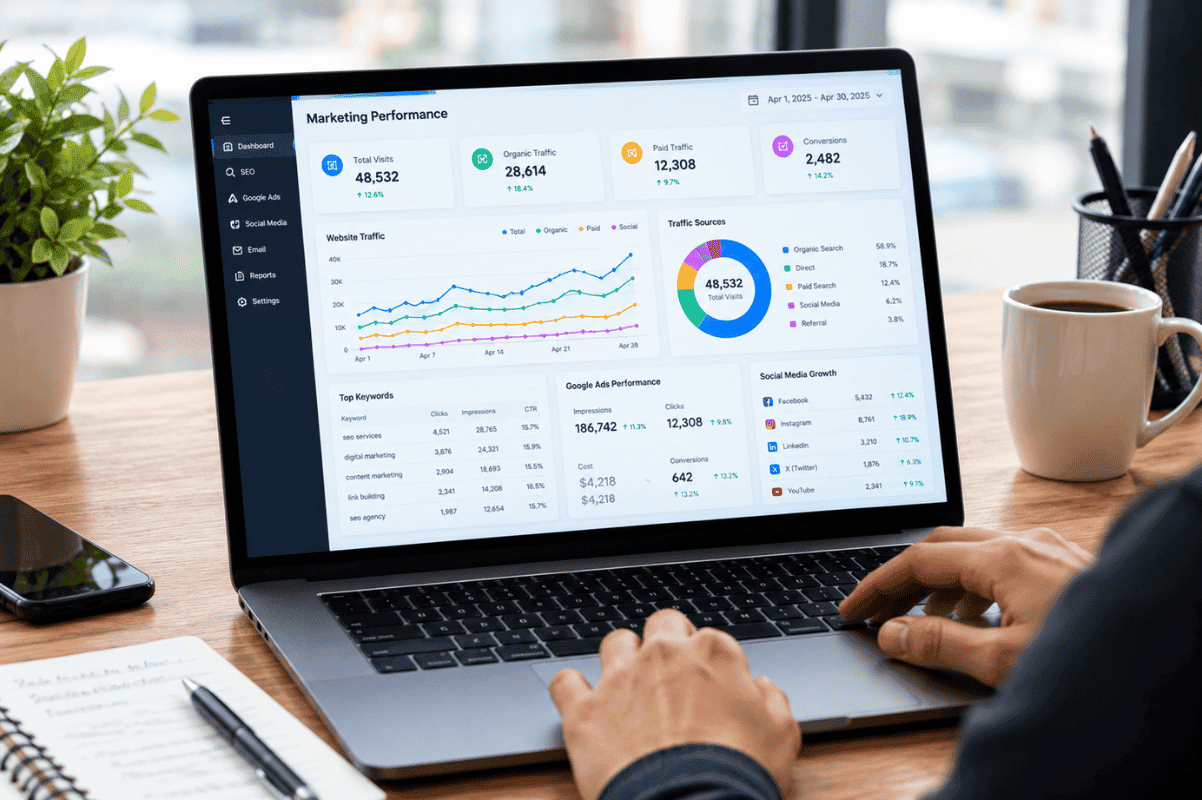
The Best SEO Reporting Tools for Agencies and In-House Teams
There is no single platform that is perfect for every SEO team. The following options are worth considering based on different reporting requirements.
AgencyAnalytics: Best for Agency Client Reporting
AgencyAnalytics is built around the needs of agencies managing multiple clients. Its platform combines dashboards, reporting, client portals, integrations, and automation in a system designed specifically for agency workflows. Current 2026 comparisons highlight its white-label reporting and multi-client capabilities as major strengths.It can be a strong option if your biggest reporting problem is not collecting SEO data but turning information from multiple sources into consistent client deliverables.
Best suited for:
- SEO agencies
- Digital marketing agencies
- Multi-client teams
- Agencies needing branded dashboards
- Teams that want automated reporting
The major advantage is workflow efficiency. Instead of repeatedly creating reports from scratch, agencies can establish templates and recurring reporting processes.
Semrush: Best for SEO Research Plus Reporting
Semrush is better known as a broad SEO and digital marketing platform than as a dedicated reporting product.Its strength is the amount of SEO intelligence available alongside reporting. Teams can work with keyword research, competitor analysis, backlinks, technical SEO, rankings, content, PPC data, and other marketing information.Semrush’s reporting features allow teams to build branded reports using Semrush data and connected marketing sources, with options for custom layouts and scheduled delivery.
Best suited for:
- Full-service SEO agencies
- Advanced SEO professionals
- Competitive industries
- Teams that need research and reporting together
- Agencies working across SEO and PPC
For an SEO team that wants one ecosystem covering both research and reporting, Semrush can make sense.
Ahrefs: Best for Backlink and SEO Performance Reporting
Ahrefs has traditionally been particularly strong for backlink analysis, keyword research, competitor research, and SEO performance data.Its current reporting functionality includes customizable reports using data from tools such as Site Explorer and Rank Tracker. Ahrefs also supports centralized project dashboards, portfolio monitoring, alerts, and integrations for reporting workflows.
Best suited for:
- Link-focused SEO teams
- Agencies doing extensive competitor analysis
- Technical SEO teams
- Content-led SEO campaigns
- Businesses monitoring backlink growth
For businesses where authority and backlinks are central to the SEO strategy, having reporting connected closely to backlink and competitor data can be particularly useful.

SE Ranking: Best for Smaller Teams and Growing Agencies
SE Ranking offers a combination of SEO tools and reporting features, making it worth considering for smaller agencies and in-house teams that want more than a basic dashboard.Its broader platform includes rank tracking, website auditing, backlink monitoring, and other SEO functions. Current comparisons also highlight its appeal for teams looking for a lower-cost alternative to larger SEO suites.
Best suited for:
- Small SEO agencies
- Growing businesses
- Freelancers
- Teams that want multiple SEO features in one platform
- Businesses with straightforward reporting requirements
The key advantage is having research, monitoring, and reporting functionality within a single SEO environment.
Looker Studio: Best for Custom Dashboards
Looker Studio is a different type of solution.Instead of being a complete SEO platform, it works as a customizable reporting and visualization layer. This makes it particularly useful for teams that already collect data through Google Search Console, GA4, Google Ads, spreadsheets, and other platforms.The benefit is flexibility.You can build a dashboard around exactly what your client or management team needs instead of relying on a fixed reporting template.The downside is that setting everything up can require more manual configuration and maintenance than using dedicated agency reporting software. Current comparisons similarly position Looker Studio as a flexible option for custom dashboards rather than a complete SEO data platform.
Best suited for:
- Data-focused SEO teams
- In-house marketing departments
- Businesses already using Google’s ecosystem
- Custom reporting requirements
- Teams comfortable building dashboards
DashThis: Best for Straightforward Marketing Dashboards
DashThis is another reporting-focused option for teams that want to bring marketing data into client-facing dashboards without building everything manually.It can make sense when the priority is creating clean, recurring reports rather than conducting deep SEO research inside the same platform.
Best suited for:
- Small and medium-sized agencies
- Marketing teams
- Client-facing reporting
- Teams prioritizing simple dashboards
- Businesses managing multiple marketing channels
The important distinction is that dedicated reporting platforms generally focus on presenting data, while platforms such as Semrush and Ahrefs are also designed to generate and analyse SEO intelligence.
SEO Reporting Tools Comparison
| Tool | Best For | Main Strength |
| AgencyAnalytics | Agencies | Client reporting and automation |
| Semrush | Advanced SEO teams | SEO research plus reporting |
| Ahrefs | Link-focused SEO | Backlinks and competitor analysis |
| SE Ranking | Smaller teams | Broad SEO functionality |
| Looker Studio | Custom reporting | Flexible dashboards |
| DashThis | Simple agency reporting | Easy multi-source dashboards |
The right choice depends more on your workflow than on the number of features listed on a pricing page.An agency with 30 clients may value automation and white-label reporting more than an in-house SEO specialist managing one large website.
What Metrics Should an SEO Report Include?
One of the biggest reporting mistakes is trying to include everything.A useful SEO report should focus on metrics that answer business questions.
Organic Traffic
Organic traffic shows how much traffic is arriving through unpaid search results.However, traffic alone doesn’t tell the whole story. A traffic increase is only valuable if the visitors are relevant and contribute to meaningful business outcomes.
Search Impressions and Clicks
Google Search Console provides valuable first-party search performance data, including impressions and clicks.These metrics can help explain whether visibility is increasing even when traffic hasn’t increased at the same rate.
Keyword Rankings
Ranking data can show whether important search terms are moving upward or downward.Don’t report hundreds of keywords simply because your tool can track them. Focus on the keywords that matter to the business.
Conversions
Conversions connect SEO performance to actual outcomes.
Depending on the business, that could mean:
- Form submissions
- Phone calls
- Purchases
- Quote requests
- Account registrations
- Consultation bookings
Backlinks
For competitive SEO campaigns, backlink growth and quality can be important indicators.A report should focus on meaningful links and authority trends rather than simply celebrating a higher backlink count.
Technical SEO
Technical issues can directly affect search visibility and website performance.
Reports may include important issues involving:
- Crawlability
- Indexation
- Broken pages
- Redirects
- Duplicate content
- Core Web Vitals
- Site structure
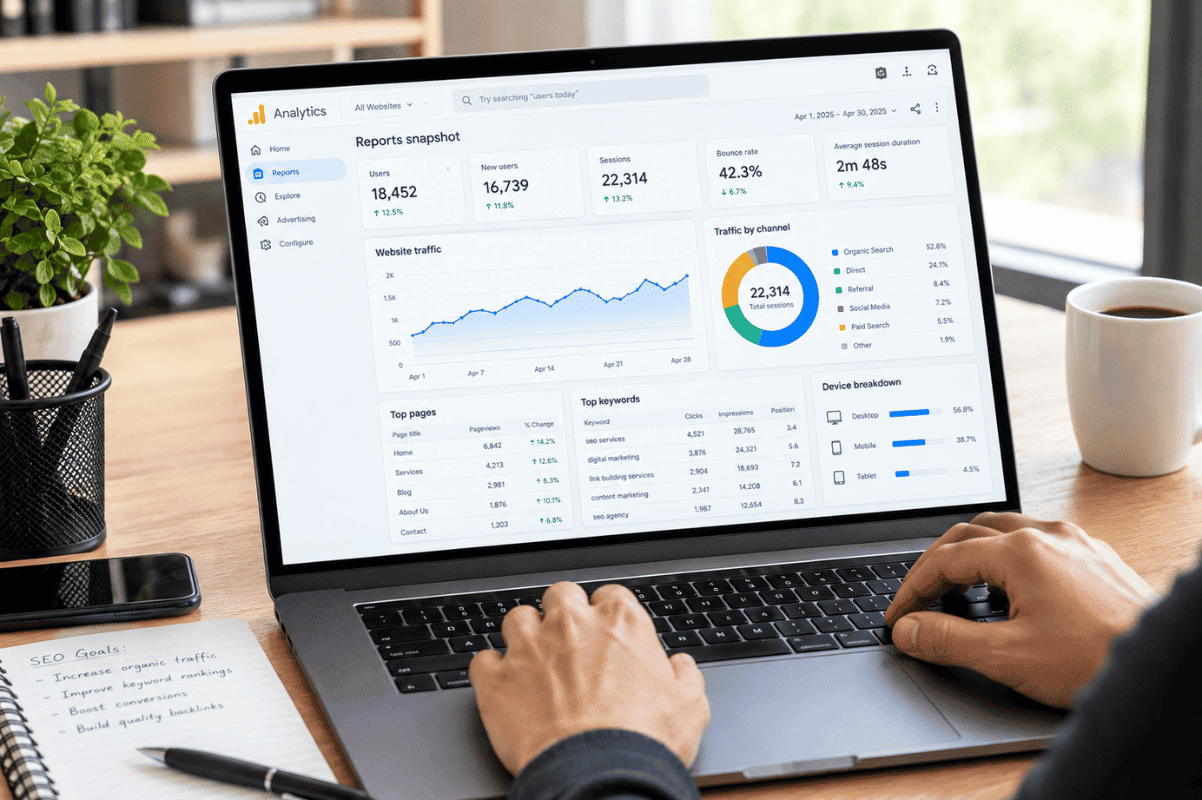
What Agencies Should Look for in SEO Reporting Software
Agencies have different requirements from individual businesses.Before choosing a platform, consider whether it provides:
White-Label Reporting
If clients receive your reports, you may want your own branding rather than the software provider’s branding.Look for options involving logos, colours, report URLs, templates, and client-facing dashboards.
Automated Reports
If someone on your team spends hours every month downloading spreadsheets and copying numbers into presentations, automation can create significant time savings.Scheduled reporting is particularly useful for recurring monthly or weekly client updates.
Multiple Data Sources
SEO rarely exists in isolation.
A useful report may combine:
- Google Search Console
- Google Analytics
- Google Ads
- Rank tracking
- Backlink data
- Technical SEO data
- Business conversion data
Semrush, for example, supports branded reports that can combine Semrush information with data from multiple connected marketing sources.
Client-Friendly Presentation
A technical SEO specialist may understand every metric in a report.A business owner may not.The reporting platform should make it easy to distinguish important findings from background data.
What In-House SEO Teams Should Look For
An in-house team doesn’t necessarily need the same setup as an agency.
If you manage one website or a small group of related websites, look for:
- Easy access to first-party data
- Strong rank tracking
- Technical SEO monitoring
- Competitor analysis
- Custom dashboards
- Conversion tracking
- Integration with existing analytics
- Easy sharing with management
An in-house team may prefer a flexible dashboard such as Looker Studio combined with Google Search Console and GA4, while a larger SEO department may prefer a comprehensive platform such as Semrush or Ahrefs.The important thing is to avoid paying for features your team will never use.
Common SEO Reporting Mistakes to Avoid
Reporting Numbers Without Context
A ranking increase sounds positive.But if the keyword has almost no commercial value, the improvement may not matter much.Always explain what changed and why it matters.
Focusing Only on Rankings
Rankings are useful, but they are not the final business objective.Traffic, leads, sales, revenue, and qualified enquiries often provide a better picture of SEO performance.
Creating Reports That Are Too Long
More information can make a report less useful.A client should be able to understand the most important developments without reading dozens of pages.
Ignoring Competitors
Your client’s performance doesn’t happen in isolation.Competitor visibility can explain why rankings changed and where new opportunities may exist.
Using the Same Report for Every Client
A local service business, ecommerce store, law firm, and SaaS company may have completely different SEO objectives.Your reporting should reflect those differences.
How to Choose the Best SEO Reporting Tool
Start with the problem you are trying to solve.
If your biggest issue is client reporting and automation, a dedicated agency reporting platform may be the better fit.
If you need keyword research, competitor analysis, backlinks, audits, and reporting, an all-in-one SEO platform may make more sense.
If you want complete dashboard customization, Looker Studio can be attractive.
If your SEO strategy relies heavily on backlink and competitor analysis, Ahrefs can be particularly useful.
If you need broad SEO research and reporting in one ecosystem, Semrush is worth evaluating.
Don’t choose a platform simply because it appears first in a “best tools” list.
Instead, compare the workflow.
Ask:
- How many websites will we manage?
- How many people need access?
- Who reads the reports?
- Do we need white-label branding?
- How often should reports be delivered?
- Which data sources need to connect?
- Do we need SEO research inside the same platform?
- How much customization is necessary?
- What happens as the number of clients grows?
Those questions will usually narrow the options faster than comparing dozens of individual features.
The Best SEO Reporting System Is More Than a Tool
Even the best SEO reporting tools cannot replace good analysis.A dashboard can show that organic traffic dropped.It cannot automatically understand every reason that happened or determine the best strategic response.That’s where the SEO team comes in.The strongest reporting process combines reliable data with human interpretation.Instead of telling a client:
“Organic traffic decreased 8%.”
A useful report should explain what changed, which pages or queries were affected, whether competitors experienced similar movement, and what the team plans to do next.That turns reporting from a monthly data dump into a strategic conversation.Choosing the best SEO reporting tool depends on your team, clients, reporting frequency, data sources, and level of customization.Agencies often need white-label dashboards, automation, multiple accounts, and client-friendly presentation. In-house teams may care more about first-party data, detailed SEO analysis, technical monitoring, and flexible dashboards.Platforms such as AgencyAnalytics, Semrush, Ahrefs, SE Ranking, Looker Studio, and DashThis can all fit different parts of the market. Current comparisons show that dedicated reporting platforms tend to focus on client dashboards and automation, while broader SEO platforms combine reporting with research, rankings, backlinks, audits, and competitor analysis.For a business investing in SEO, however, reporting is only one part of the equation.The real objective is to improve visibility, attract relevant visitors, earn authority, and generate meaningful business results.At BuyBacklinks.ca, SEO reporting can be considered alongside the wider link-building strategy, including relevant backlinks, authority building, competitor research, and organic growth. The right reporting process helps you see what is improving, where opportunities remain, and where your SEO investment should go next.
5. FAQ Section
What are SEO reporting tools?
SEO reporting tools are platforms that collect, organize, visualize, and present search engine optimization data. They can help teams monitor rankings, organic traffic, backlinks, technical issues, conversions, and other SEO performance indicators.
What is the best SEO reporting tool for an agency?
There is no universal best option. Agencies managing multiple clients may benefit from dedicated reporting platforms such as AgencyAnalytics, while agencies wanting SEO research and reporting together may prefer platforms such as Semrush or Ahrefs.
Is Looker Studio good for SEO reporting?
Yes. Looker Studio can be useful when you want highly customized dashboards and data from multiple sources. It is particularly attractive for teams already working with Google Search Console, GA4, Google Ads, and other connected data sources.
What should an SEO report include?
A useful SEO report can include organic traffic, clicks, impressions, keyword rankings, conversions, backlinks, technical SEO issues, and important changes over time. The exact metrics should depend on the website’s goals.
Should SEO agencies use white-label reporting?
White-label reporting can be valuable for agencies that want client-facing reports to reflect their own branding. It can create a more consistent experience and reduce the need to manually recreate reports.
Are SEO reporting software and SEO tools the same thing?
Not always. Some platforms are primarily designed for SEO research and analysis, while others focus on reporting and dashboards. Many modern platforms combine both functions, but their strengths can differ significantly.
