
When people search for a nearby service, they usually intend to take action. Whether they’re looking for a plumber, dentist, restaurant, or marketing agency, they often choose a business that appears near the top of Google’s local results. If your business isn’t visible there, you’re missing valuable opportunities to attract customers who are ready to buy.
That’s why local search optimization has become an essential part of digital marketing. It helps businesses improve their visibility in location-based searches, making it easier for nearby customers to discover and contact them.
If you’ve ever wondered how to rank higher on Google, the answer goes beyond adding a few keywords to your website. Google’s local algorithm considers several factors, including relevance, distance, prominence, website quality, and the accuracy of your business information.
This guide explains the fundamentals of local search engine optimization and provides practical steps you can take to improve your local rankings in 2026.
What Is Local Search Optimization?
Local search optimization is the process of improving your online presence so your business appears more prominently in Google’s local search results, including Google Maps and the Local Pack.
Unlike traditional SEO, which targets users across a wider geographic area, local SEO focuses on attracting customers within a specific city, region, or service area.
For example, when someone searches for:
- “coffee shop near me”
- “SEO agency in Toronto”
- “emergency plumber Mississauga”
Google prioritises businesses that are most relevant to that location and search intent.
A strong local search engine optimization strategy helps your business appear in these high-intent searches.
Why Local SEO Matters
Most local searches are made by people who are actively looking for a nearby product or service. That means local traffic is often more valuable than general website traffic because it comes from users who are closer to making a purchasing decision.
Effective local SEO can help you:
- Increase local visibility
- Drive more qualified website traffic
- Generate phone calls and enquiries
- Improve foot traffic to physical locations
- Build trust through reviews and accurate business information
Even businesses that serve customers at their location can benefit from appearing prominently in Google Maps and local search results.
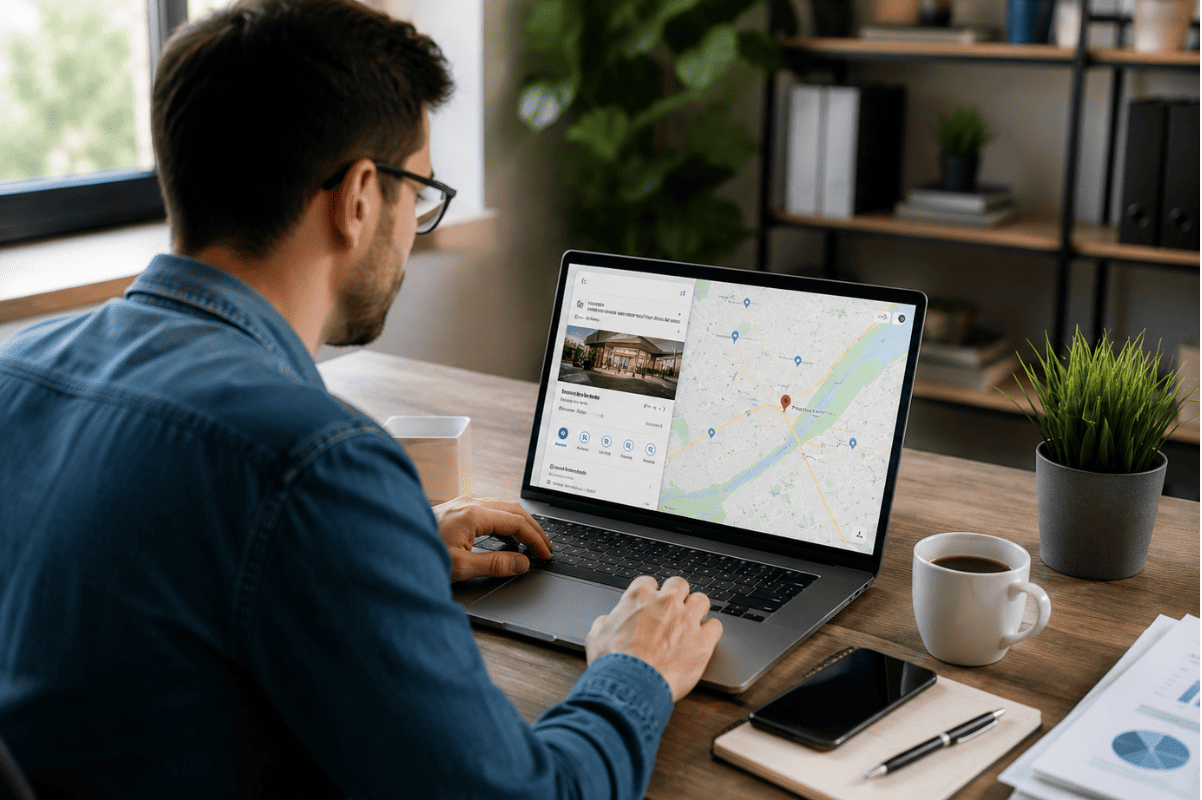
1. Optimise Your Google Business Profile
Your Google Business Profile is one of the most important ranking factors for local SEO.
Make sure your profile includes:
- Accurate business name
- Correct address
- Phone number
- Website URL
- Business hours
- Primary and secondary categories
- High-quality photos
- Business description
- Services and products
Keep your profile updated whenever your business information changes.
A complete and accurate profile helps Google understand your business and improves your chances of appearing in local search results.
2. Keep Your Business Information Consistent
Your Name, Address, and Phone Number (NAP) should be consistent everywhere your business appears online.
Check that your information matches across:
- Your website
- Google Business Profile
- Business directories
- Social media profiles
- Industry listings
Inconsistent information can confuse both customers and search engines, making it more difficult to establish trust.
3. Optimise Your Website for Local Keywords
Your website should naturally include location-specific keywords that match the services you provide.
Instead of targeting only broad terms, consider phrases such as:
- SEO agency in Vancouver
- Accountant in Calgary
- Roofing services in Ottawa
Include local keywords in:
- Page titles
- Meta descriptions
- Headings
- Body content
- Image alt text
- URLs where appropriate
Avoid keyword stuffing. Write naturally for readers first.
4. Create Dedicated Location Pages
If your business serves multiple cities or regions, create a dedicated page for each location.
Each page should contain:
- Unique content
- Local service information
- Relevant customer testimonials
- Area-specific FAQs
- Contact details
- Driving directions where appropriate
Avoid copying the same content across multiple pages with only the city name changed.
Unique location pages provide a much better experience for both users and search engines.
5. Build Strong Local Citations
A citation is any online mention of your business information.
Common citation sources include:
- Local business directories
- Industry-specific directories
- Chamber of Commerce websites
- Local business associations
- Trusted review platforms
Focus on quality and consistency rather than submitting your business to hundreds of low-quality directories.
6. Encourage Customer Reviews
Reviews are one of the strongest trust signals in local SEO.
Encourage satisfied customers to leave honest reviews on your Google Business Profile.
When responding to reviews:
- Thank customers for positive feedback.
- Respond professionally to negative reviews.
- Address concerns respectfully.
- Never purchase fake reviews.
Authentic customer feedback helps build credibility and may improve your local visibility over time.
7. Build Local Backlinks
Backlinks remain one of Google’s strongest ranking signals, and local backlinks can have an even greater impact on local search optimization.
Look for opportunities to earn links from reputable local websites, such as:
- Local news publications
- Community organisations
- Chambers of Commerce
- Industry associations
- Local business partners
- Sponsorships and events
Quality matters far more than quantity. A few relevant local backlinks are often more valuable than dozens of low-quality links.

8. Optimise for Mobile Users
Most local searches happen on smartphones. People searching for nearby businesses expect a fast, mobile-friendly experience.
Review your website to ensure it:
- Loads quickly
- Uses a responsive design
- Has readable text without zooming
- Includes easy-to-tap buttons
- Displays contact information clearly
- Offers simple navigation
A poor mobile experience can lead to higher bounce rates and lost customers.
9. Improve Your On-Page SEO
Good on-page optimisation helps search engines understand your content and improves your chances of ranking.
Before publishing or updating a page, check that you have:
- A unique title tag
- A compelling meta description
- One clear H1 heading
- Logical H2 and H3 headings
- Relevant internal links
- Optimised images with descriptive alt text
- Short, descriptive URLs
Strong on-page SEO supports both traditional rankings and local search visibility.
10. Create Helpful Local Content
Publishing useful local content is an effective way to demonstrate expertise and attract nearby customers.
Consider writing about:
- Local events
- Community news
- Area-specific guides
- Frequently asked questions
- Seasonal tips
- Customer success stories
For example, a landscaping company could publish articles about spring lawn care in its service area, while a restaurant might share guides to local food festivals.
Content that genuinely helps local readers is more likely to earn traffic, backlinks, and engagement.
11. Monitor Your Performance
Local SEO requires ongoing attention. Regular monitoring helps you understand what’s working and where improvements are needed.
Useful metrics include:
- Local keyword rankings
- Google Business Profile views
- Website traffic
- Phone calls
- Direction requests
- Contact form submissions
- Conversion rates
Review your performance regularly and adjust your strategy based on real data rather than assumptions.
Common Local SEO Mistakes to Avoid
Even well-established businesses can lose visibility because of avoidable mistakes.
Some of the most common include:
- Inconsistent business information across directories
- Ignoring customer reviews
- Using duplicate location pages
- Choosing the wrong business categories
- Neglecting mobile optimisation
- Publishing thin or outdated content
- Forgetting to update business hours
- Building low-quality backlinks
A routine review of your website and business profile can help you identify and correct these issues before they affect your rankings.
How Long Does Local SEO Take?
One of the most common questions businesses ask is how to rank higher on Google quickly.
The honest answer is that local SEO is a long-term strategy.
Some improvements, such as updating your Google Business Profile or fixing inaccurate business information, may have an impact within a few weeks. More competitive keywords often require several months of consistent effort, particularly if you’re building authority in a crowded market.
The key is consistency. Regular updates, high-quality content, positive customer reviews, and ethical link building all contribute to stronger long-term results.
Effective local search engine optimization isn’t about finding shortcuts or trying to outsmart Google’s algorithm. It’s about making your business easier for customers and search engines to understand.
By optimising your Google Business Profile, maintaining consistent business information, creating valuable local content, improving your website, and earning high-quality backlinks, you can build a stronger online presence that attracts more local customers.
If you’re looking to strengthen your SEO strategy even further, buybacklinks offers ethical, high-quality link-building solutions designed to complement local SEO efforts. When combined with a technically sound website and helpful content, authoritative backlinks can support sustainable growth and improved search visibility.
Frequently Asked Questions
1. What is local search optimization?
Local search optimization is the process of improving your online presence so your business appears more prominently in location-based Google Search and Google Maps results.
2. How can I rank higher on Google locally?
Improve your Google Business Profile, maintain consistent business information, optimise your website for local keywords, earn quality reviews, and build relevant local backlinks.
3. Is local search engine optimization only for businesses with physical locations?
No. Service-area businesses, such as plumbers, electricians, consultants, and digital agencies, can also benefit from local SEO by targeting the areas they serve.
4. How important are customer reviews for local SEO?
Customer reviews help build trust and can influence local search visibility. Encourage genuine reviews and respond professionally to both positive and negative feedback.
5. How often should I update my Google Business Profile?
Review your profile regularly and update it whenever your business hours, services, contact information, or photos change. Posting occasional updates can also help keep your profile active.
