
Running successful PPC campaigns isn’t just about improving your own ads.
It’s also about understanding what your competitors are doing.
Every day, businesses compete for the same keywords, audiences, and clicks. Some consistently appear above everyone else in search results, while others struggle to gain visibility despite significant advertising budgets.
One of the most important concepts behind this competition is competitor ad rank.
Understanding how ad rank works and how your competitors achieve strong positions can help you improve your own campaigns, reduce wasted spend, and gain a competitive advantage in paid search.
In this guide, we’ll explain competitor ad rank, how to analyze competing advertisers, and practical strategies to improve your PPC performance in 2026.
What Is Competitor Ad Rank?
Competitor ad rank refers to the position competing advertisers achieve in paid search results.
When multiple advertisers bid on the same keyword, search engines determine which ads appear and in what order.
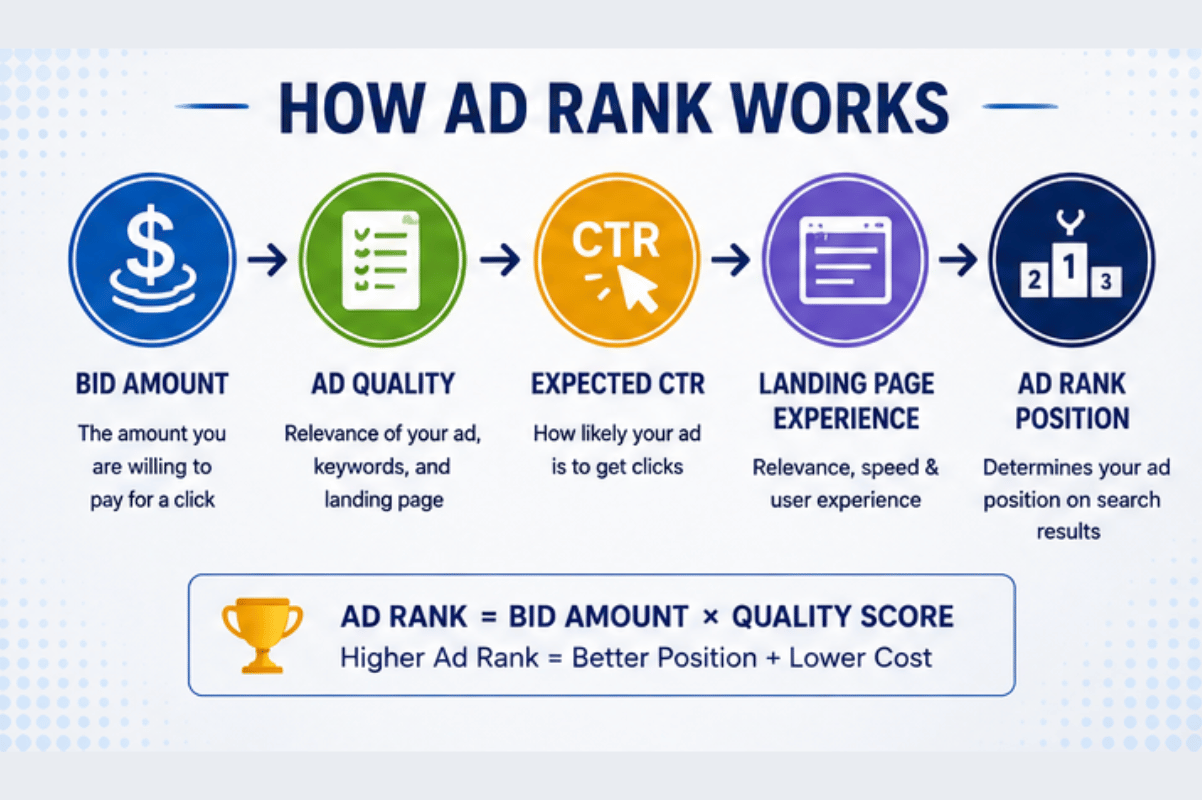
The ranking process isn’t based solely on who spends the most money.
Search engines evaluate factors such as:
- Bid amount
- Ad quality
- Expected click-through rate
- Landing page experience
- Ad relevance
- Search intent alignment
The advertiser with the strongest overall combination typically earns the highest ad position.
Why Competitor Ad Rank Matters
Many advertisers focus only on their own campaigns.
However, understanding competitor performance helps answer important questions:
- Why are competitors outranking you?
- Which keywords are competitors targeting?
- What messaging are they using?
- Which offers attract clicks?
- Where are opportunities being missed?
Competitive analysis helps improve decision-making instead of relying on assumptions.
How Ad Rank Actually Works
Although advertising platforms use complex algorithms, the concept is relatively simple.
Search engines evaluate:
Bid Strategy
Higher bids can improve visibility, but they don’t guarantee top placement.
A poorly optimized ad can still lose to a competitor with a lower bid.
Quality Score
Quality Score generally reflects:
- Ad relevance
- Expected click-through rate
- Landing page quality
Strong Quality Scores often reduce advertising costs while improving visibility.
User Experience
Search engines prioritize ads that provide value to users.
Landing pages that load quickly and match search intent often perform better.
Contextual Factors
Ad rank can also change based on:
- Device type
- Location
- Search history
- Time of day
- Audience signals
This is why competitors may appear differently across searches.
How to Analyze Competitor Ad Rank
You don’t need access to a competitor’s advertising account to learn valuable insights.
Several methods can reveal useful information.
1. Search Your Target Keywords
One of the simplest approaches is manual observation.
Search important keywords and note:
- Which competitors appear consistently
- Ad headlines
- Calls to action
- Promotions
- Landing page offers
Over time, patterns become easier to identify.
Consistent visibility often signals successful campaigns.
2. Study Competitor Ad Copy
Ad copy reveals what competitors believe resonates with customers.
Pay attention to:
- Pricing offers
- Guarantees
- Discounts
- Unique selling points
- Emotional triggers
Questions to ask:
- What benefits do they emphasize?
- What problems are they solving?
- What makes their offer different?
Understanding messaging can help improve your own ads.
3. Analyze Landing Pages
Clicks don’t generate revenue.
Conversions do.
That’s why competitor landing pages deserve close attention.
Review:
- Page structure
- Headlines
- Forms
- Trust signals
- Testimonials
- Calls to action
Often, the biggest PPC advantages come from better landing page experiences rather than larger budgets.
4. Monitor Keyword Coverage
Competitors frequently reveal strategic priorities through keyword targeting.
Look for:
- Core commercial keywords
- Long-tail opportunities
- Industry-specific searches
- Local PPC campaigns
Keyword analysis often uncovers opportunities competitors haven’t fully addressed.
5. Track Competitor Trends Over Time
A single search provides limited information.
Ongoing monitoring reveals:
- Seasonal campaigns
- New promotions
- Expanding keyword targets
- Messaging changes
Long-term observation often delivers the most valuable insights.
Ethical Ways to “Spy” on Competitors
The word “spy” sounds aggressive, but competitive analysis should remain ethical.
Focus on publicly available information such as:
- Search ads
- Landing pages
- Public offers
- Industry messaging
- Market positioning
Avoid:
- Unauthorized access
- Data theft
- Misrepresentation
Competitive intelligence should improve strategy not violate trust.
Common Reasons Competitors Outrank Your Ads
Understanding why competitors rank higher helps prioritize improvements.
Better Quality Scores
Strong Quality Scores often outperform higher bids.
Improving relevance can sometimes increase rankings without increasing spend.
Stronger Landing Pages
Landing page quality significantly affects ad performance.
Poor user experiences reduce competitiveness.
More Relevant Ad Copy
Ads that closely match search intent generally perform better.
Relevance often wins over generic messaging.
Better Click-Through Rates
Search engines favor ads that users engage with consistently.
Higher engagement signals greater usefulness.
Strong Audience Targeting
Competitors may use:
- Remarketing
- Customer match lists
- Geographic targeting
- Device-specific strategies
Better targeting improves overall campaign performance.
Strategies to Improve Your Ad Rank
Once you’ve analyzed competitors, focus on improving your own campaigns.
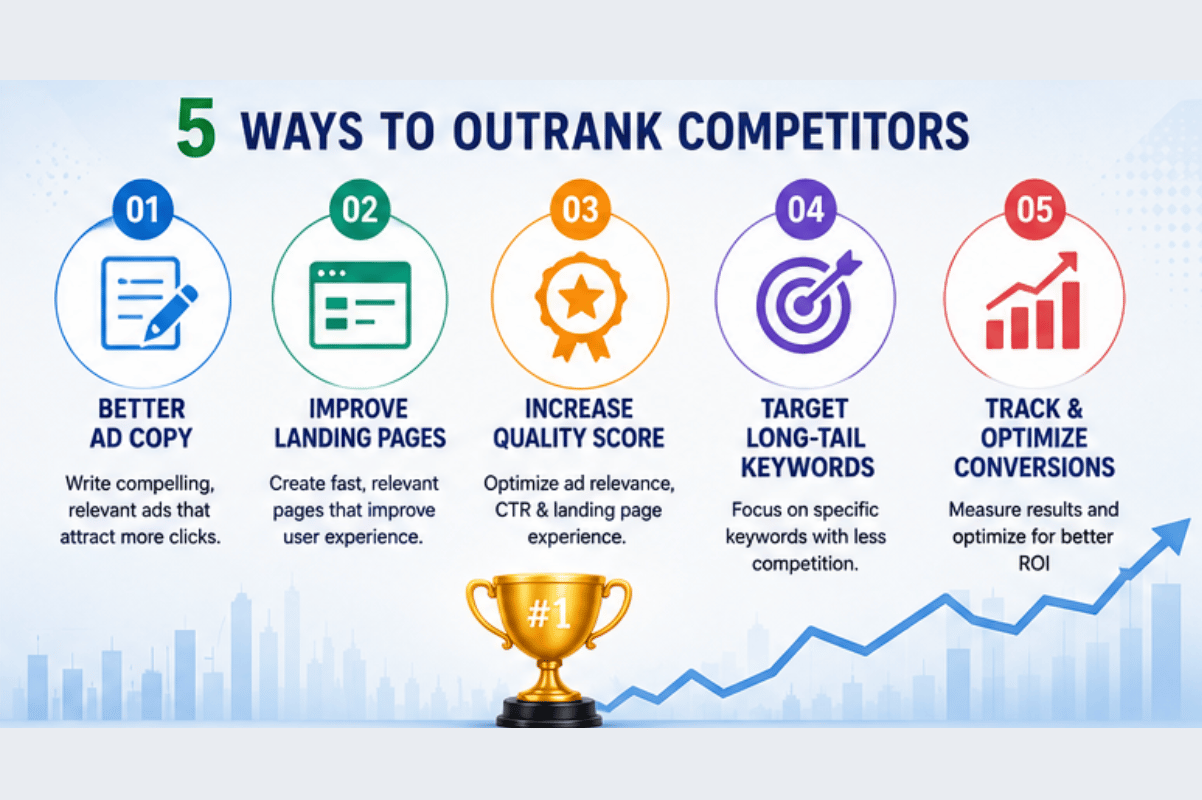
Optimize Ad Relevance
Ensure ads closely match keyword intent.
Include:
- Relevant headlines
- Clear benefits
- Strong calls to action
Search engines reward relevance.
Improve Landing Pages
Review:
- Page speed
- Mobile experience
- Conversion paths
- Content relevance
A stronger landing page can improve Quality Score and conversions simultaneously.
Test Multiple Ad Variations
Never rely on one ad version.
Experiment with:
- Headlines
- Descriptions
- Offers
- Calls to action
Continuous testing often reveals surprising performance improvements.
Focus on Long-Tail Keywords
Highly competitive keywords are expensive.
Long-tail keywords often provide:
- Lower costs
- Higher intent
- Better conversion rates
These opportunities are frequently overlooked.
Strengthen Conversion Tracking
Accurate tracking helps identify what actually works.
Monitor:
- Leads
- Purchases
- Form submissions
- Phone calls
Data-driven optimization consistently outperforms guesswork.
Common PPC Competitive Analysis Mistakes
Copying Competitors Exactly
Learning from competitors is useful.
Imitating them completely is not.
Differentiate your offer whenever possible.
Focusing Only on Position
The top ad position isn’t always the most profitable.
Focus on return on investment rather than visibility alone.
Ignoring Landing Pages
Many advertisers obsess over ads while neglecting the conversion experience.
Landing pages often determine campaign success.
Making Decisions Too Quickly
PPC performance fluctuates.
Avoid drawing conclusions from limited data.
Tools That Help Analyze Competitor Ad Rank
Popular tools include:
- Google Ads Auction Insights
- SEMrush Advertising Research
- Ahrefs
- SpyFu
- Similarweb
These platforms provide visibility into competitor activity, keyword targeting, and advertising trends.
What Will Matter Most in PPC During 2026?
As advertising platforms evolve, success increasingly depends on:
- Search intent alignment
- Ad relevance
- User experience
- First-party data
- Conversion optimization
- Audience targeting
Advertisers who focus only on bidding often struggle against competitors with stronger overall strategies.
Understanding competitor ad rank helps you move beyond guesswork and make smarter PPC decisions.
By analyzing competitor ads, landing pages, messaging, and keyword strategies, you can identify opportunities to improve performance without simply increasing ad spend.
The goal isn’t to copy competitors.
The goal is to understand what works, identify gaps, and create campaigns that provide greater value to searchers.
When combined with strong ad relevance, landing page optimization, and continuous testing, competitive analysis becomes a powerful advantage in paid search.
And while paid advertising can drive immediate traffic, long-term visibility often benefits from strong SEO foundations as well. Buy Backlinks provides backlink solutions designed to support sustainable organic growth alongside broader digital marketing efforts.
FAQ Section
1. What is competitor ad rank?
Competitor ad rank refers to the position competing advertisers achieve in paid search results based on factors such as bids, ad quality, and relevance.
2. Can I see my competitors’ Google Ads?
You can view publicly displayed ads through search results and use competitive research tools to gather additional insights.
3. Does a higher bid guarantee a better ad rank?
No. Search engines also consider Quality Score, relevance, landing page experience, and expected click-through rates.
4. What is the best way to improve ad rank?
Focus on improving ad relevance, landing page quality, user experience, and conversion optimization rather than relying solely on higher bids.
5. Which tools help analyze competitor PPC campaigns?
Popular options include Google Ads Auction Insights, SpyFu, SEMrush, Ahrefs, and Similarweb.
